A project budget worksheet is a practical tool for planning, organizing, and monitoring the financial side of a project. It provides a structured place to estimate expenses, record actual spending, compare costs, and identify potential budget problems before they affect the project.
Whether you are managing a business project, construction project, event, marketing campaign, school project, or personal initiative, having a clear budget can make financial decisions easier. A project budget worksheet helps turn a general spending plan into a detailed financial overview that can be reviewed throughout the project.
Instead of keeping estimated costs in separate notes or spreadsheets, you can use a project budget worksheet to organize expenses by category and compare planned costs with actual expenditures. This makes it easier to understand where the budget stands and where adjustments may be necessary.
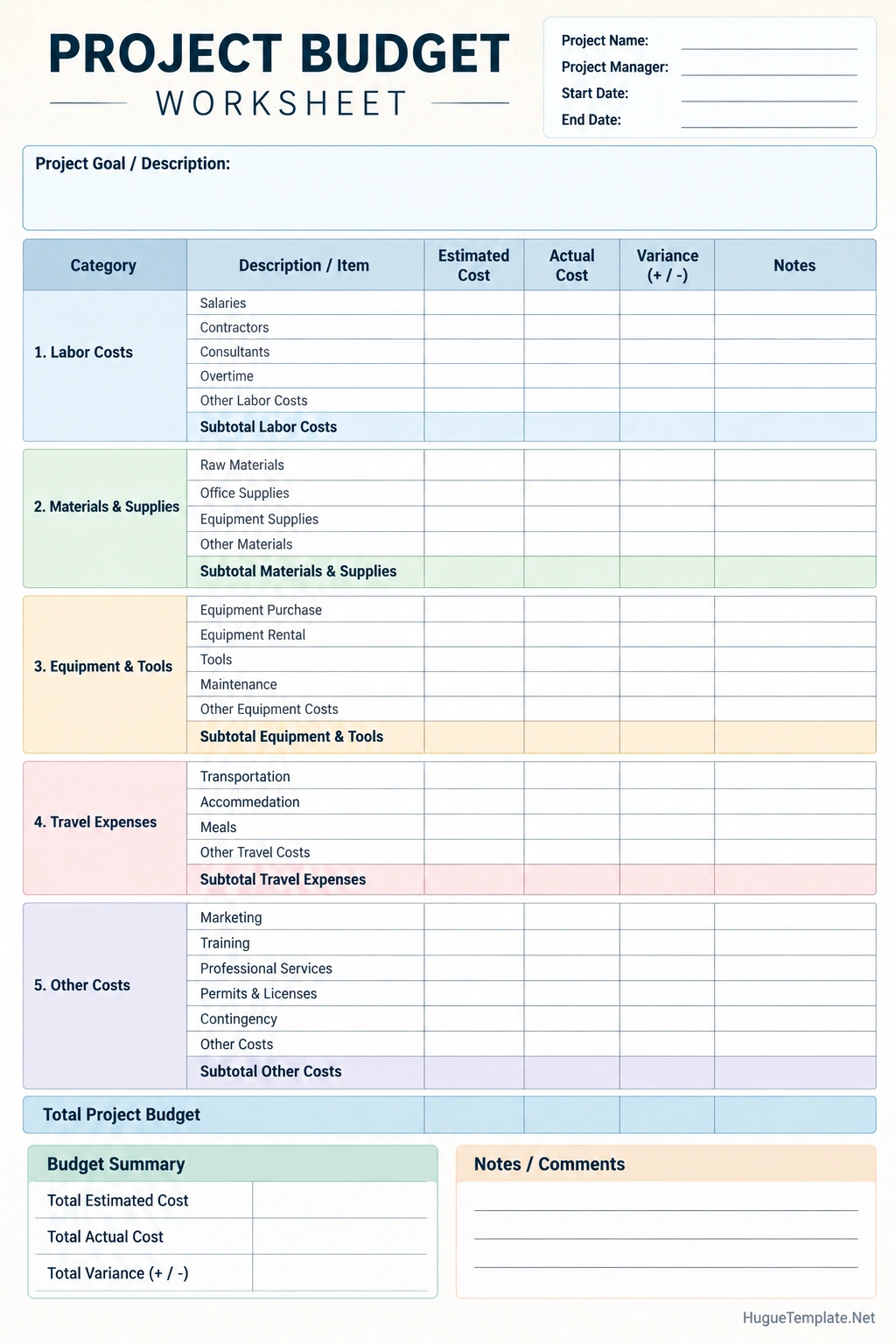
What Is a Project Budget Worksheet?
A project budget worksheet is a financial planning document used to estimate and track the costs associated with completing a project. It typically organizes expenses into categories such as labor, materials, equipment, travel, services, and other project-related costs.
The worksheet can be used before a project begins to create an initial budget and during the project to monitor actual spending. By comparing estimated costs with actual costs, project managers can identify differences and determine whether corrective action is needed.
A well-organized project budget worksheet can also provide a useful financial reference for project managers, team members, stakeholders, and decision-makers.
Why Is a Project Budget Worksheet Important?
Projects often involve many different expenses, and small cost increases can become significant when they occur across multiple categories. A structured budget helps make those costs visible.
A project budget worksheet can help you:
- Estimate the total cost of a project.
- Allocate funds to different expense categories.
- Track actual project spending.
- Compare estimated costs with actual expenses.
- Identify budget variances.
- Monitor financial progress throughout the project.
- Identify potential cost overruns.
- Support communication with stakeholders.
- Improve financial accountability.
- Provide a documented baseline for project cost control.
The worksheet is not simply a list of expenses. It creates a framework for understanding how project resources are being used and whether spending remains aligned with the original plan.
What Should a Project Budget Worksheet Include?
The exact format depends on the project, but an effective project budget worksheet generally includes enough information to identify each expense and compare planned spending with actual results.
Project Information
Start with basic information such as the project name, project manager, start date, end date, department, client, or other relevant details.
This makes the worksheet easier to identify when multiple projects are being managed at the same time.
Expense Categories
Organize costs into logical categories. Common categories include labor, materials, equipment, travel, professional services, marketing, permits, and contingency expenses.
Estimated Cost
The estimated cost represents the amount you expect to spend on a particular item or category. These estimates form the initial financial baseline for the project.
Actual Cost
Once the project begins, record the amount actually spent. Keeping actual costs updated allows you to compare real spending against the original estimates.
Budget Variance
The variance shows the difference between the planned amount and the actual amount. Depending on the worksheet design, variance may be expressed as a positive or negative difference.
Notes
A notes section can be used to explain unusual expenses, changes in scope, supplier issues, delayed purchases, or other information that helps explain a budget difference.
Common Project Budget Categories
The categories used in a project budget should reflect the type of project being managed. Some projects may require only a few categories, while larger projects may need a much more detailed cost breakdown.
Labor Costs
Labor can include employee wages, contractor fees, consultant costs, overtime, temporary workers, and other personnel-related expenses.
Materials and Supplies
This category may include raw materials, office supplies, production supplies, packaging, consumables, and other physical resources required to complete the project.
Equipment and Tools
Equipment expenses can include purchases, rentals, maintenance, software-related equipment, tools, or specialized resources needed for the project.
Travel Expenses
Projects that require travel may include transportation, accommodation, meals, parking, and other approved travel-related costs.
Professional Services
Professional services can include legal services, accounting, consulting, design, engineering, technical services, or other specialized assistance.
Other Project Costs
Depending on the project, additional expenses may include marketing, training, permits, licenses, administrative costs, or contingency funds.
How to Create a Project Budget Worksheet
Creating a project budget worksheet is easier when you build it around the actual activities and resources required to complete the project.
1. Define the Project Scope
Before estimating costs, make sure the project scope is clear. Identify what the project is expected to deliver and which activities are included.
A poorly defined scope can make budgeting difficult because important expenses may be overlooked or added later.
2. List Project Activities
Break the project into major activities or work packages. This provides a clearer basis for determining which resources and expenses are required.
3. Identify Required Resources
Determine the people, materials, equipment, services, travel, and other resources needed for each activity.
4. Estimate Each Cost
Assign an estimated cost to each expense. Use reasonable assumptions and available historical information where possible.
5. Organize Costs by Category
Group similar expenses together. Categorization makes the budget easier to review and helps you identify which areas account for the largest portion of project spending.
6. Calculate the Total Budget
Add the estimated costs across all categories to determine the expected project budget. Make sure all major project expenses have been considered before finalizing the initial budget.
7. Include a Contingency Amount
Depending on the nature of the project, you may want to include a contingency amount for unexpected or uncertain costs. The appropriate amount depends on project complexity, risk, and organizational practices.
Estimated Cost vs. Actual Cost
One of the most useful features of a project budget worksheet is the ability to compare estimated costs with actual spending.
For example, suppose a project initially estimates $5,000 for materials but eventually spends $5,600. The worksheet can show the $600 difference and provide space to explain why the additional cost occurred.
This comparison can help project managers identify trends and determine whether similar cost increases may affect other areas of the project.
What Is Budget Variance?
Budget variance is the difference between an expected cost and the corresponding actual cost. Monitoring variance helps project managers understand whether spending is tracking according to plan.
A favorable or unfavorable variance should not automatically be interpreted without context. For example, spending less than expected may be positive, but it could also indicate that planned work has not yet been completed.
Likewise, spending more than expected may indicate a problem, or it may reflect an approved change in project scope.
For this reason, the notes and explanation sections of a project budget worksheet can be just as important as the numbers themselves.
How to Use a Project Budget Worksheet During a Project
A budget worksheet is most useful when it is updated throughout the project rather than completed once and forgotten.
Track Expenses Regularly
Record actual expenses as they occur. Regular updates make it easier to detect budget issues while there is still time to respond.
Compare Spending With the Baseline
Review actual costs against the original estimates. Pay particular attention to categories where spending is increasing faster than expected.
Investigate Significant Variances
When a significant difference appears, identify its cause. The reason could be a price increase, unexpected requirement, change in scope, scheduling issue, or estimation error.
Update Forecasts When Necessary
If new information changes the expected project cost, update the forecast according to your organization’s budget management process. Keep the original baseline documented so changes can be distinguished from the initial plan.
Project Budget Worksheet for Different Types of Projects
A project budget worksheet can be adapted to many different project environments.
Business Projects
Businesses can use project budgets to track personnel, software, consulting, marketing, travel, equipment, and operational expenses associated with a specific initiative.
Construction Projects
Construction budgets may include labor, materials, equipment rental, subcontractors, permits, transportation, site preparation, and contingency costs.
Event Planning
Event budgets can organize venue costs, catering, decorations, entertainment, transportation, staffing, promotional materials, and other event expenses.
Marketing Projects
Marketing budgets may include advertising, content creation, design, software, freelancers, events, promotional materials, and other campaign-related costs.
School and Academic Projects
Students and educators can use a simple project budget worksheet to plan costs for supplies, printing, transportation, equipment, materials, or other project requirements.
Tips for Better Project Budget Management
A worksheet is most effective when it is supported by consistent budgeting practices. Consider these practical tips:
- Base estimates on realistic information: Avoid creating a budget based solely on optimistic assumptions.
- Separate fixed and variable costs: This can make changes easier to identify.
- Track costs consistently: Use the same categories throughout the project.
- Review the budget regularly: Do not wait until the end of the project to examine spending.
- Document major changes: Explain significant changes in scope or expenses.
- Monitor high-risk categories: Pay extra attention to expenses that are difficult to estimate.
- Communicate important changes: Keep relevant stakeholders informed about significant budget issues.
- Keep supporting records: Maintain invoices, receipts, purchase records, and other documentation according to applicable procedures.
Common Project Budgeting Mistakes
Even a well-designed budget can become ineffective if important costs or changes are overlooked.
Common mistakes include:
- Underestimating labor costs.
- Forgetting indirect or supporting expenses.
- Failing to account for unexpected costs.
- Using outdated cost estimates.
- Not updating actual spending.
- Ignoring small expenses that accumulate over time.
- Failing to document changes in project scope.
- Creating a budget without input from people responsible for the work.
- Waiting too long to investigate budget variances.
Using a Project Budget Worksheet Template
A project budget worksheet template can provide a ready-made structure for organizing financial information. Instead of building a budget from an empty page, you can start with sections for project information, expense categories, estimated costs, actual costs, variances, and notes.
A template is especially useful when you manage multiple projects and want to maintain a consistent budgeting process. You can customize the categories and fields according to the project’s specific requirements.
Before using a template, review the available sections and add or remove categories as needed. A small project may require only a few expense categories, while a complex project may need a detailed cost breakdown.
Project Budget Worksheet vs. Project Budget Spreadsheet
A printable project budget worksheet and a digital project budget spreadsheet can serve similar purposes, but each has different advantages.
A spreadsheet can automatically calculate totals, variances, percentages, and forecasts. It may also provide sorting, filtering, charts, and other analytical features.
A printable worksheet, on the other hand, provides a simple physical format for writing estimates, recording expenses, and reviewing the overall budget. It can be useful during meetings, planning sessions, or situations where a quick paper reference is preferred.
The two approaches can also be used together. A printed worksheet can support initial planning, while a digital spreadsheet can be used for detailed ongoing financial analysis.
Final Thoughts on Project Budget Worksheets
A project budget worksheet provides a practical framework for planning project expenses, allocating resources, monitoring actual spending, and identifying budget variances. By establishing a clear financial baseline, it gives project managers a way to compare expectations with real results throughout the project lifecycle.
The most useful budget is not necessarily the most complicated one. It should provide enough detail to capture meaningful costs while remaining simple enough to update consistently.
Whether you are managing a business initiative, construction project, event, marketing campaign, or academic assignment, a well-organized project budget worksheet can help keep financial information visible and support better project decisions.
Download: Project Budget Template
