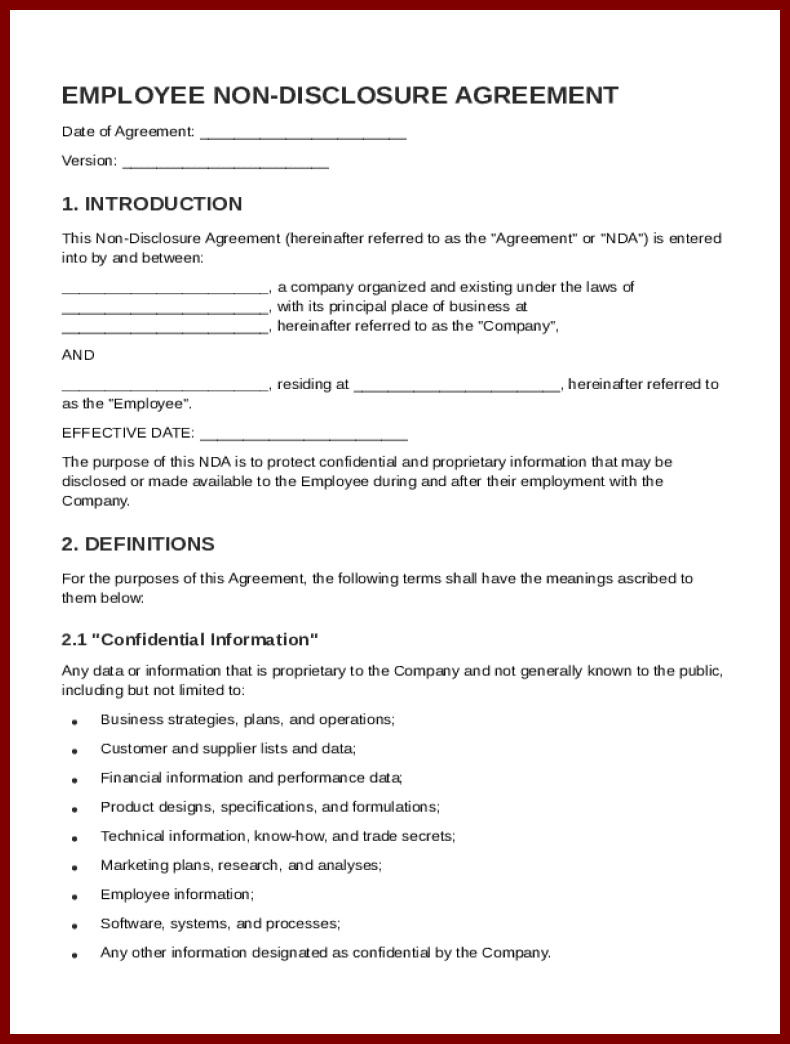
Non-disclosure agreements (NDAs) are essential legal documents that protect a company’s confidential information from being shared or disclosed without authorization. When it comes to employees, NDAs play a crucial role in safeguarding sensitive data and trade secrets. In this comprehensive guide, we will delve into everything you need to know about non-disclosure agreements for employees, including what they are, why they are important, what to include in an NDA, how to enforce it, and tips for successful implementation.
What is a Non-Disclosure Agreement for Employees?
A non-disclosure agreement for employees, also known as a confidentiality agreement, is a legally binding contract between an employer and an employee that outlines the confidential information the employee may have access to during their employment. This agreement prohibits the employee from disclosing or sharing this information with third parties without the company’s consent. NDAs are commonly used in industries where proprietary knowledge and intellectual property are key assets, such as technology, pharmaceuticals, and finance.
Why are Non-Disclosure Agreements Important for Employees?
Non-disclosure agreements are vital for protecting a company’s confidential information and trade secrets from unauthorized disclosure. By having employees sign NDAs, employers can ensure that sensitive data remains secure and that employees understand the importance of maintaining confidentiality. NDAs also serve as a deterrent against employees leaking proprietary information or using it for personal gain, as they are legally bound to keep such information confidential.
What to Include in a Non-Disclosure Agreement for Employees
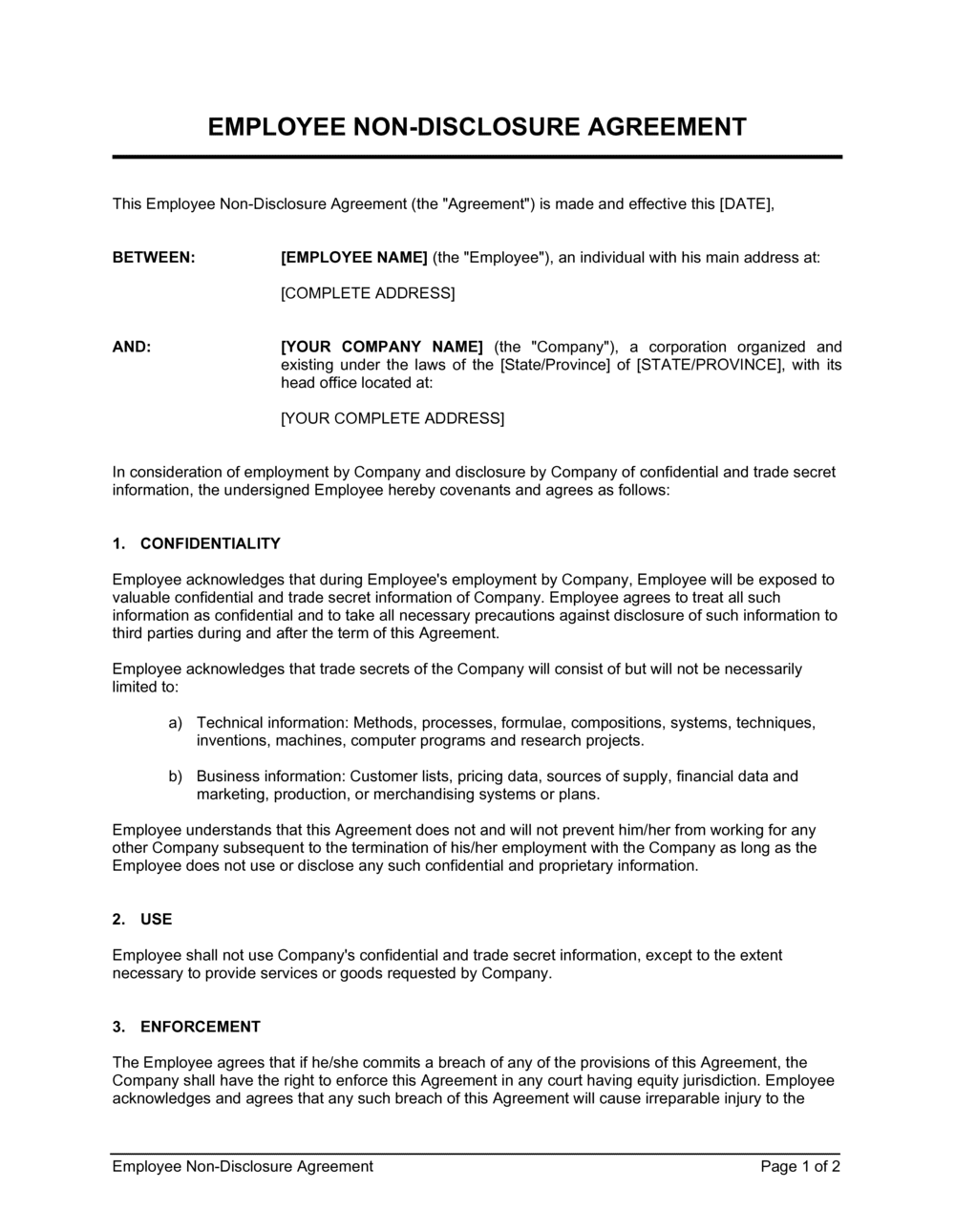
When drafting a non-disclosure agreement for employees, it is essential to include specific clauses and provisions to ensure the agreement is comprehensive and enforceable. Here are some key elements to include in an NDA for employees:
- Definition of Confidential Information. Clearly define what constitutes confidential information, including trade secrets, proprietary data, customer lists, business strategies, and any other sensitive information.
- Obligations of the Employee. Specify the employee’s responsibilities regarding the protection and non-disclosure of confidential information, including the steps they must take to safeguard such information.
- Exceptions to Confidentiality. Outline any exceptions where the employee may be required to disclose confidential information, such as legal obligations or court orders.
- Duration of the Agreement. Specify the duration for which the NDA will remain in effect, including any post-employment obligations the employee may have.
- Remedies for Breach. Detail the consequences of breaching the NDA, including potential legal action, damages, and injunctive relief.
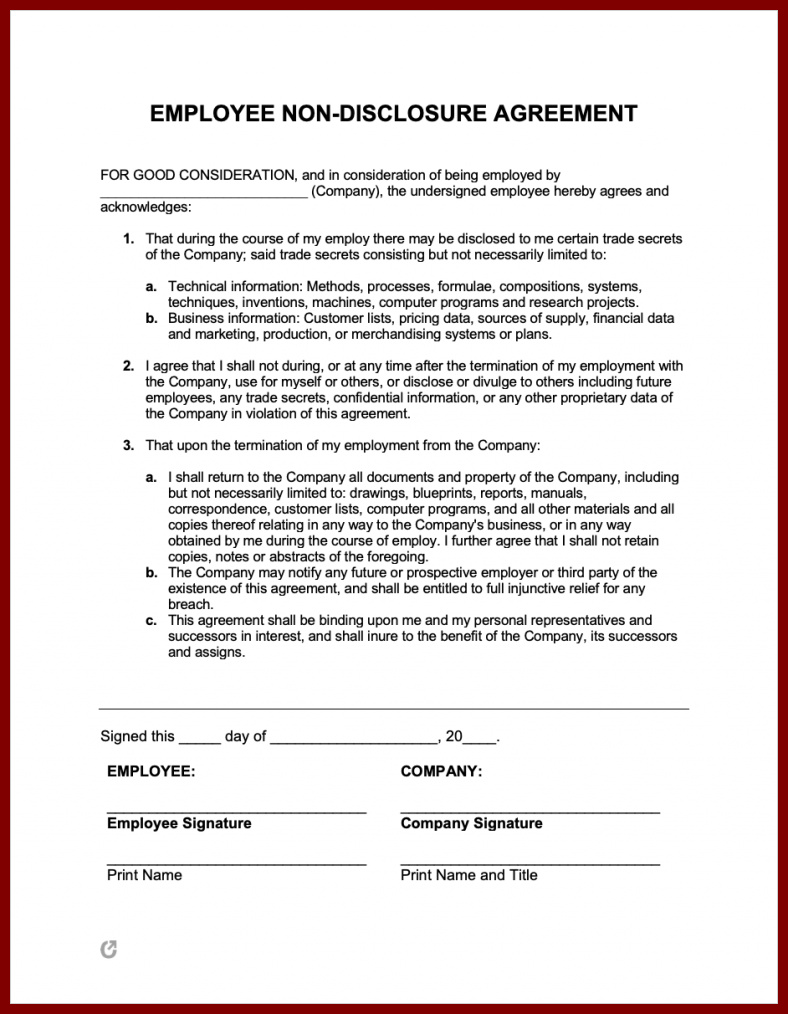
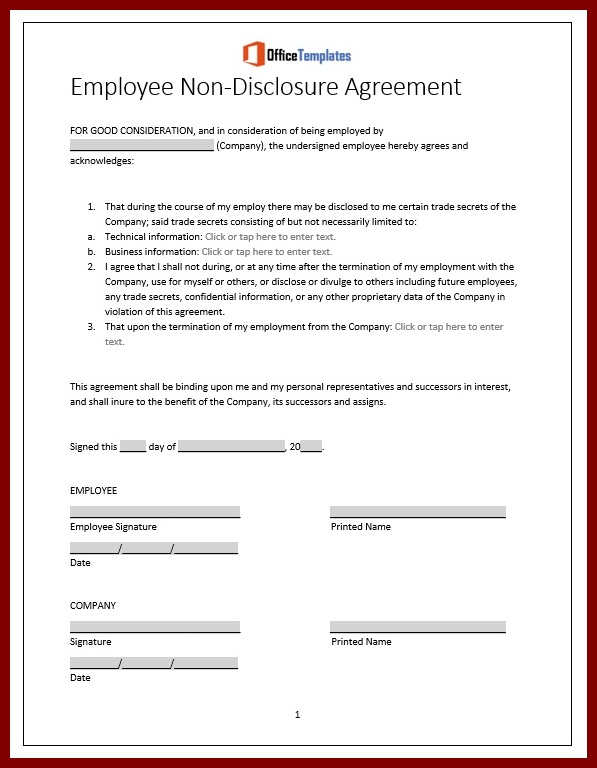
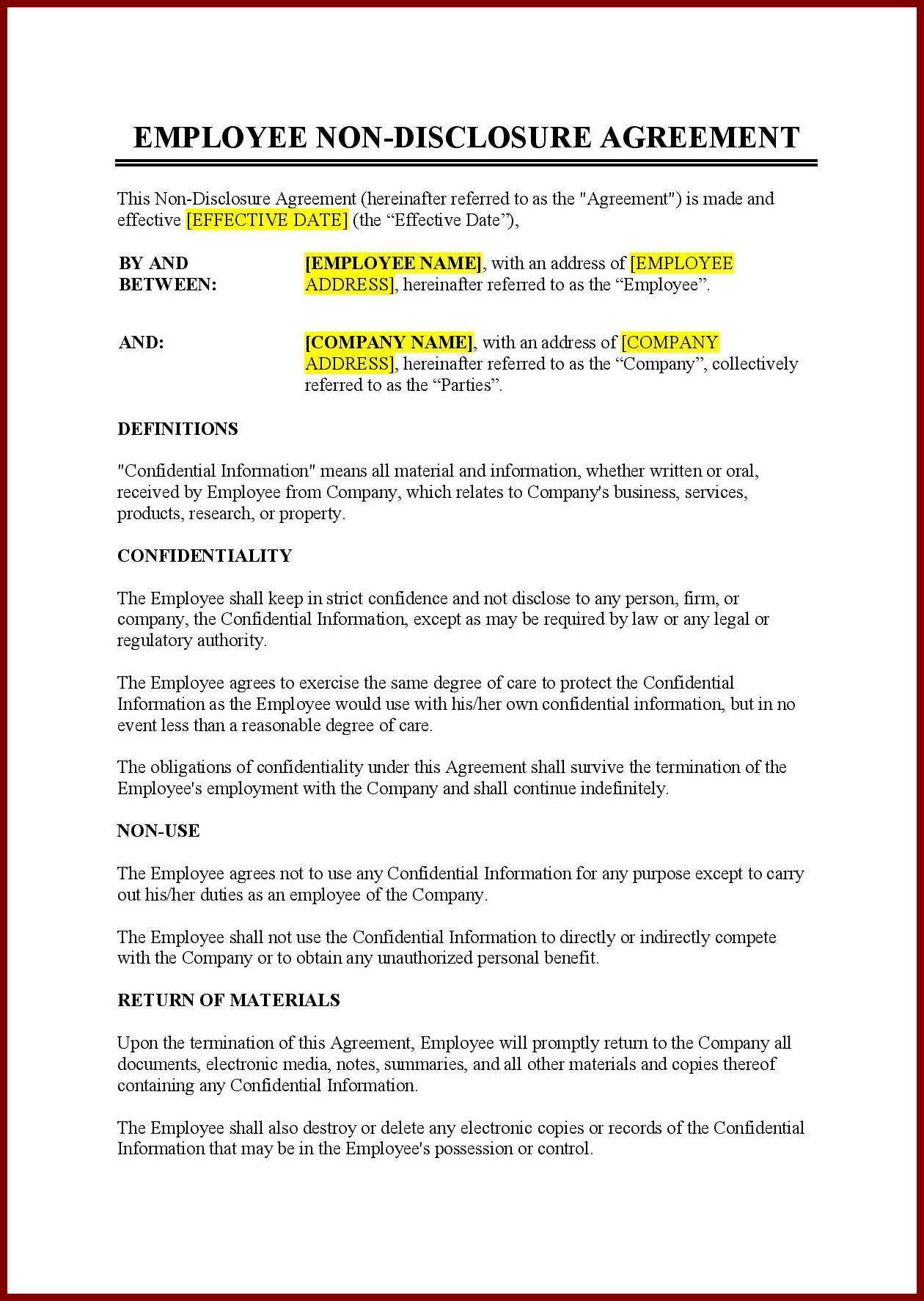
Examples
How to Enforce a Non-Disclosure Agreement for Employees
Enforcing a non-disclosure agreement for employees involves taking legal action against an employee who breaches the terms of the agreement. To enforce an NDA effectively, the following steps should be taken:
- Evidence Collection. Gather evidence of the breach, such as emails, documents, or witness statements, to support your claim.
- Legal Consultation. Seek advice from a legal professional to determine the best course of action and assess the strength of your case.
- Notification of Breach. Notify the employee in writing of the breach and provide them with an opportunity to remedy the situation or face legal consequences.
- Litigation. If necessary, file a lawsuit against the employee for breaching the NDA and seek damages or injunctive relief as appropriate.
Tips for Successful Implementation of Non-Disclosure Agreements
Implementing non-disclosure agreements for employees successfully requires careful planning and execution. Here are some tips to ensure the effectiveness of NDAs in your organization:
- Clear Communication. Clearly communicate the importance of confidentiality to employees and ensure they understand the terms of the NDA.
- Regular Training. Provide regular training on data security and confidentiality best practices to reinforce the importance of safeguarding sensitive information.
- Review and Update. Regularly review and update your NDAs to ensure they are up to date with current laws and regulations.
- Monitor Compliance. Monitor employee compliance with the NDA and address any breaches promptly to prevent further violations.
Conclusion
Non-disclosure agreements for employees are essential tools for protecting a company’s confidential information and trade secrets. By understanding what NDAs are, why they are important, what to include in an NDA, how to enforce it, and tips for successful implementation, employers can safeguard their sensitive data and maintain a competitive edge in today’s business environment. Remember to consult with legal professionals to ensure your NDAs are legally sound and enforceable.
Non-disclosure Agreement Template for Employees
