A painting agreement is a written document that defines the terms between a painting contractor and a client before painting work begins. It explains what services will be provided, which areas will be painted, what materials will be used, how much the project will cost, and when the work is expected to be completed.
Whether you are a professional painting contractor, an independent painter, or a homeowner hiring someone for a residential project, putting the agreement in writing can help both parties understand their responsibilities. A clear painting contract can also reduce misunderstandings about pricing, project scope, materials, timelines, and changes to the original work.
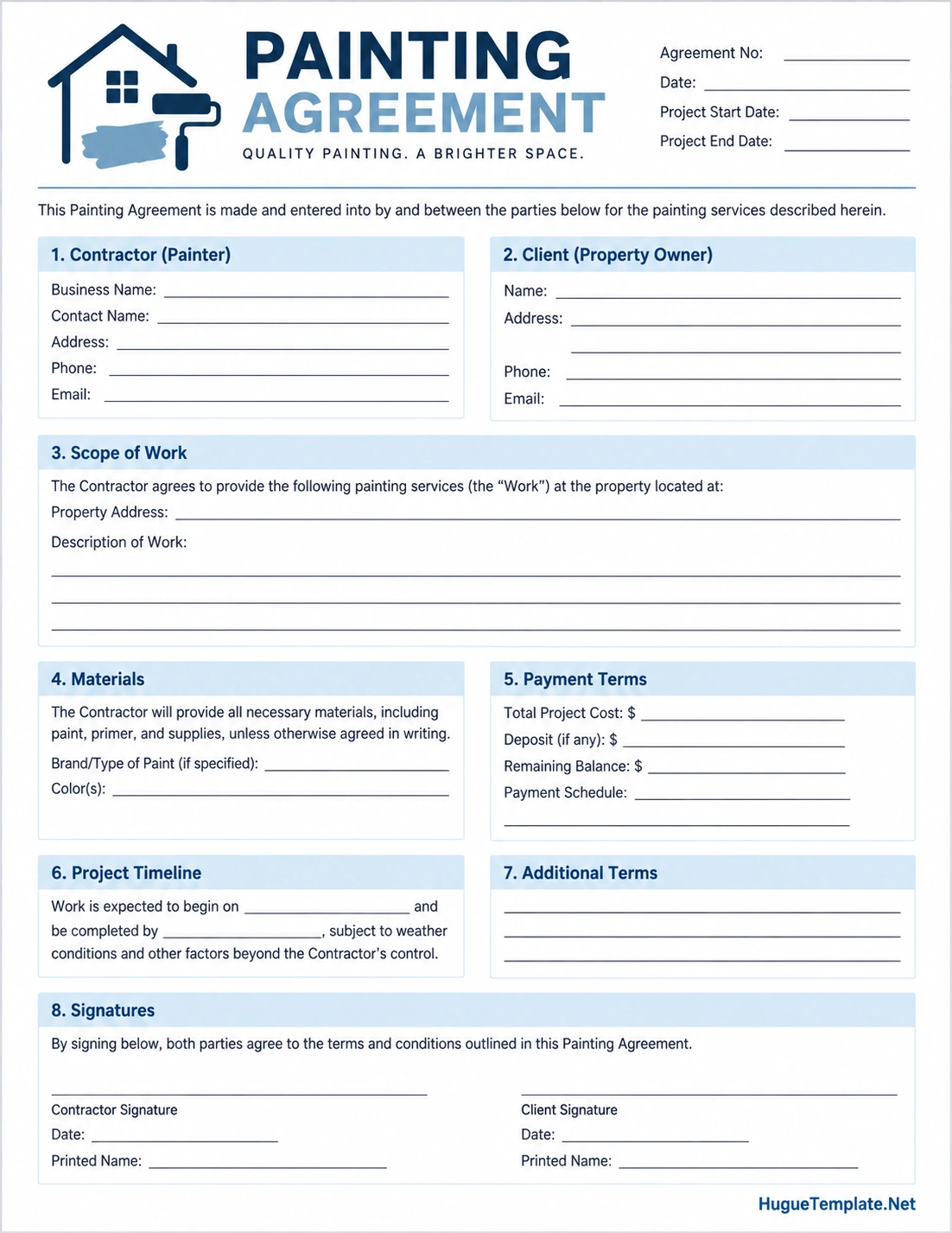
A well-organized painting agreement template makes this process easier by providing a structured format for recording the most important project details. The template can be customized for interior painting, exterior painting, commercial projects, residential homes, or other painting services.
This guide explains what a painting agreement should contain and how to create a clear document that both the contractor and client can review before signing.
What Is a Painting Agreement?
A painting agreement is a written contract between a painting service provider and a client. It establishes the basic terms and conditions under which the contractor will perform painting work.
The agreement can cover a wide range of projects, including painting a single room, repainting an entire house, completing an exterior painting project, or providing painting services for a commercial property.
Although the exact contents vary from one project to another, a typical painting agreement may identify:
- The painting contractor or service provider
- The client or property owner
- The property where the work will take place
- The scope of painting services
- Paint brands, colors, and materials
- Project price and payment terms
- Estimated start and completion dates
- Additional terms and conditions
- Signatures from both parties
The purpose is to create a shared written understanding before work begins.
Why Use a Painting Agreement?
Painting projects can involve many details, and verbal conversations may not provide enough documentation when questions arise later. A written agreement gives both parties a reference point for the project.
Clarifies the Scope of Work
One of the most useful purposes of a painting contract is defining exactly what the contractor has agreed to do. The agreement can identify the rooms, walls, ceilings, doors, trim, exterior surfaces, or other areas included in the project.
Clear descriptions can help prevent assumptions about work that was never included in the original price.
Documents the Agreed Price
A painting agreement can document the total project cost and explain how payments will be handled. This may include a deposit, progress payments, and the remaining balance.
Recording these details in writing gives the client and contractor a common reference when discussing payment.
Defines Responsibilities
The agreement can explain which responsibilities belong to the contractor and which belong to the client. For example, the contractor may be responsible for preparing surfaces and providing painting materials, while the client may need to remove fragile items or provide access to the property.
Creates a Project Record
A signed painting agreement provides documentation of the original arrangement. Keeping a copy with estimates, invoices, receipts, and change orders can make project administration more organized.
What Should Be Included in a Painting Agreement?
A professional painting agreement should contain enough information to describe the project without making the document unnecessarily complicated.
Contractor Information
Begin by identifying the painting contractor or company. Include the business name and relevant contact information.
- Business name
- Contractor or contact person’s name
- Business address
- Phone number
- Email address
- License or registration information when applicable
Providing complete contact information makes it easy for the client to communicate with the contractor throughout the project.
Client Information
The agreement should also identify the client or property owner. For a residential project, this may simply be the homeowner’s name and contact details. For a commercial project, it may include the company name and authorized representative.
Property Information
Include the address of the property where the painting work will be performed. If the project involves only a specific portion of a larger property, describe the relevant area as well.
Scope of Painting Work
The scope of work is one of the most important parts of a painting agreement. It should describe what the contractor is expected to complete.
Depending on the project, the description may include:
- Interior walls
- Ceilings
- Doors and door frames
- Window trim
- Baseboards and other trim
- Exterior walls
- Siding
- Fences and other exterior structures
- Surface preparation
- Primer application
- Number of paint coats
Specific descriptions are generally more useful than a broad statement such as “paint the house.”
Materials and Paint Specifications
A painting agreement can also specify the materials that will be used for the project. This section is particularly helpful when the client has requested a specific paint brand, finish, or color.
Depending on the project, document details such as the paint brand, paint type, color name or color code, finish, primer, caulk, sealant, and other preparation materials.
The agreement should also make clear whether the contractor or client is responsible for purchasing the materials.
Painting Project Cost and Payment Terms
The financial section explains how much the project will cost and how the client will pay. A painting agreement may use a fixed project price, an hourly rate, or another pricing arrangement agreed upon by the parties.
Total Project Cost
Clearly state the agreed project price. If the price is an estimate rather than a fixed amount, identify it appropriately and explain what factors could affect the final cost.
Deposit
If a deposit is required, state the amount or percentage and when it is due. Any applicable requirements concerning deposits should comply with the laws and regulations governing the project.
Payment Schedule
For larger painting projects, payments may be divided into multiple stages. The agreement can specify when each payment is due and what project milestone it corresponds to.
Additional Charges
If additional work may result in additional charges, explain how those charges will be handled. It is useful to establish a process for approving work that falls outside the original scope.
Project Timeline and Completion Date
A painting agreement should identify the expected start date and estimated completion date when those dates are known.
However, painting schedules can sometimes be affected by weather, material availability, property access, surface conditions, or other circumstances. The agreement can explain how schedule changes will be handled.
For exterior painting, weather conditions may be particularly relevant. A project may need to be delayed when conditions are unsuitable for proper paint application or safe working conditions.
Surface Preparation and Additional Work
Surface preparation can significantly affect the scope and cost of a painting project. The agreement should clarify what preparation is included in the quoted price.
Possible preparation work may include cleaning surfaces, scraping loose paint, sanding, patching small holes, caulking gaps, repairing minor imperfections, and applying primer.
If major repairs are discovered after work begins, the agreement can establish that those repairs require separate approval and pricing before they are performed.
Change Orders in a Painting Agreement
Clients sometimes decide to add rooms, change colors, request additional coats, or add surfaces after a project has started. A painting agreement can include a process for handling these changes.
A change order can document:
- The requested change
- Additional or reduced work
- Changes to the project price
- Changes to the completion date
- Approval from the client
Documenting changes before the additional work is performed can help keep the original agreement and the revised project scope clearly separated.
Using a Painting Agreement Template
A painting agreement template can provide a convenient starting point for creating a project-specific contract. Instead of designing the document from the beginning for every job, a contractor can use a reusable structure and fill in the details for each client.
A useful template should leave enough space for the contractor and client information, property address, scope of work, materials, project cost, payment schedule, timeline, additional terms, and signatures.
Templates should be customized to match the actual project. A simple residential room-painting job may require fewer details than a large commercial painting project with multiple locations and extensive preparation work.
Tips for Creating a Clear Painting Contract
Be Specific About What Is Included
Avoid vague descriptions. Instead of simply writing “interior painting,” identify the rooms or surfaces that are included and specify any important preparation or coating requirements.
Confirm Paint Colors Before Work Begins
Record the selected colors and finishes whenever possible. This can reduce confusion when several colors are being used in the same project.
Separate Included and Optional Services
If services such as extensive drywall repair, wood repair, wallpaper removal, or additional surface preparation are not included in the base price, make that distinction clear.
Put Changes in Writing
If the scope, price, materials, or timeline changes, update the project documentation rather than relying only on verbal conversations.
Have Both Parties Review the Agreement
Before signing, both the contractor and client should review the document carefully. Each party should understand the project scope, pricing, payment requirements, schedule, and other applicable terms.
Painting Agreement vs. Painting Estimate
A painting estimate and a painting agreement serve different purposes. An estimate generally provides an expected price and description of proposed work before the client decides whether to proceed.
A painting agreement is a more detailed document that establishes the terms under which the work will be performed after the parties decide to move forward.
A contractor may therefore use an estimate during the sales process and then use a signed painting agreement to document the final arrangement.
Keep Signed Painting Agreements Organized
After both parties sign the agreement, keep a copy in your business records. Digital copies can be organized by customer name, project address, invoice number, or project date.
It can also be helpful to keep related documents together, including estimates, invoices, receipts, approved change orders, and project correspondence.
Good recordkeeping makes it easier to review what was originally agreed upon and can simplify administration when a project involves multiple stages or payments.
Final Thoughts on Painting Agreements
A painting agreement provides a clear written framework for a painting project. By documenting the contractor and client information, property details, scope of work, materials, price, payment schedule, timeline, and other important terms, the document helps establish clear expectations before work begins.
A reusable painting agreement template can make the process faster and more consistent, especially for contractors who manage multiple projects. However, every agreement should be reviewed and customized to reflect the actual services and terms of the specific project.
For important or complex projects, consider having the agreement reviewed by an appropriate legal or professional advisor to ensure that it complies with applicable local requirements. A clear agreement is not only a useful business document but also an important part of maintaining organized and professional project records.
Download: Painting Agreement Template
