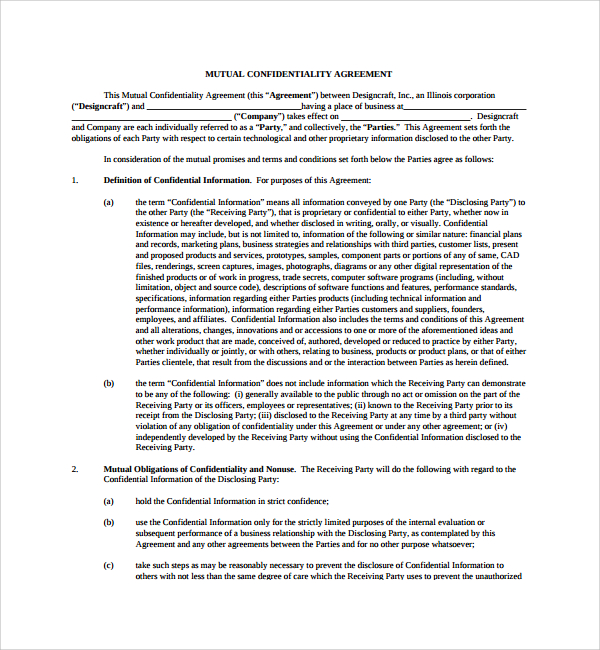
When two parties are considering sharing sensitive information with each other, a mutual confidentiality agreement becomes an essential document to protect the confidentiality of the information exchanged. This legal agreement, also known as a mutual non-disclosure agreement (NDA), ensures that both parties agree to keep each other’s information confidential and not disclose it to third parties.
In this article, we will delve into the details of mutual confidentiality agreements, why they are important, what to include in them, how to create one, and tips for successful implementation.
What is a Mutual Confidentiality Agreement?
A mutual confidentiality agreement is a legally binding contract between two parties that outlines the terms and conditions under which confidential information will be shared and protected. This agreement is commonly used in business transactions, partnerships, collaborations, and any other situation where sensitive information needs to be shared between parties. By signing the agreement, both parties agree to keep the shared information confidential and not disclose it to anyone else without prior consent.
Why are Mutual Confidentiality Agreements Important?
Mutual confidentiality agreements are vital for protecting sensitive information and trade secrets from being disclosed to unauthorized parties. These agreements help establish trust between the parties involved and provide a legal recourse in case of a breach of confidentiality. By clearly outlining the terms of confidentiality, both parties can feel secure in sharing valuable information without the fear of it being misused or disclosed without permission.
What to Include in a Mutual Confidentiality Agreement
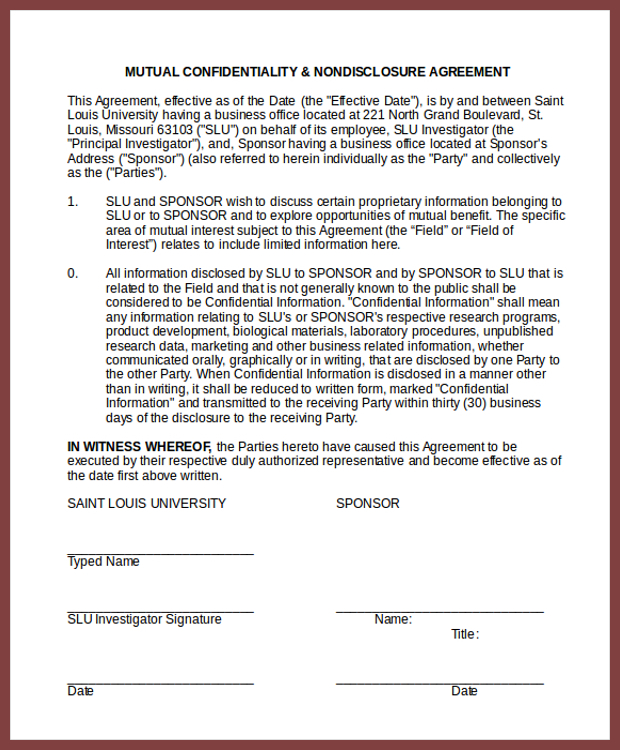
When drafting a mutual confidentiality agreement, there are several key elements that should be included to ensure its effectiveness and enforceability. These may vary depending on the nature of the information being shared and the specific requirements of the parties involved, but some common provisions to consider are:
- Definition of confidential information. Clearly define what constitutes confidential information and what is excluded from the agreement.
- Obligations of the parties. Specify the responsibilities of each party regarding the protection and use of the confidential information.
- Duration of confidentiality. Determine the period during which the information will be considered confidential and protected under the agreement.
- Exceptions to confidentiality. Outline any circumstances under which the information can be disclosed without breaching the agreement.
- Remedies for breach. Specify the actions that will be taken in case of a breach of confidentiality, such as legal recourse or monetary damages.
- Governing law. Determine the jurisdiction and laws that will govern the agreement in case of any disputes.
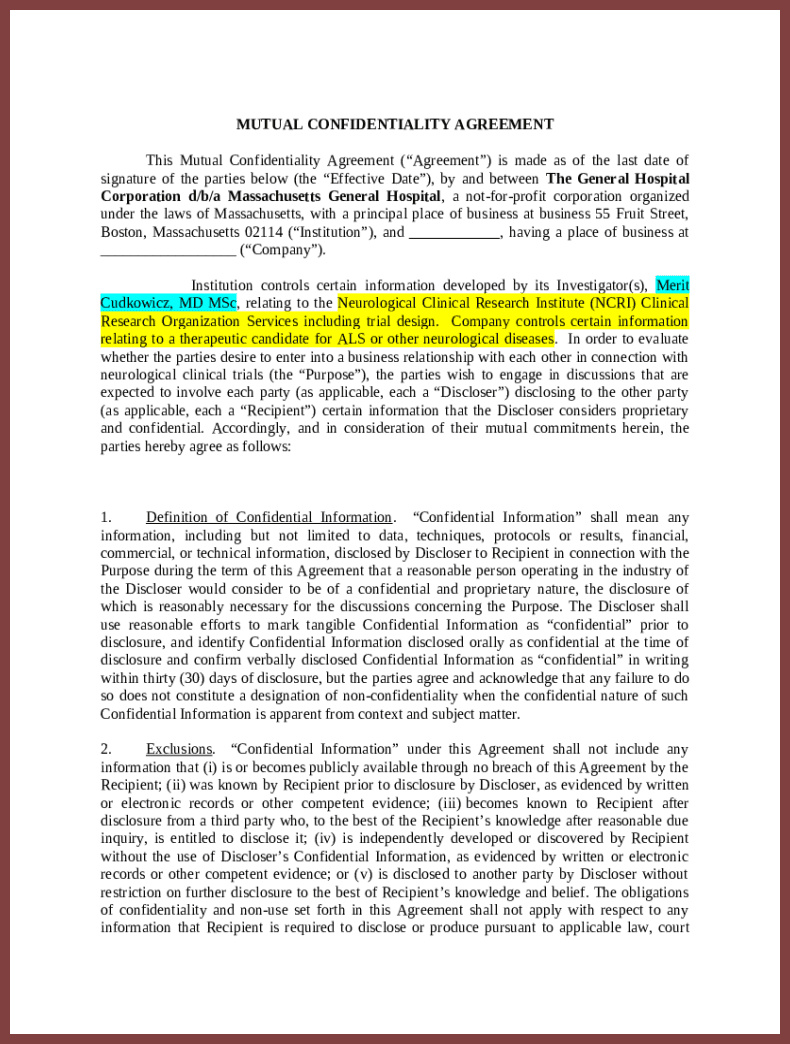
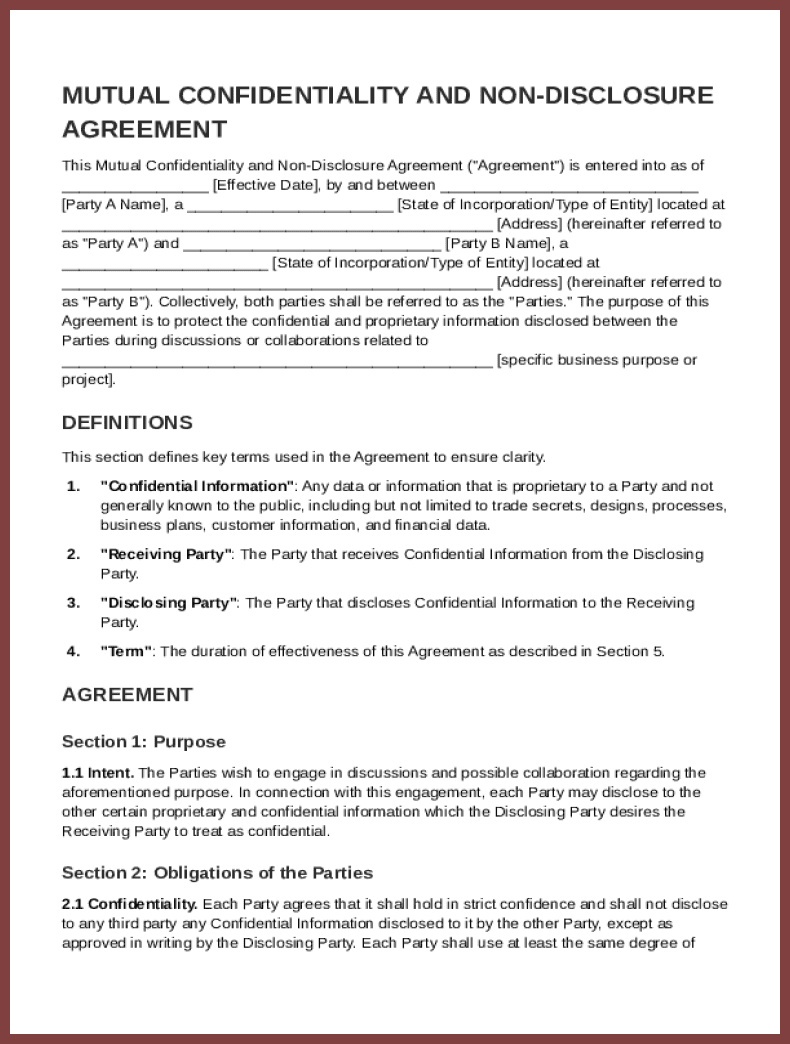
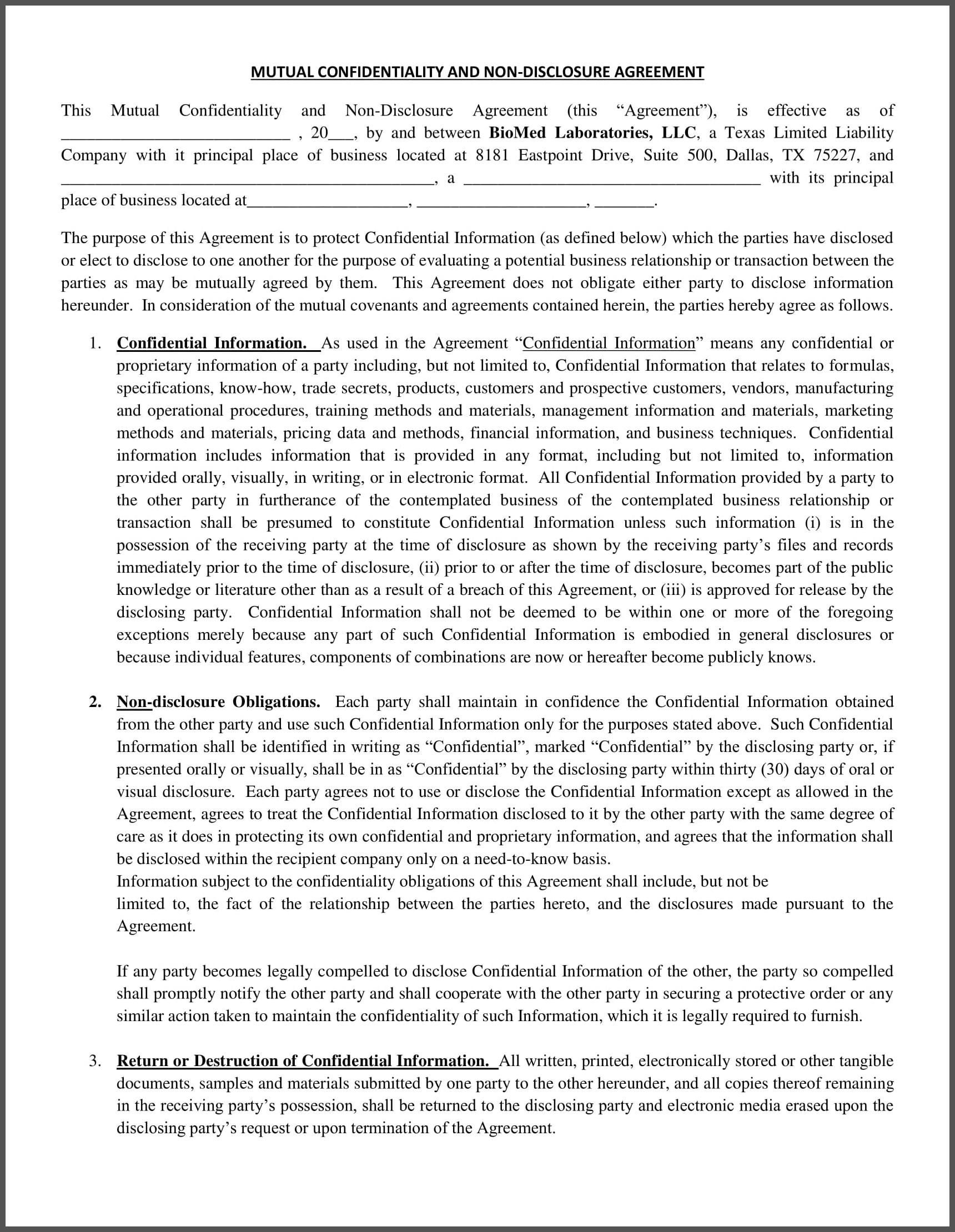
Examples
How to Create a Mutual Confidentiality Agreement
Creating a mutual confidentiality agreement involves several steps to ensure that all necessary details are included and both parties are protected. Here is a general guide on how to create a mutual confidentiality agreement:
- Identify the parties involved. Clearly state the names and addresses of the parties entering into the agreement.
- Define the confidential information. Clearly outline what information will be considered confidential and protected under the agreement.
- Specify the purpose of sharing the information. Explain why the information is being shared and how it will be used by the receiving party.
- Include the obligations of each party. Detail the responsibilities of both parties regarding the protection and use of the confidential information.
- Specify the duration of confidentiality. Determine how long the information will be considered confidential and protected under the agreement.
- Include any exceptions to confidentiality. Outline any circumstances under which the information can be disclosed without breaching the agreement.
- Include remedies for breach. Specify the actions that will be taken in case of a breach of confidentiality, such as legal recourse or monetary damages.
- Include governing law and jurisdiction. Determine the laws and jurisdiction that will govern the agreement in case of any disputes.
Tips for Successful Implementation of Mutual Confidentiality Agreements
While mutual confidentiality agreements are essential for protecting sensitive information, there are some tips to ensure their successful implementation and enforcement:
- Be clear and specific. Clearly define what information is considered confidential and how it should be protected.
- Review the agreement carefully. Make sure both parties understand and agree to the terms outlined in the agreement before signing.
- Keep the agreement up to date. Regularly review and update the agreement to reflect any changes in the information being shared or the parties involved.
- Train employees on confidentiality. Ensure that all employees who have access to confidential information are aware of their obligations and responsibilities under the agreement.
- Seek legal advice if needed. If you are unsure about any aspect of the agreement or need assistance in drafting it, consult with legal professionals to ensure its legality and enforceability.
Conclusion
In conclusion, mutual confidentiality agreements play a crucial role in protecting sensitive information and trade secrets from unauthorized disclosure. By clearly outlining the terms of confidentiality, both parties can share valuable information with confidence and trust.
By including key provisions, such as defining confidential information, specifying obligations, and outlining remedies for breach, mutual confidentiality agreements can help establish a strong foundation for collaboration and partnership.
By following the tips for successful implementation, parties can ensure that their confidential information is protected and secure.
Overall, mutual confidentiality agreements are essential tools for safeguarding sensitive information and fostering trust between parties.
Mutual Confidentiality Agreement Template
