Independent contractor agreements are essential documents that outline the terms and conditions of a working relationship between a company and an independent contractor. These agreements help establish a clear understanding of the rights and responsibilities of both parties, ensuring a smooth and productive working relationship.
In this comprehensive guide, we will delve into the what, why, what to include, how to, and tips for creating a solid independent contractor agreement.
What is an Independent Contractor Agreement?
An independent contractor agreement is a legal document that defines the terms of engagement between a company and an independent contractor. It outlines the scope of work, payment terms, project timelines, confidentiality clauses, and other essential details related to the project or service being provided. This document helps clarify the relationship between the two parties and protects both parties’ interests.
Why are Independent Contractor Agreements Important?
Independent contractor agreements are crucial for several reasons. Firstly, they help define the project scope and deliverables, which reduces the risk of misunderstandings or disputes down the line. Secondly, these agreements help establish the independent contractor’s status, ensuring compliance with labor laws and regulations. Lastly, having a written agreement in place can provide legal protection in case of disagreements or breach of contract.
What to Include in an Independent Contractor Agreement
When creating an independent contractor agreement, it is essential to include the following key elements:
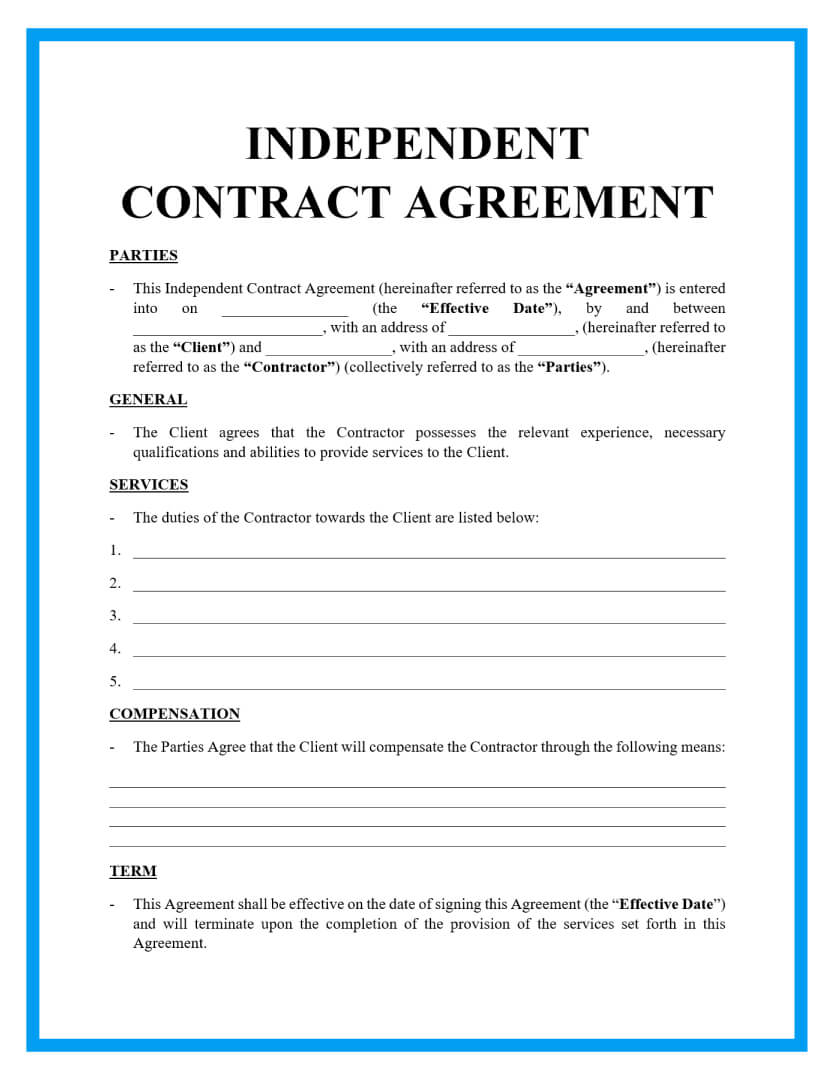
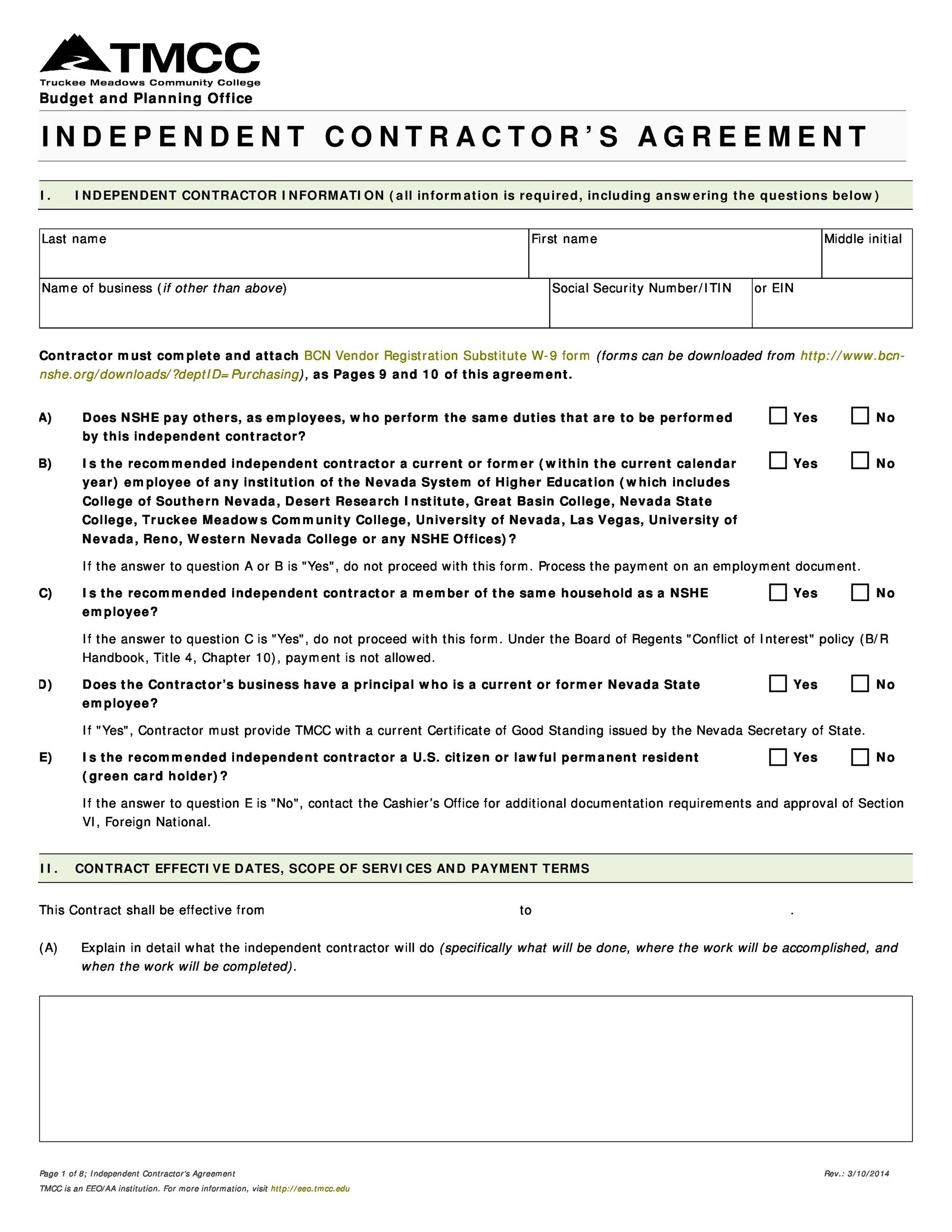
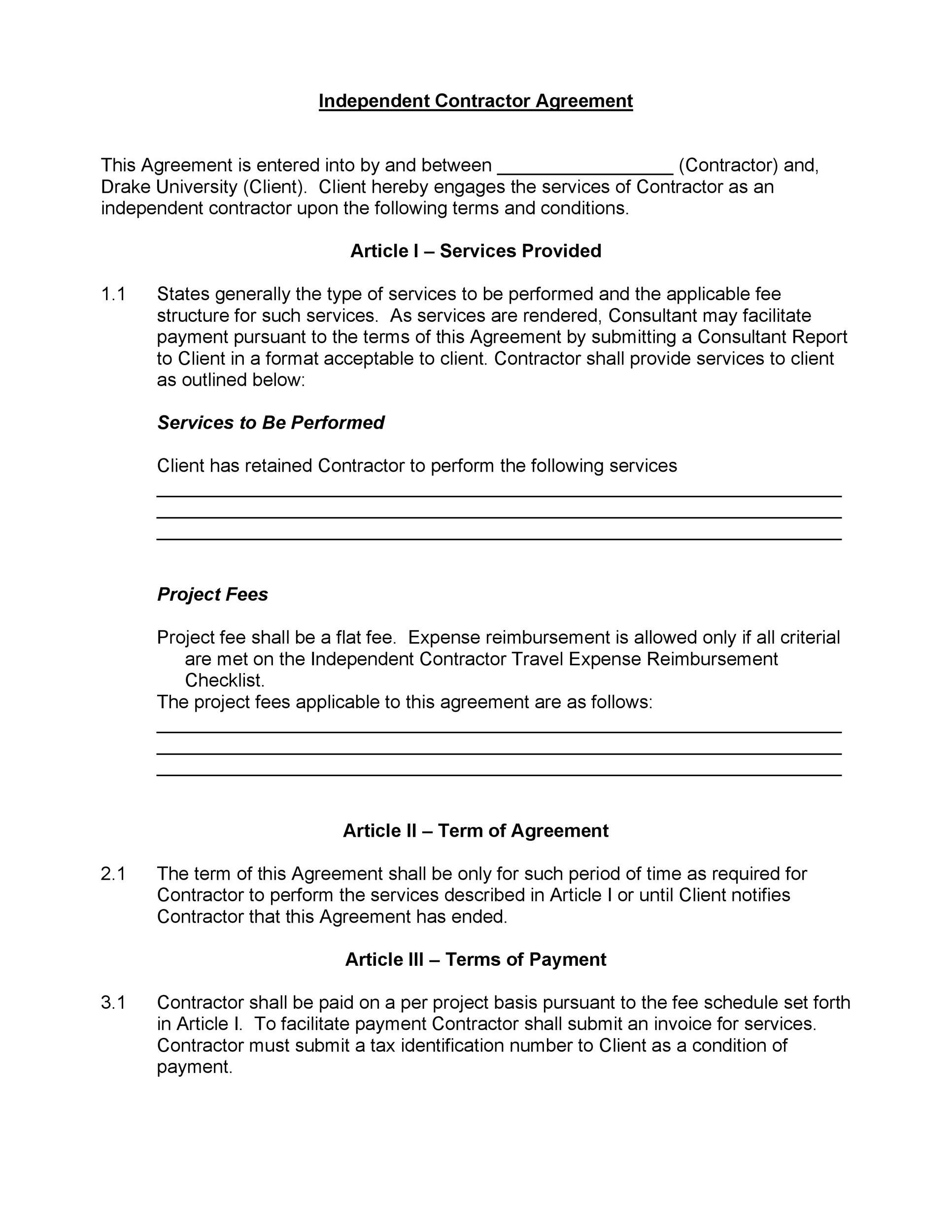
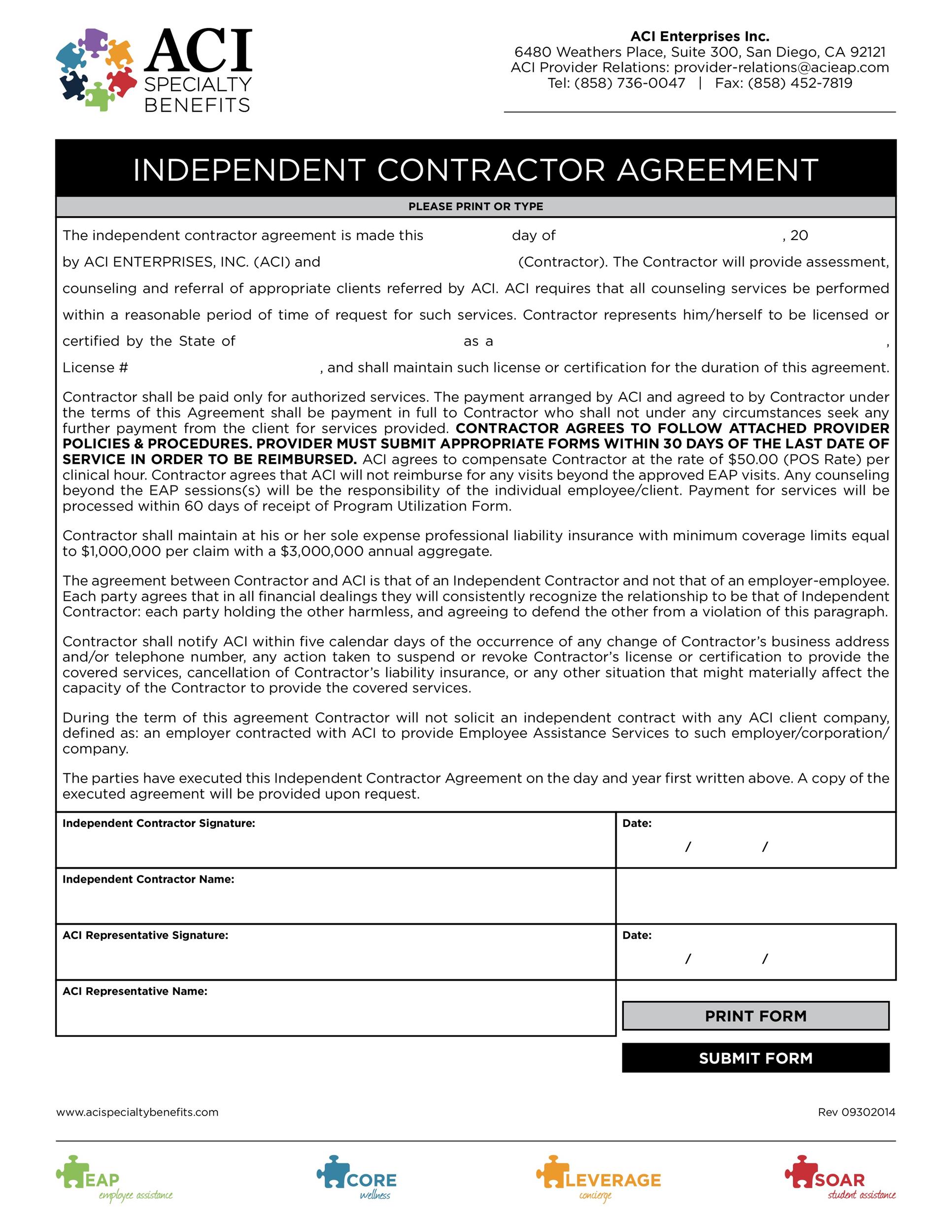
- Scope of Work: Clearly define the project or service that the independent contractor will be providing.
- Payment Terms: Outline the payment structure, including rates, invoicing procedures, and payment schedule.
- Project Timelines: Specify the project deadlines and milestones to ensure timely completion.
- Confidentiality Clause: Include a confidentiality agreement to protect sensitive information shared during the project.
- Intellectual Property Rights: Address ownership rights of any intellectual property created during the project.
- Termination Clause: Define the conditions under which either party can terminate the agreement.
- Dispute Resolution: Include a process for resolving disputes or disagreements that may arise during the project.
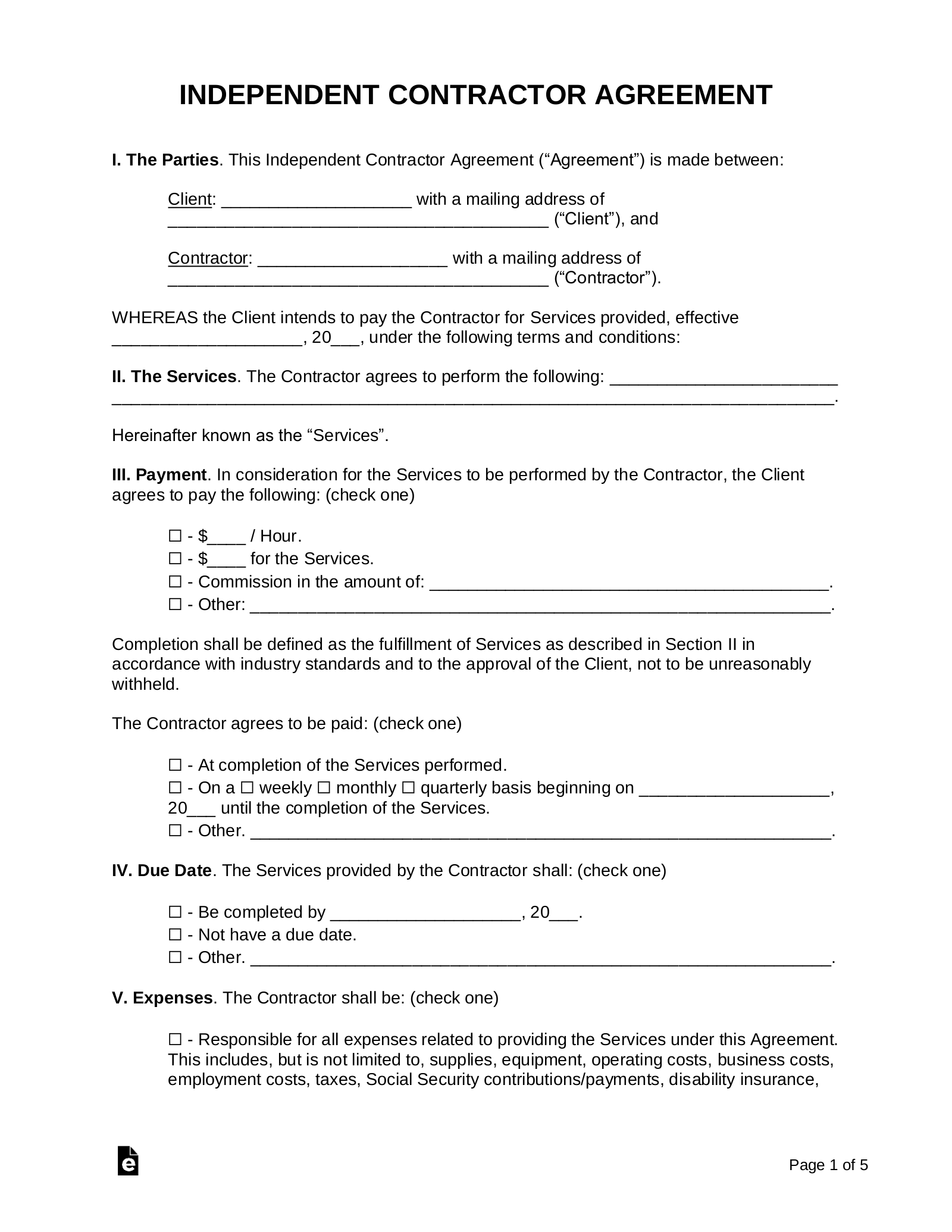
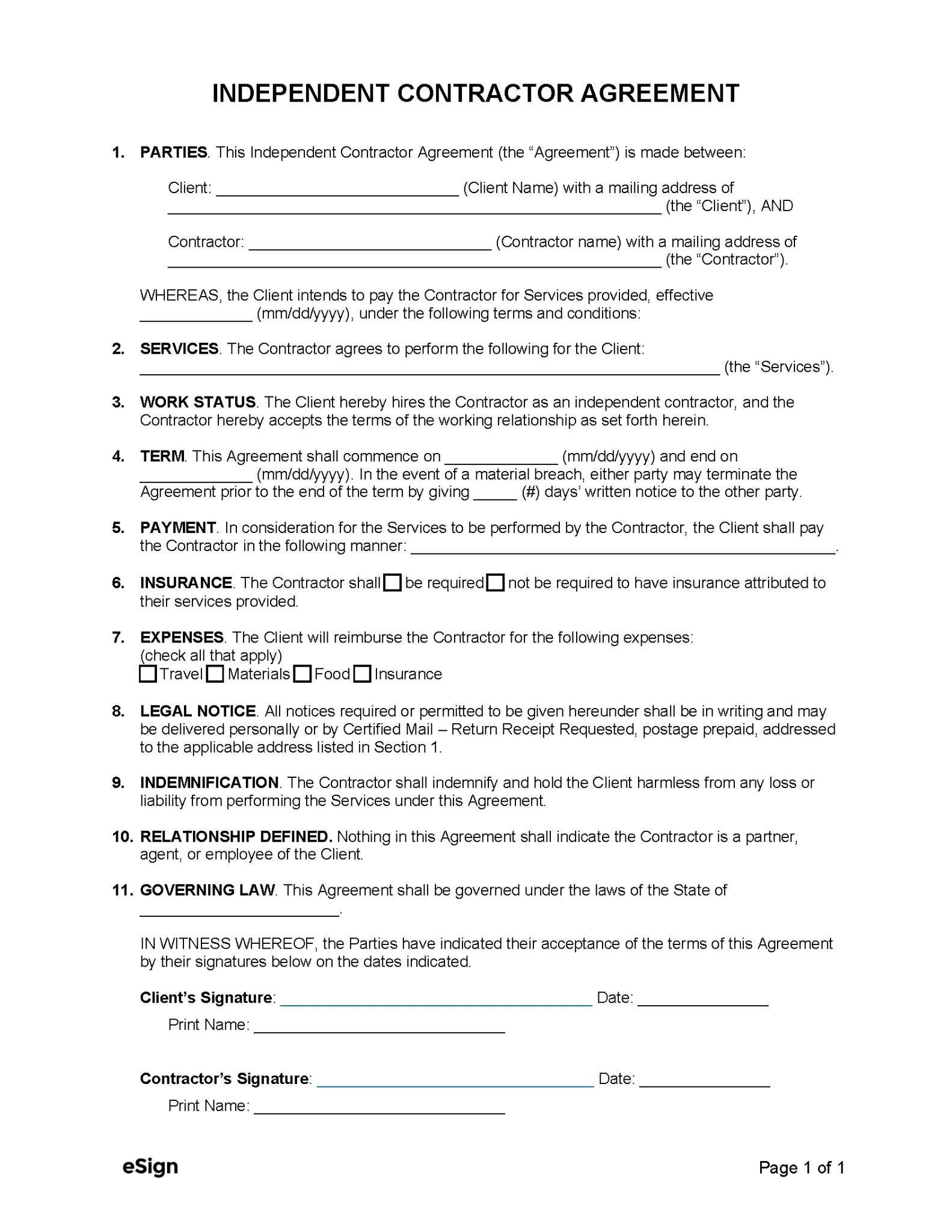
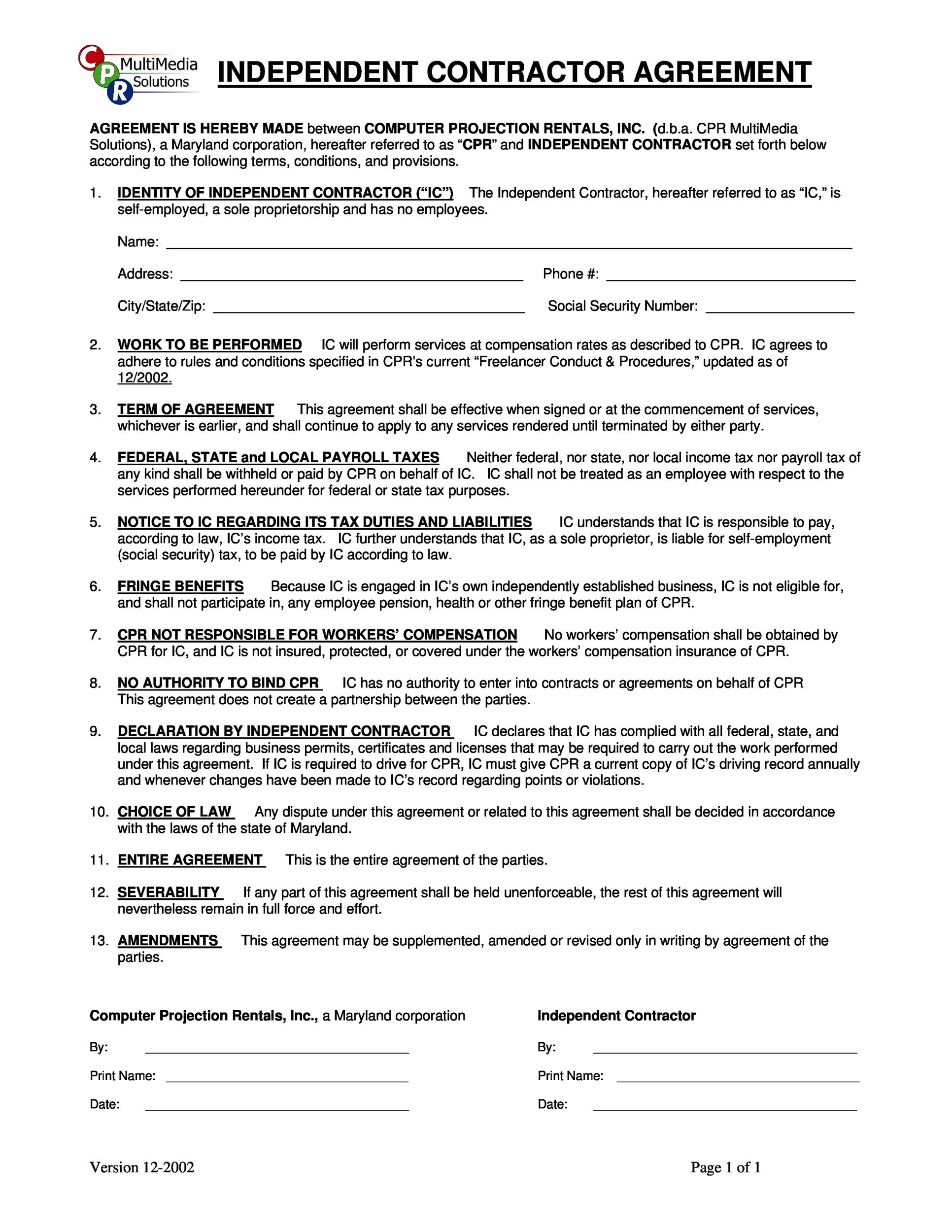
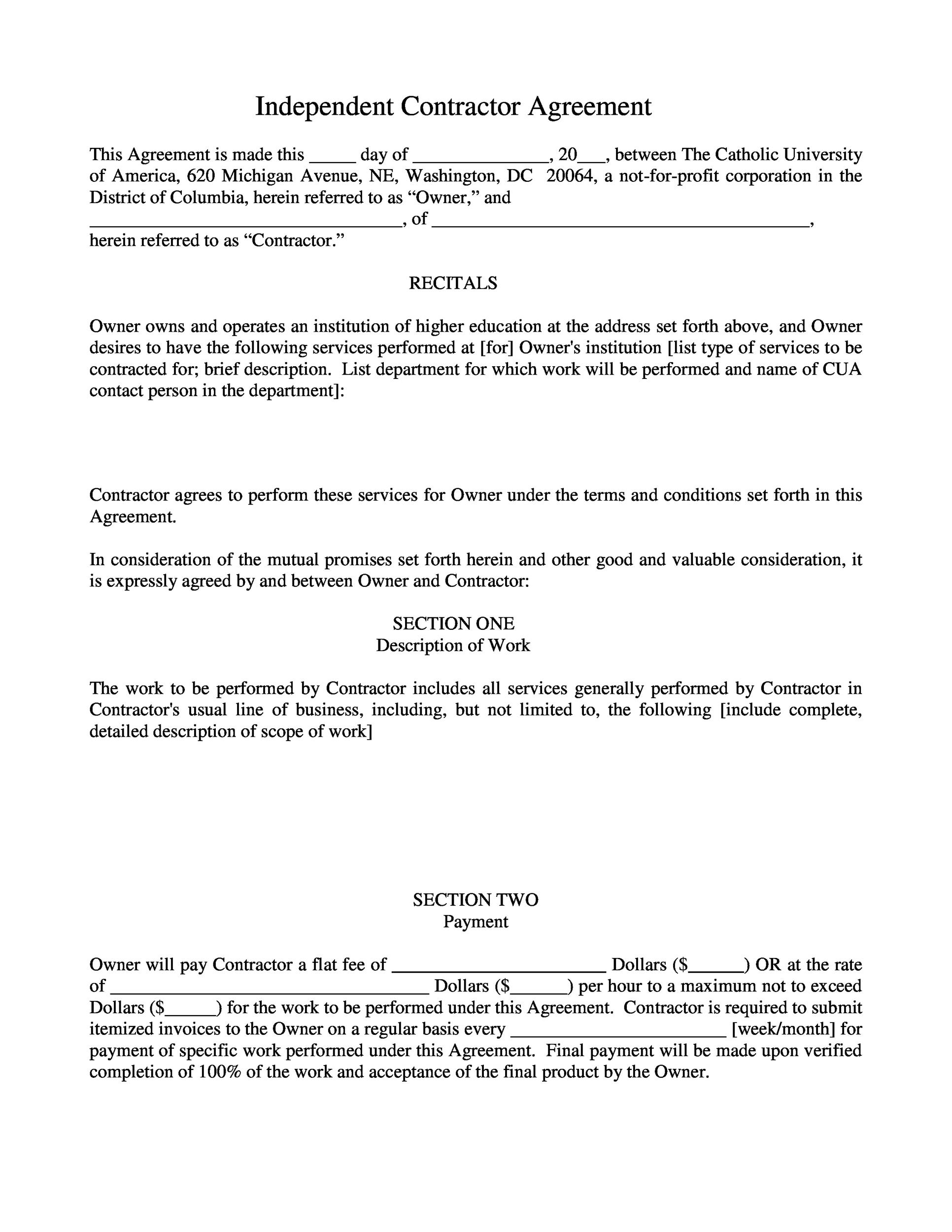
Examples
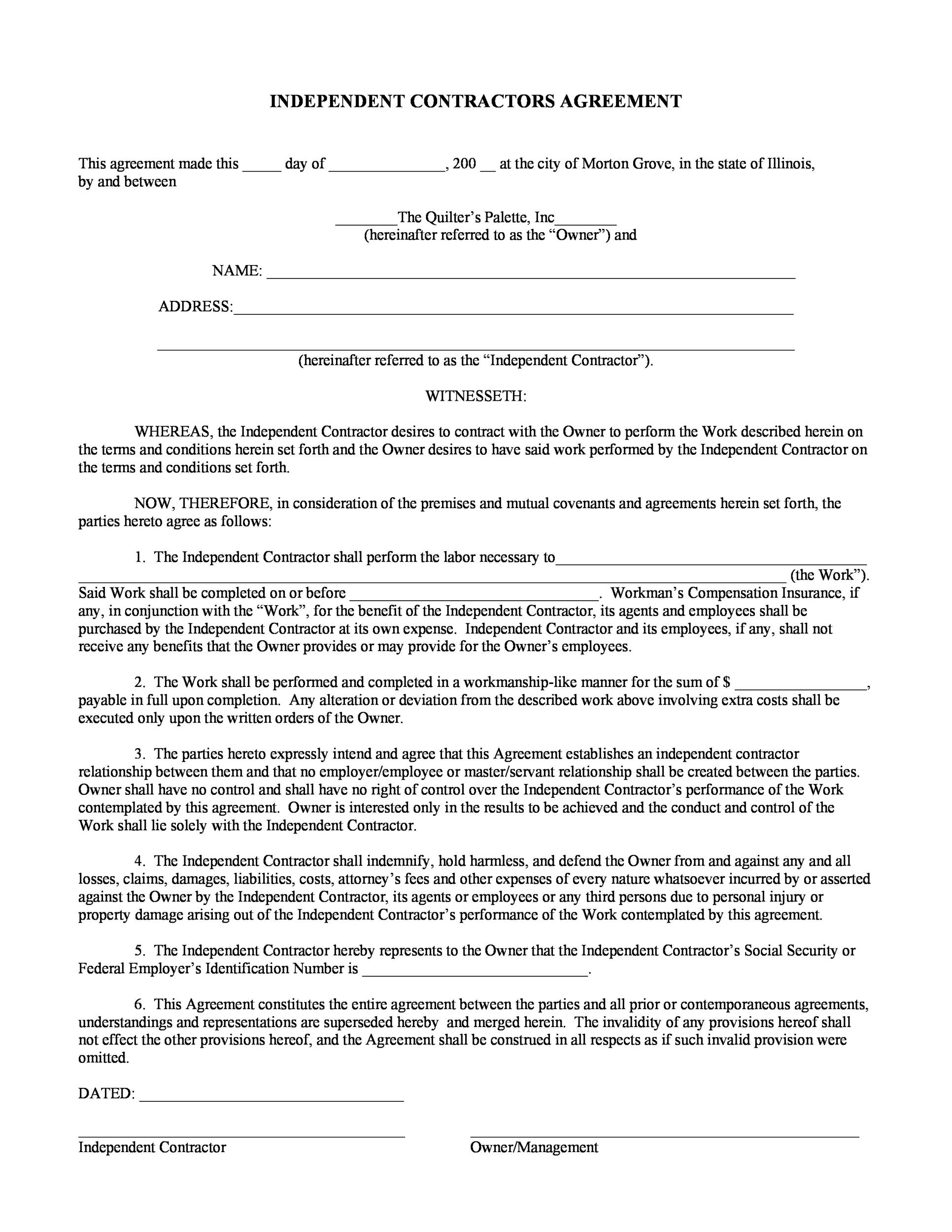
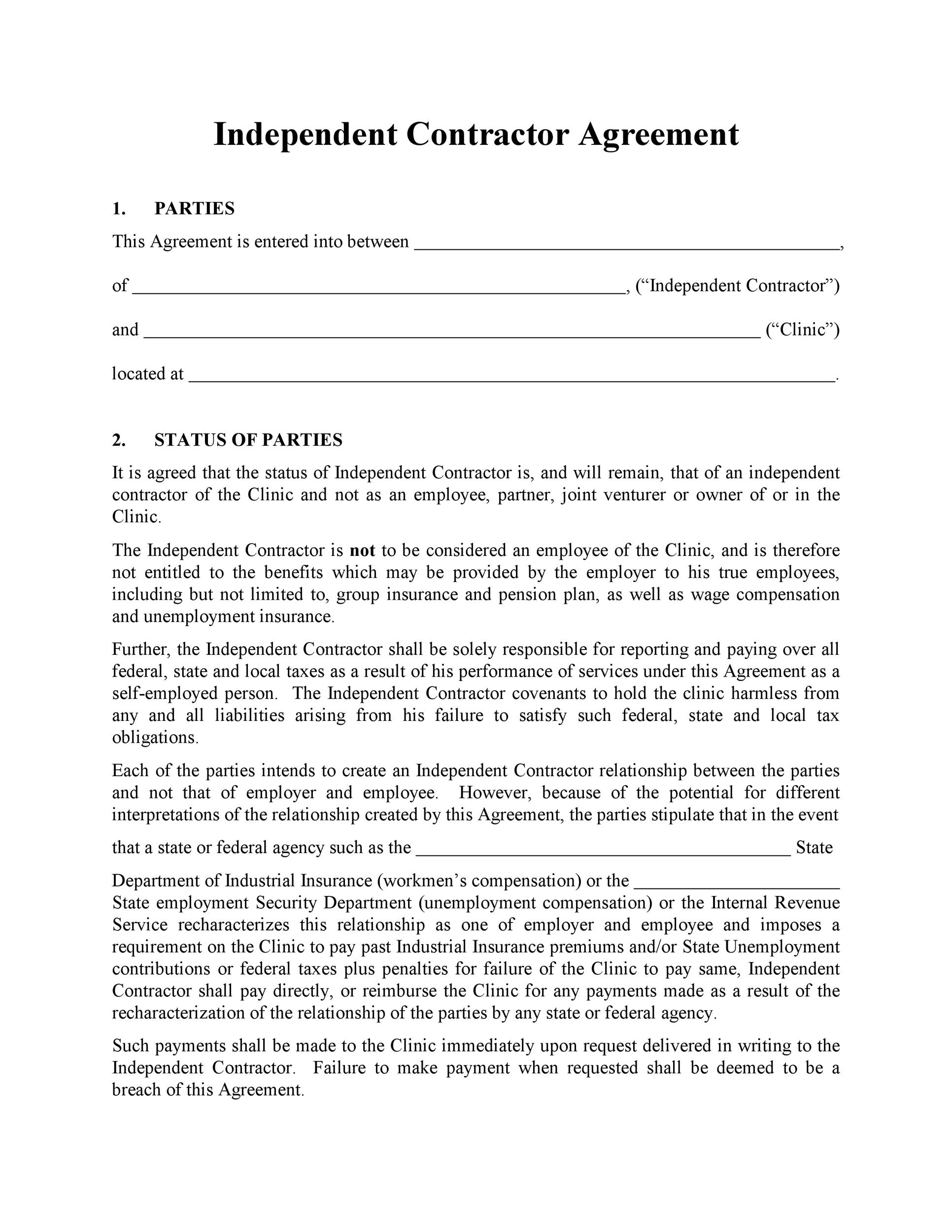
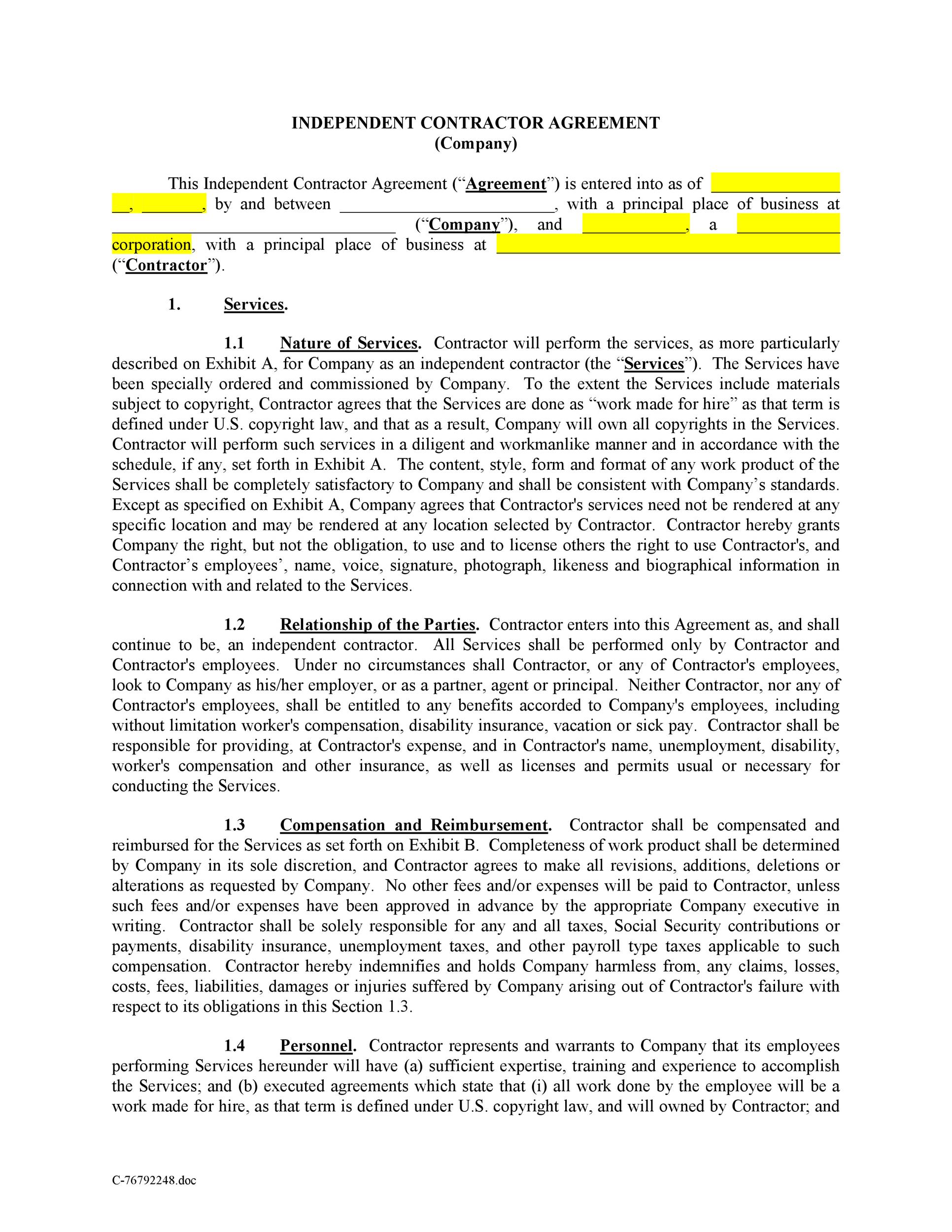
How to Create an Effective Independent Contractor Agreement
When drafting an independent contractor agreement, follow these steps to ensure it is comprehensive and legally sound:
- Understand the Project Requirements: Clearly define the scope of work and project deliverables before drafting the agreement.
- Consult Legal Counsel: Seek legal advice to ensure the agreement complies with labor laws and regulations.
- Be Specific: Use clear and precise language to avoid ambiguity and misunderstandings.
- Include All Relevant Details: Cover all aspects of the project, payment terms, timelines, and other essential information.
- Review and Revise: Thoroughly review the agreement before finalizing it, and make any necessary revisions to ensure accuracy.
Tips for Creating a Strong Independent Contractor Agreement
Here are some additional tips to help you create a robust independent contractor agreement:
- Define Expectations Clearly: Make sure both parties have a clear understanding of the project requirements and expectations.
- Protect Confidential Information: Include a robust confidentiality clause to safeguard sensitive data shared during the project.
- Specify Payment Terms: Clearly outline the payment structure, including rates, invoicing procedures, and payment deadlines.
- Include Termination Conditions: Define the circumstances under which either party can terminate the agreement to avoid misunderstandings.
- Get Signatures: Ensure both parties sign the agreement to make it legally binding and enforceable.
Conclusion
Creating a comprehensive independent contractor agreement is essential for establishing a clear and productive working relationship between a company and an independent contractor. By including key elements such as scope of work, payment terms, confidentiality clauses, and dispute resolution procedures, you can protect both parties’ interests and ensure a successful project outcome. Follow the tips and guidelines outlined in this guide to create a strong and effective independent contractor agreement that sets the foundation for a successful collaboration.
