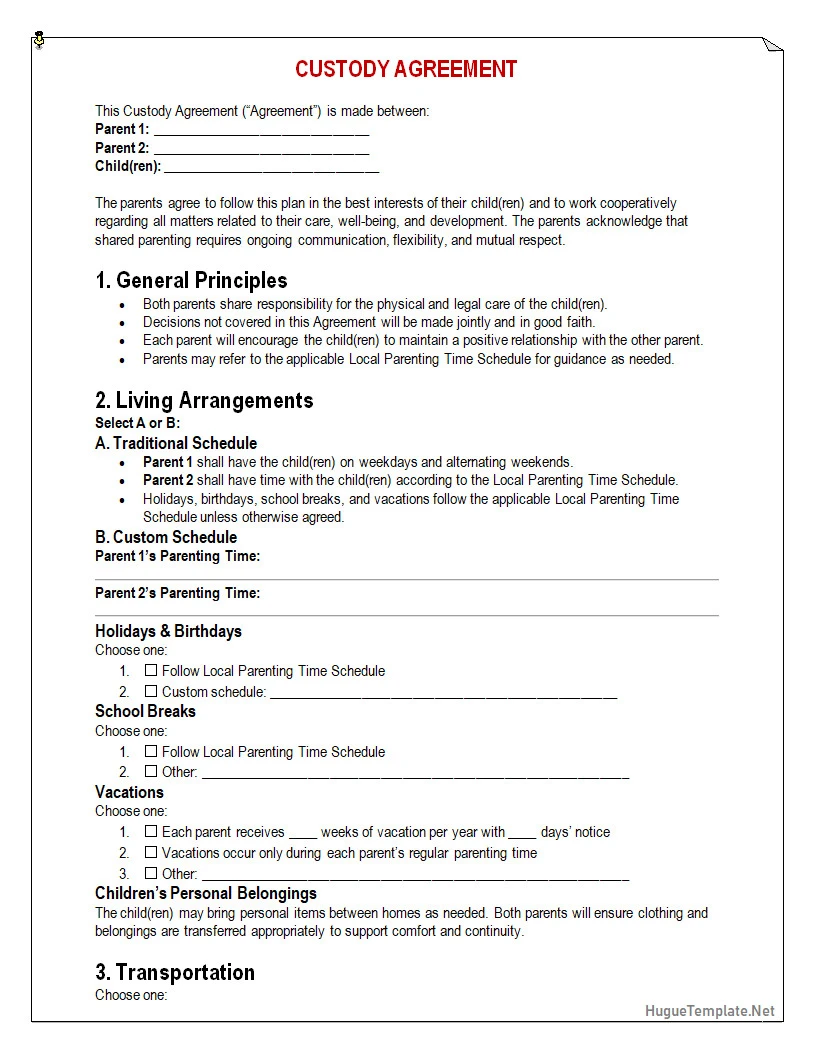
Child custody agreements are legal arrangements that determine the living arrangements and responsibilities of parents regarding their children after a divorce or separation. These agreements are crucial in ensuring the well-being and stability of the children involved.
Navigating the complexities of child custody can be challenging, but with the right information and guidance, parents can come to a mutually beneficial agreement that prioritizes the best interests of their children.
What is a Child Custody Agreement?
A child custody agreement is a document that outlines the custody and visitation schedules for children whose parents are no longer together. It details where the children will live, how decisions about their upbringing will be made, and how they will divide their time between each parent. The agreement can be reached through mediation, negotiation, or litigation, and once approved by a judge, it becomes legally binding.
Child custody agreements typically address two main types of custody:- Physical Custody: This determines where the child will live on a day-to-day basis.- Legal Custody: This pertains to the right and responsibility to make decisions about the child’s upbringing, such as education, healthcare, and religion.
Why Child Custody Agreements are Important
Child custody agreements are essential for ensuring that both parents have a clear understanding of their rights and responsibilities regarding their children. These agreements help establish a sense of stability and predictability for the children, which is crucial for their emotional well-being. By outlining the terms of custody and visitation, parents can avoid misunderstandings and conflicts in the future.
What to Include in a Child Custody Agreement
When creating a child custody agreement, it’s important to include the following key elements:- A detailed parenting plan outlining the custody and visitation schedules.- Provisions for decision-making authority regarding the child’s upbringing.- Guidelines for communication between parents regarding the children.- Procedures for resolving disputes and making modifications to the agreement.- Any special considerations or unique circumstances that need to be addressed.
How to Create a Child Custody Agreement
Creating a child custody agreement involves careful consideration and communication between both parents. Here are some steps to help you navigate this process:
1. Open communication: Discuss your preferences, concerns, and expectations openly with the other parent.
2. Seek mediation: Consider working with a mediator to facilitate productive discussions and help you reach a mutually acceptable agreement.
3. Consult with legal professionals: It’s essential to seek legal advice to ensure that your agreement complies with state laws and protects your rights.
4. Prioritize the best interests of the children: Keep the focus on what is best for the children and strive to create a plan that meets their needs.
5. Be flexible and willing to compromise: Parenting arrangements may need to be adjusted over time, so being open to compromise can help maintain a positive co-parenting relationship.
6. Document everything: Make sure to document all agreements in writing to avoid any misunderstandings or disputes in the future.
Tips for Successful Child Custody Agreements
– Put the children first: Always prioritize the best interests of the children when making decisions.
– Maintain open communication: Keep the lines of communication with the other parent clear and respectful.
– Be flexible: Life circumstances may change, so be willing to adapt your custody agreement as needed.
– Follow the agreement: Adhere to the terms of the agreement to promote stability and consistency for the children.
– Seek professional help if needed: Don’t hesitate to consult with legal or mental health professionals for guidance and support.
Navigating the complexities of child custody agreements can be challenging, but with patience, understanding, and a focus on the well-being of the children involved, parents can create a successful co-parenting arrangement that benefits everyone. Remember that the ultimate goal of a child custody agreement is to provide a stable and loving environment for the children to thrive despite the changes in their family dynamic.
Child Custody Agreement Template – DOWNLOAD
