A project report is a structured document used to communicate project progress, track performance, identify risks, and keep stakeholders informed. It provides a clear overview of what has been completed, what is currently in progress, what needs attention, and what should happen next.
Whether you are managing a small internal project or a complex initiative involving multiple teams, a well-organized project report can make project information easier to understand. It can also help project managers compare actual performance with the original plan and support better decision-making.
A useful project report does not need to be unnecessarily long. The most effective reports present relevant information clearly, allowing project managers, clients, team members, and senior management to quickly understand the current status of the project.
What Is a Project Report?
A project report is a formal document that summarizes important information about a project’s progress, performance, activities, risks, costs, and outcomes. It can be prepared at different stages of a project depending on the purpose and reporting requirements.
Project reports are commonly used to:
- Communicate project progress
- Track completed and outstanding work
- Compare actual results with the project plan
- Monitor schedules and milestones
- Track project costs and budget performance
- Identify risks and issues
- Document project decisions and achievements
- Communicate next steps to stakeholders
The content of a project report should reflect the project’s size, complexity, reporting frequency, and stakeholder requirements.
Project Report Template
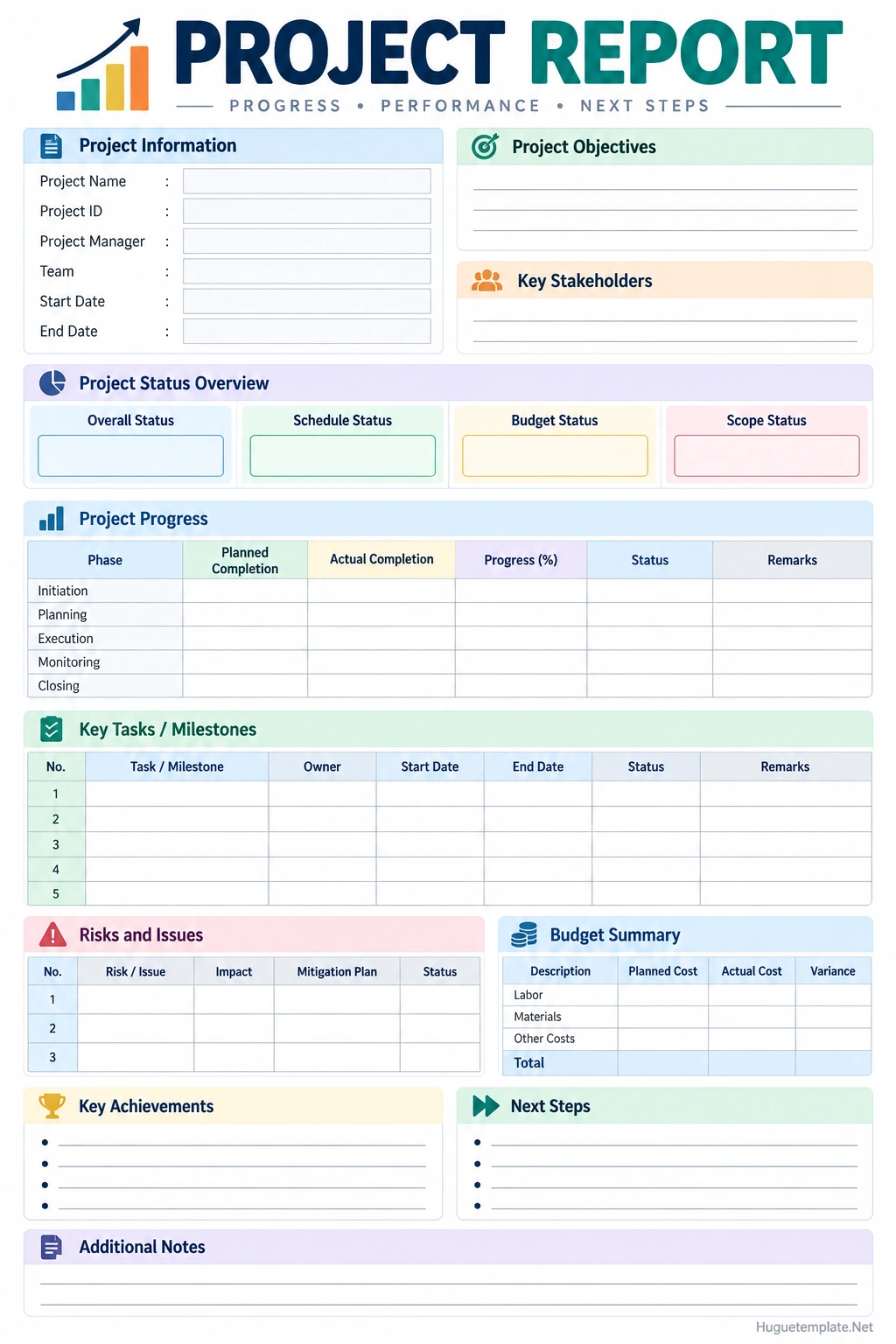
A printable project report template provides a structured framework for organizing project information. Instead of starting every report from a blank page, you can use predefined sections for project details, objectives, status, progress, milestones, risks, budget, achievements, and next steps.
The template below is designed as a practical project status report that can be used for regular project reviews, internal reporting, client updates, or management meetings.
Why Is a Project Report Important?
A project report creates a consistent way to communicate information throughout the project lifecycle. Without regular reporting, stakeholders may have difficulty understanding whether a project is progressing according to plan.
Improve Project Visibility
A project status report gives stakeholders a concise view of current activities and progress. This makes it easier to understand what has happened since the previous reporting period.
Track Performance
Project reporting allows teams to compare planned activities with actual progress. Differences in schedule, cost, scope, or resources can be identified before they become larger problems.
Identify Risks and Issues
A regular report provides a place to document project risks, current issues, potential impacts, and mitigation actions. This helps keep important concerns visible.
Support Decision-Making
Project managers and stakeholders can use accurate project information to make decisions about resources, timelines, priorities, scope, and corrective actions.
Maintain Accountability
Documenting tasks, owners, milestones, decisions, and outcomes helps clarify responsibilities and creates a formal record of project activity.
What Should a Project Report Include?
The exact format of a project report can vary, but several sections are useful for most projects.
Project Information
Start with basic information such as the project name, project ID, project manager, team, start date, and planned end date. This establishes the context for the report.
Project Objectives
State the main objectives or intended outcomes of the project. Keeping the objectives visible helps stakeholders understand how current activities relate to the original purpose.
Project Status
A status overview can summarize the current condition of the project. Common status categories include overall status, schedule status, budget status, and scope status.
Project Progress
Describe completed work, work in progress, and remaining activities. Progress can be expressed using percentages, milestones, phases, or other measures appropriate to the project.
Key Tasks and Milestones
List important tasks or milestones along with their owners, planned dates, actual dates, status, and relevant remarks. This makes schedule progress easier to review.
Risks and Issues
Record significant risks and active issues, their potential impact, mitigation plans, and current status. Keeping this information updated helps stakeholders understand where attention may be required.
Budget Summary
Include planned costs, actual costs, and relevant variances when financial tracking is part of the project. A simple budget summary can highlight areas that require further review.
Key Achievements
Summarize important accomplishments during the reporting period. This gives stakeholders a clear view of what the team has delivered.
Next Steps
List the most important activities planned for the next reporting period. Include owners and target dates when appropriate.
Types of Project Reports
Different project reports serve different purposes. Choosing the right format helps ensure that stakeholders receive the information they need.
Project Status Report
A project status report provides a regular snapshot of project progress, schedule, budget, risks, issues, and upcoming work. It is commonly prepared weekly, biweekly, or monthly.
Project Progress Report
A project progress report focuses primarily on work completed, current activities, milestones, and progress toward project objectives.
Project Performance Report
A performance report examines project results against established targets or performance measures. It may include schedule, cost, quality, scope, or other project metrics.
Project Risk Report
A risk report focuses on identified risks, their potential impact, probability or priority, mitigation strategies, and current status.
Project Closure Report
A project closure report summarizes the completed project, final outcomes, deliverables, costs, lessons learned, unresolved items, and other information needed to formally close the project.
How to Write a Project Report
Writing a useful project report is easier when you follow a consistent structure. Focus on relevant facts and avoid filling the report with information that does not help stakeholders understand the project.
Start With the Project Overview
Begin with the project name, reporting period, project manager, and a brief summary of the current situation. This gives readers immediate context.
Summarize Overall Status
Provide a concise overview of the project’s current status. Explain whether the project is progressing according to plan and identify any significant changes.
Report Actual Progress
Describe what has been completed during the reporting period and compare it with the work that was planned. Use measurable information where possible.
Highlight Important Variances
If the project is behind schedule, above budget, or outside the original scope, explain the relevant variance. Focus on the cause, impact, and planned response.
Document Risks and Issues
Include only risks and issues that are relevant to the project. For each significant item, explain the potential impact and current mitigation or resolution plan.
List the Next Steps
End the main project update with the actions planned for the next reporting period. Clear next steps help the team maintain momentum and give stakeholders a better understanding of what to expect.
Project Report vs. Project Status Report
The terms project report and project status report are sometimes used interchangeably, but they can have different meanings depending on the organization.
A project report can refer to a broad document covering project information, progress, performance, risks, costs, outcomes, or lessons learned.
A project status report is generally more focused on the current state of the project. It typically provides a periodic snapshot of progress, schedule, budget, risks, issues, and next steps.
In practice, the two formats can overlap significantly. The appropriate structure depends on what stakeholders need to know.
How Often Should You Create a Project Report?
The reporting frequency should match the project’s size, complexity, duration, and stakeholder needs.
- Weekly: Useful for active projects with frequent changes or short deadlines.
- Biweekly: Suitable for projects where progress can be reviewed over a slightly longer period.
- Monthly: Common for longer projects and management-level reporting.
- Milestone-based: Useful when major deliverables or project phases determine reporting points.
- At project closure: Used to document final outcomes and lessons learned.
There is no universal reporting schedule. The goal is to provide timely information without creating unnecessary administrative work for the project team.
Tips for Creating an Effective Project Report
- Keep the report focused on information that stakeholders need.
- Use consistent terminology and status definitions.
- Separate completed work from planned work.
- Use measurable progress information when possible.
- Highlight significant risks and issues clearly.
- Compare planned costs with actual costs when budget tracking is required.
- Assign owners to important tasks and actions.
- Document important changes to scope, schedule, or budget.
- Keep the reporting period clearly visible.
- Review the report for accuracy before distributing it.
Common Project Reporting Mistakes
Including Too Much Information
A report filled with unnecessary details can make important information difficult to find. Focus on relevant progress, decisions, risks, costs, and actions.
Reporting Without Context
A percentage or status indicator is more useful when readers understand what it represents. Explain important changes and compare results with the original plan when appropriate.
Ignoring Risks Until They Become Issues
Risks should be documented before they become active problems. Early identification gives the project team more time to develop mitigation strategies.
Failing to Update Budget Information
When financial performance matters, outdated cost information can make the report misleading. Keep planned and actual costs current and explain meaningful variances.
Not Defining Next Steps
A report should help the team move forward. Clearly documenting upcoming tasks, owners, and deadlines can turn the report into a practical management tool rather than simply a historical record.
Project Report Best Practices
A good project reporting process should make information easier to communicate, not create unnecessary complexity.
- Use the same reporting template throughout the project.
- Keep important project metrics easy to locate.
- Update information regularly.
- Use concise language.
- Highlight significant changes instead of burying them in long paragraphs.
- Use tables for structured project information.
- Keep risks and issues visible until they are resolved.
- Document decisions that affect project scope, schedule, or cost.
- Tailor the level of detail to the audience.
- Archive completed reports for future reference when appropriate.
Frequently Asked Questions About Project Reports
What is the purpose of a project report?
The purpose of a project report is to communicate project progress, track performance, document risks and issues, monitor costs and schedules, and provide stakeholders with information for decision-making.
What should a project report contain?
A project report can include project information, objectives, current status, progress, milestones, risks, issues, budget information, achievements, next steps, and additional notes.
What is the difference between a project report and a project status report?
A project report can cover a broad range of project information, while a project status report usually focuses on the current condition of the project, including progress, schedule, budget, risks, issues, and upcoming activities.
How often should a project status report be prepared?
The frequency depends on the project and stakeholder requirements. Weekly, biweekly, monthly, milestone-based, and final reports are common approaches.
Who prepares a project report?
A project manager often coordinates or prepares the report, but team members may provide progress, cost, risk, and milestone information. The exact responsibility depends on the organization’s project management process.
How can a project report improve project management?
A project report creates a regular process for reviewing progress, identifying problems, monitoring resources, and communicating important information. This can help project teams respond to changes more effectively.
Can a project report include budget information?
Yes. When financial tracking is relevant, a project report can include planned costs, actual costs, budget variance, and other financial information needed to monitor project performance.
Conclusion
A project report provides a structured way to communicate project progress, monitor performance, manage risks, track costs, and document important project information. When prepared consistently, it helps project managers and stakeholders understand where the project stands and what needs to happen next.
A practical project report does not need to be complicated. By using clear sections for objectives, status, progress, milestones, risks, budget, achievements, and next steps, you can create a report that is easy to review and useful for decision-making.
Whether you prepare weekly status updates, monthly management reports, or a final project report, a consistent template can save time and help ensure that important project information is not overlooked.
Download: Project Report Template
