When it comes to business reports, proposals, or any document that requires a detailed overview, the executive summary plays a crucial role. It is a concise summary that encapsulates the key points of a longer document, providing busy executives and stakeholders with a quick understanding of the main points without having to read the entire report.
In this article, we will delve into the importance of an executive summary, what should be included, how to write one effectively, and some tips to make it stand out.
What is an Executive Summary?
An executive summary is a brief overview of a longer document that highlights the key points, conclusions, recommendations, and important data. It is usually found at the beginning of a report or proposal and is designed to give readers a quick understanding of the main content without having to go through the entire document.
The executive summary serves as a roadmap for readers, guiding them through the main points and helping them decide whether they need to read the full document or not.
Why is an Executive Summary Important?
The executive summary is crucial for several reasons.
- Firstly, it helps busy executives and stakeholders get a quick overview of the main points of a document without having to read through the entire report.
- Secondly, it allows readers to quickly grasp the purpose of the document, the key findings, and the recommendations.
- Thirdly, it can be used as a standalone document, especially when the full report is lengthy and readers need a summary for reference.
Overall, an executive summary is essential for communicating complex information in a clear and concise manner.
What to Include in an Executive Summary
When crafting an executive summary, it’s important to include the following key elements:
- Background: Provide a brief introduction to the topic or issue being discussed.
- Objectives: Clearly state the objectives of the report or proposal.
- Key Findings: Summarize the main findings and conclusions of the document.
- Recommendations: Include any recommendations or actions that need to be taken based on the findings.
- Key Data: Highlight any important data or statistics that support the findings.
- Conclusion: Wrap up the summary with a concise conclusion that reinforces the main points.
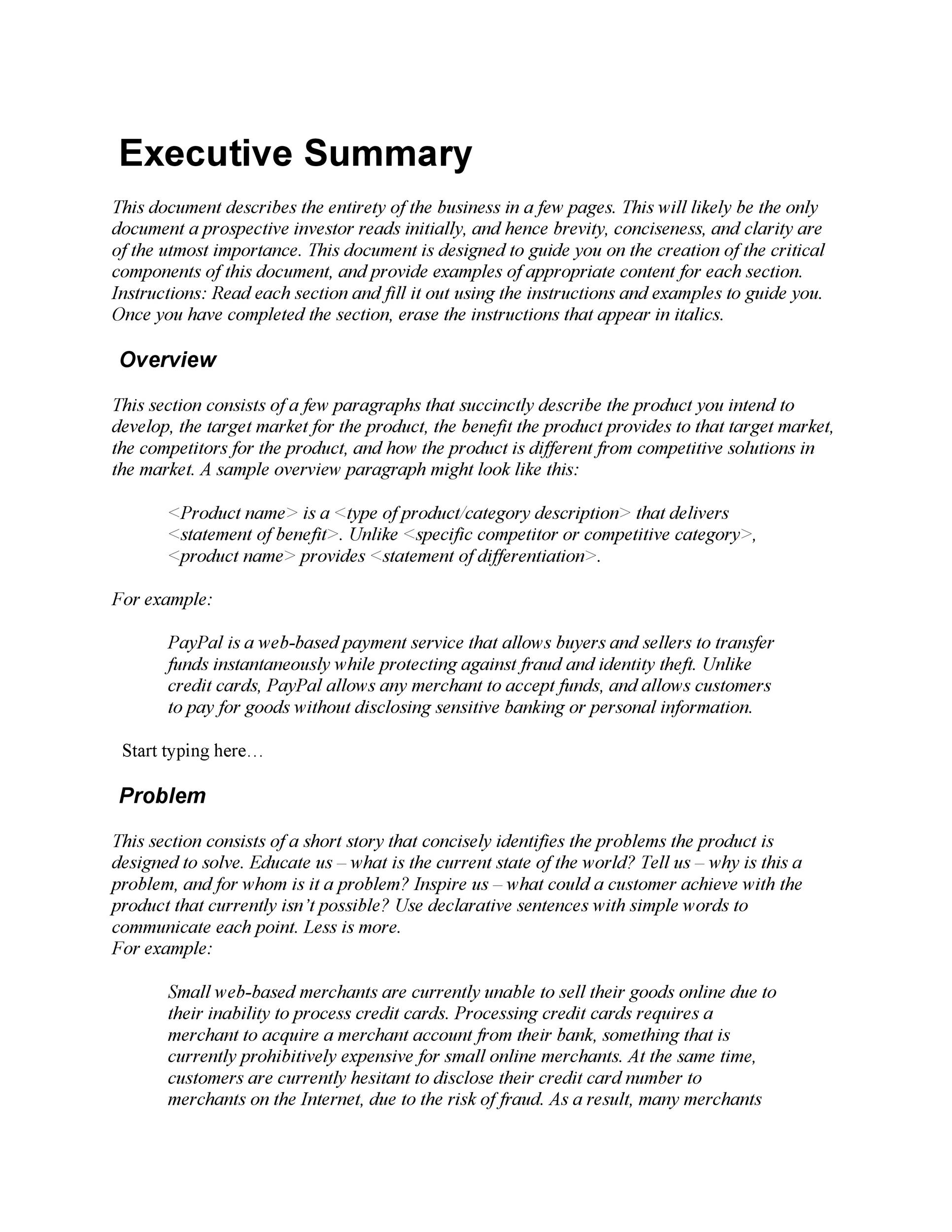
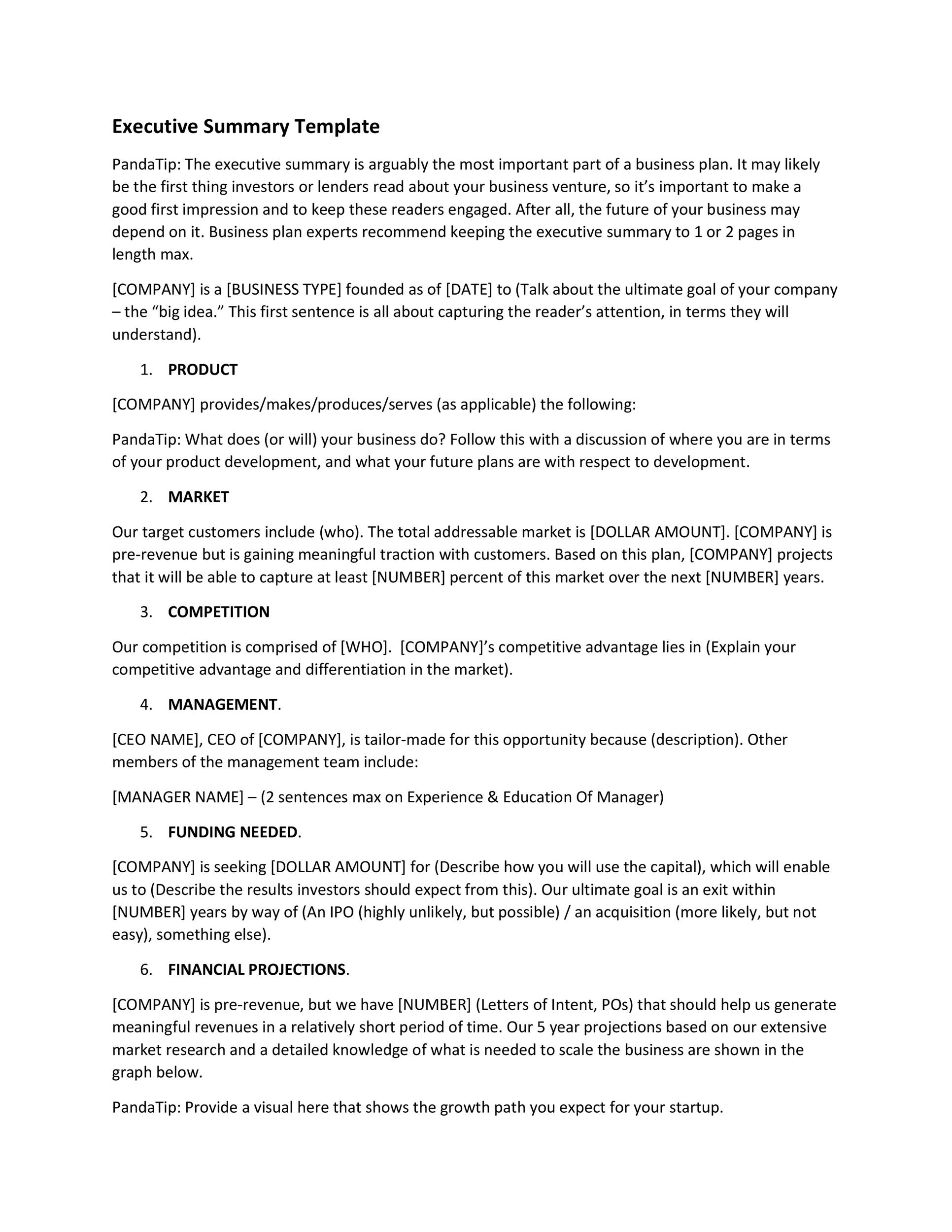
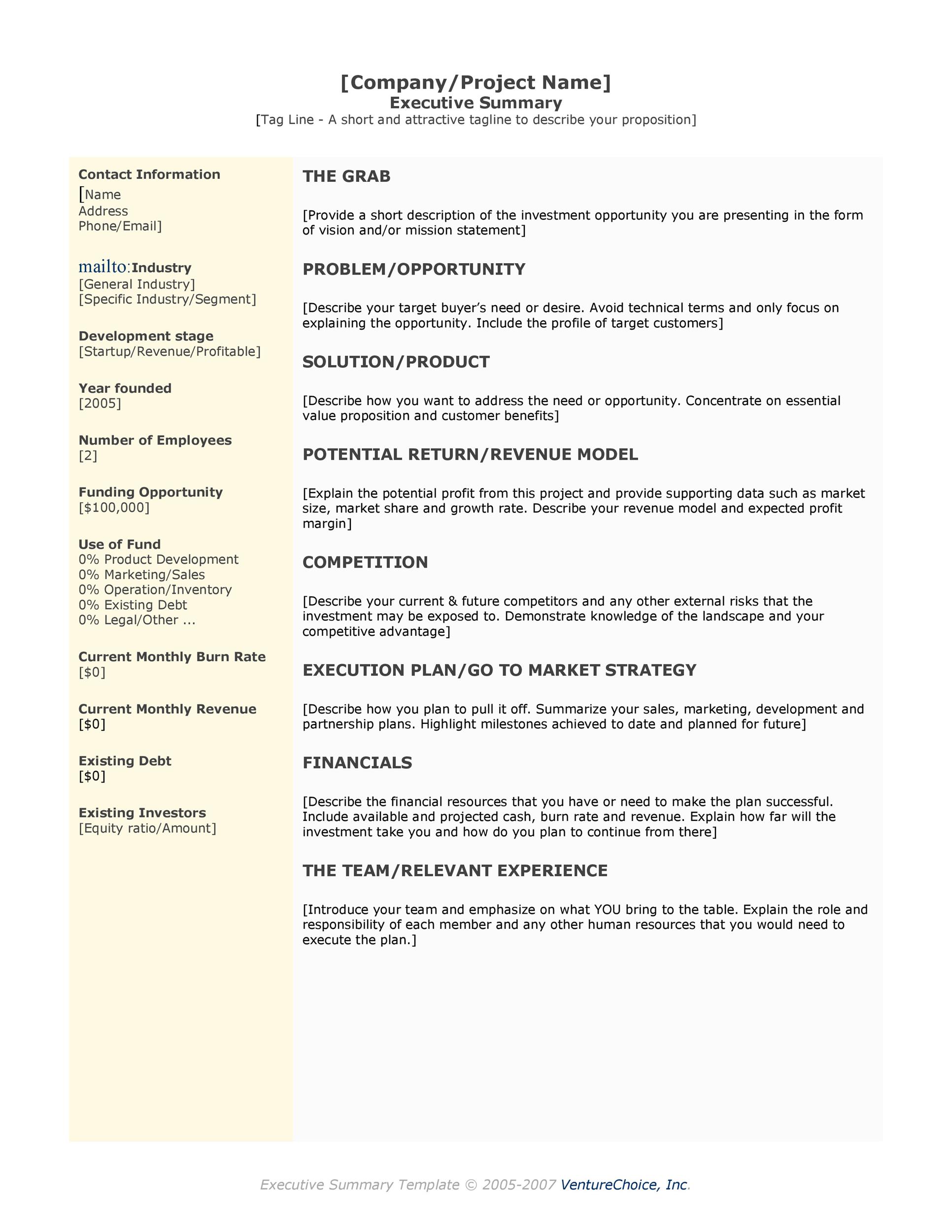
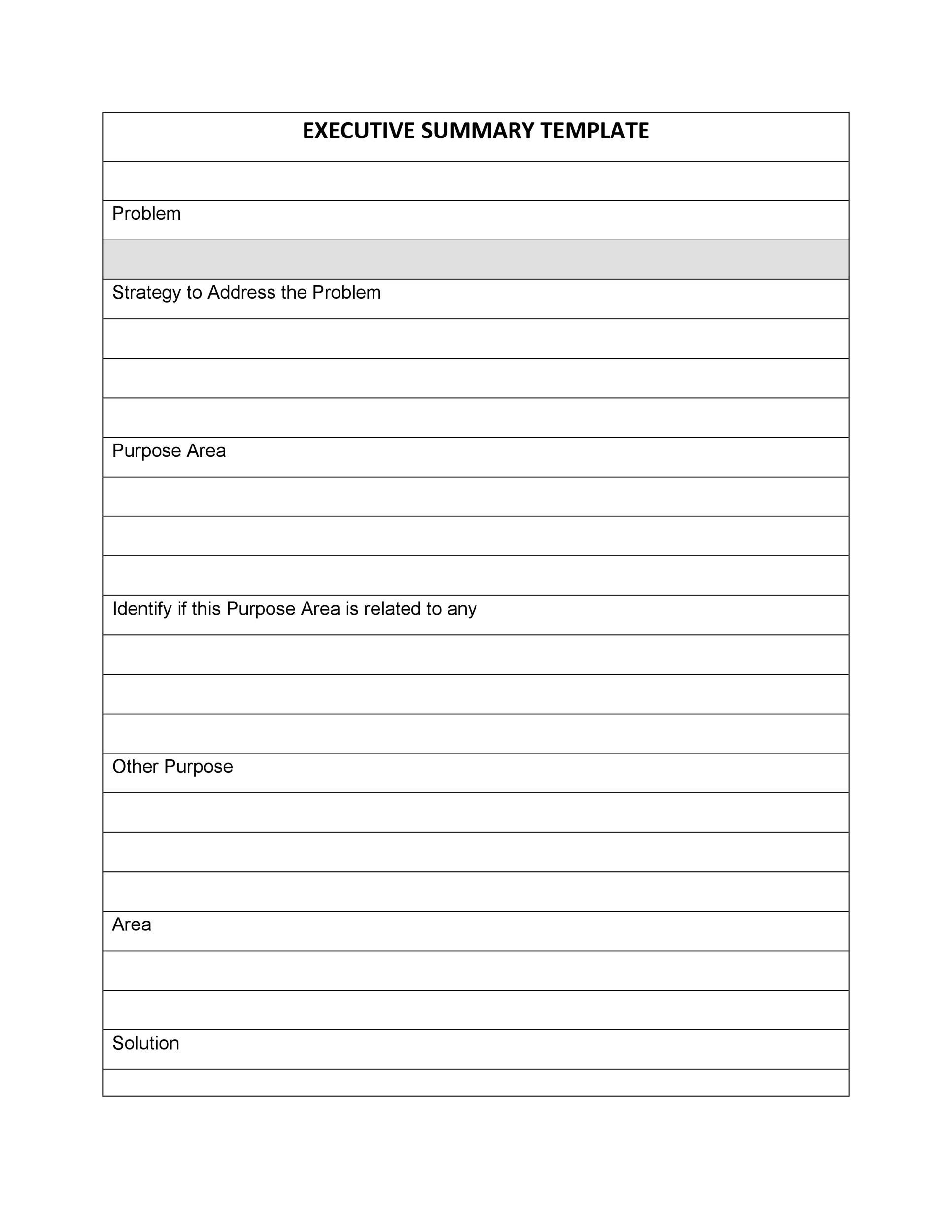
Examples
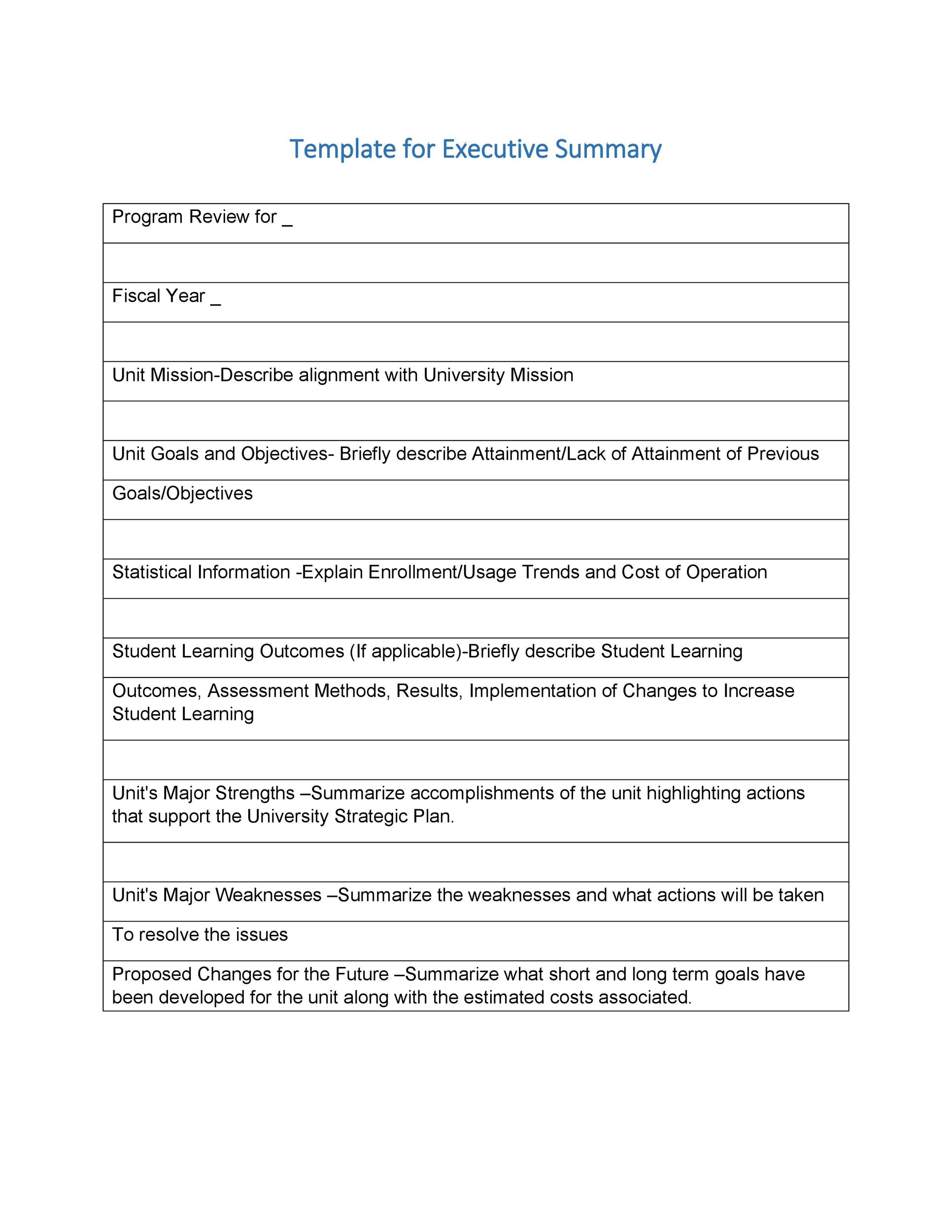
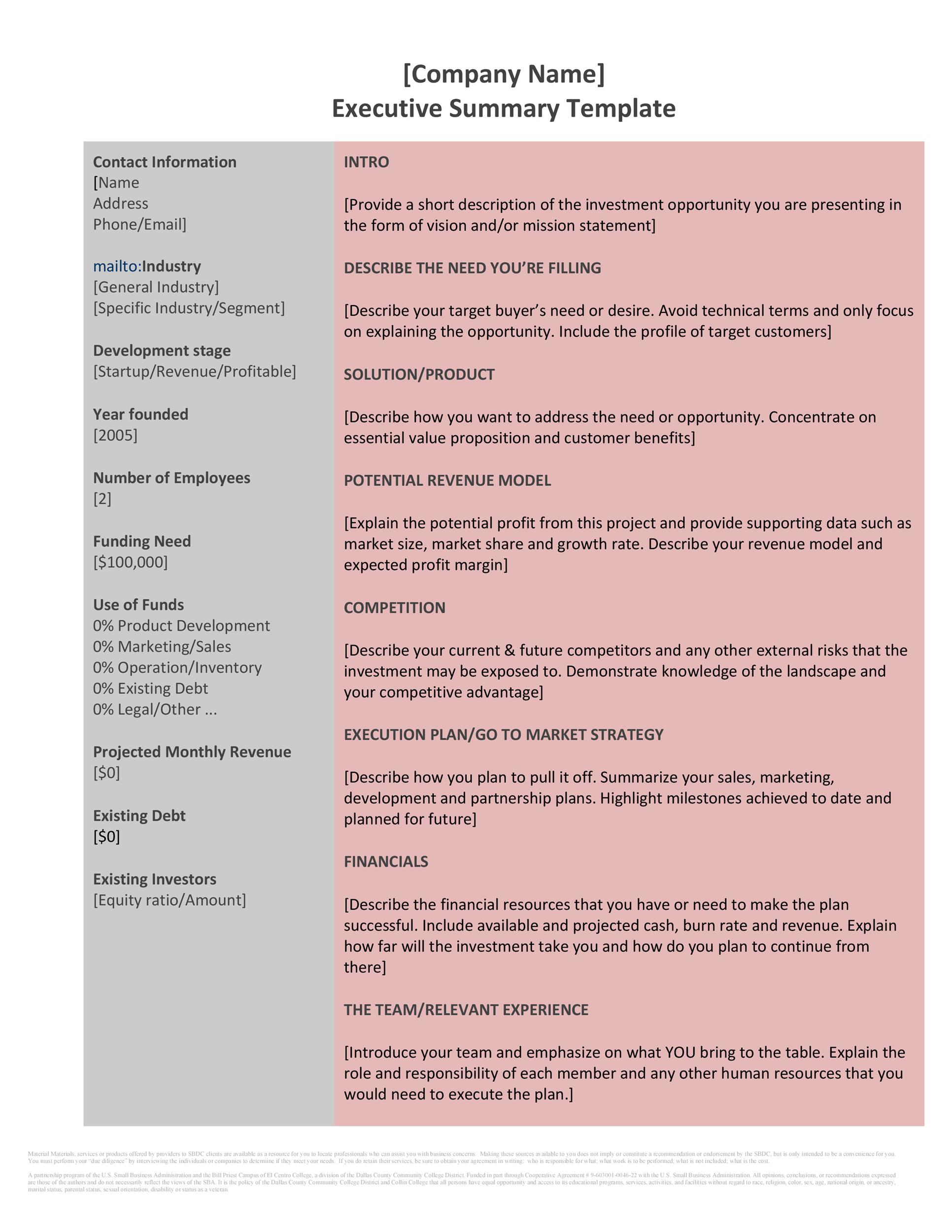
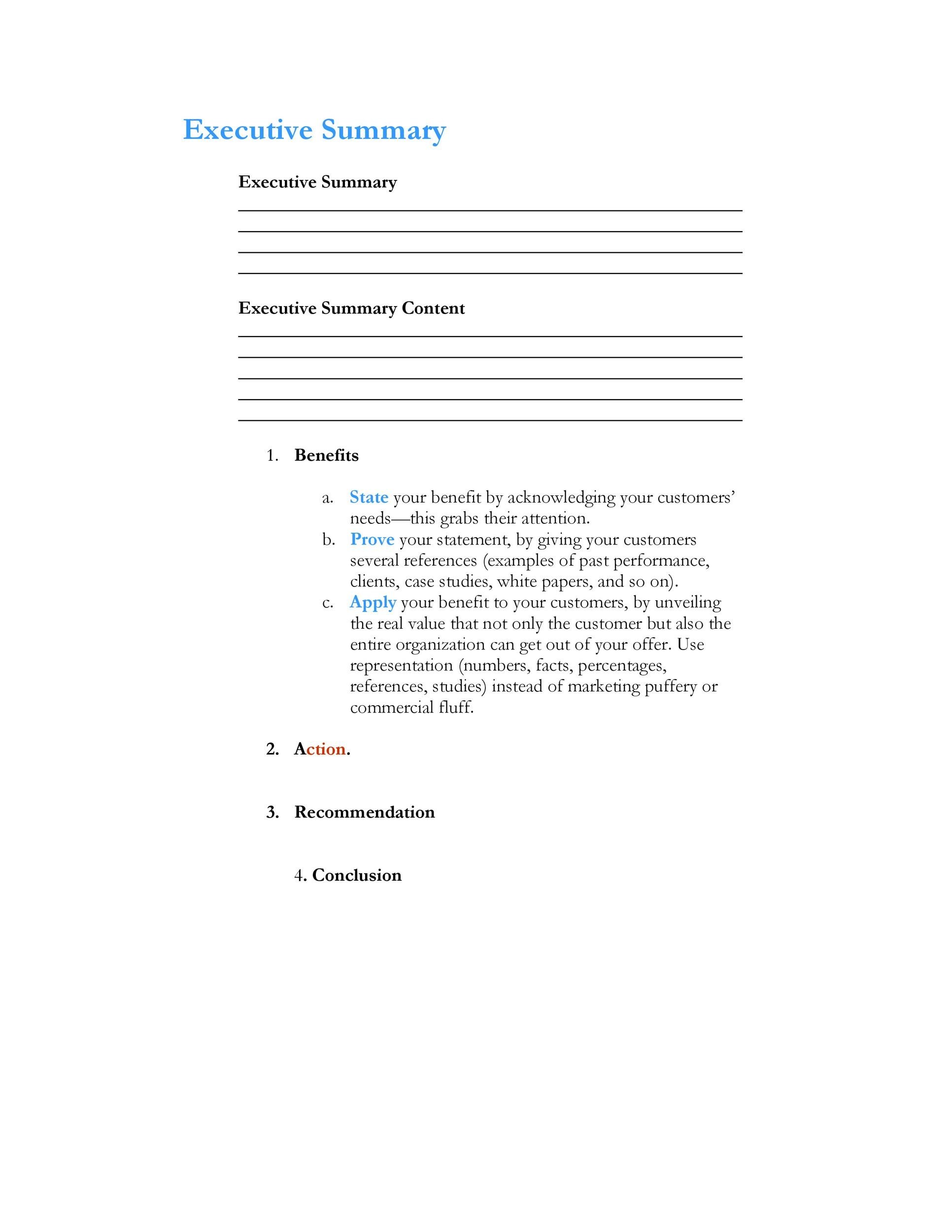
How to Write an Effective Executive Summary
Writing an effective executive summary requires careful planning and attention to detail. Here are some tips to help you craft a compelling summary:
- Understand Your Audience: Tailor the summary to the needs and expectations of your audience.
- Be Concise: Keep the summary brief and to the point, focusing on the most important information.
- Use Clear Language: Avoid jargon and technical terms, and use simple language that is easy to understand.
- Highlight Key Points: Emphasize the main findings, conclusions, and recommendations to grab the reader’s attention.
- Proofread and Edit: Ensure the summary is error-free and well-structured before finalizing it.
Tips for Creating a Standout Executive Summary
To make your executive summary stand out, consider the following tips:
- Start Strong: Begin with a compelling opening that grabs the reader’s attention.
- Use Visuals: Incorporate graphs, charts, or images to illustrate key points visually.
- Focus on Benefits: Highlight the benefits of the document and why it is important for the reader.
- Include a Call to Action: Encourage the reader to take specific actions based on the information provided.
- Seek Feedback: Get input from colleagues or stakeholders to ensure the summary is clear and effective.
Conclusion
In conclusion, the executive summary is a vital component of any business document, providing readers with a quick overview of the main points and key findings. By following the guidelines outlined in this article, you can create an effective executive summary that communicates the essence of your report or proposal.
Remember to tailor the summary to your audience, keep it concise and clear, and highlight the most important information to make it stand out. With practice and attention to detail, you can master the art of crafting compelling executive summaries that leave a lasting impression on your readers.
