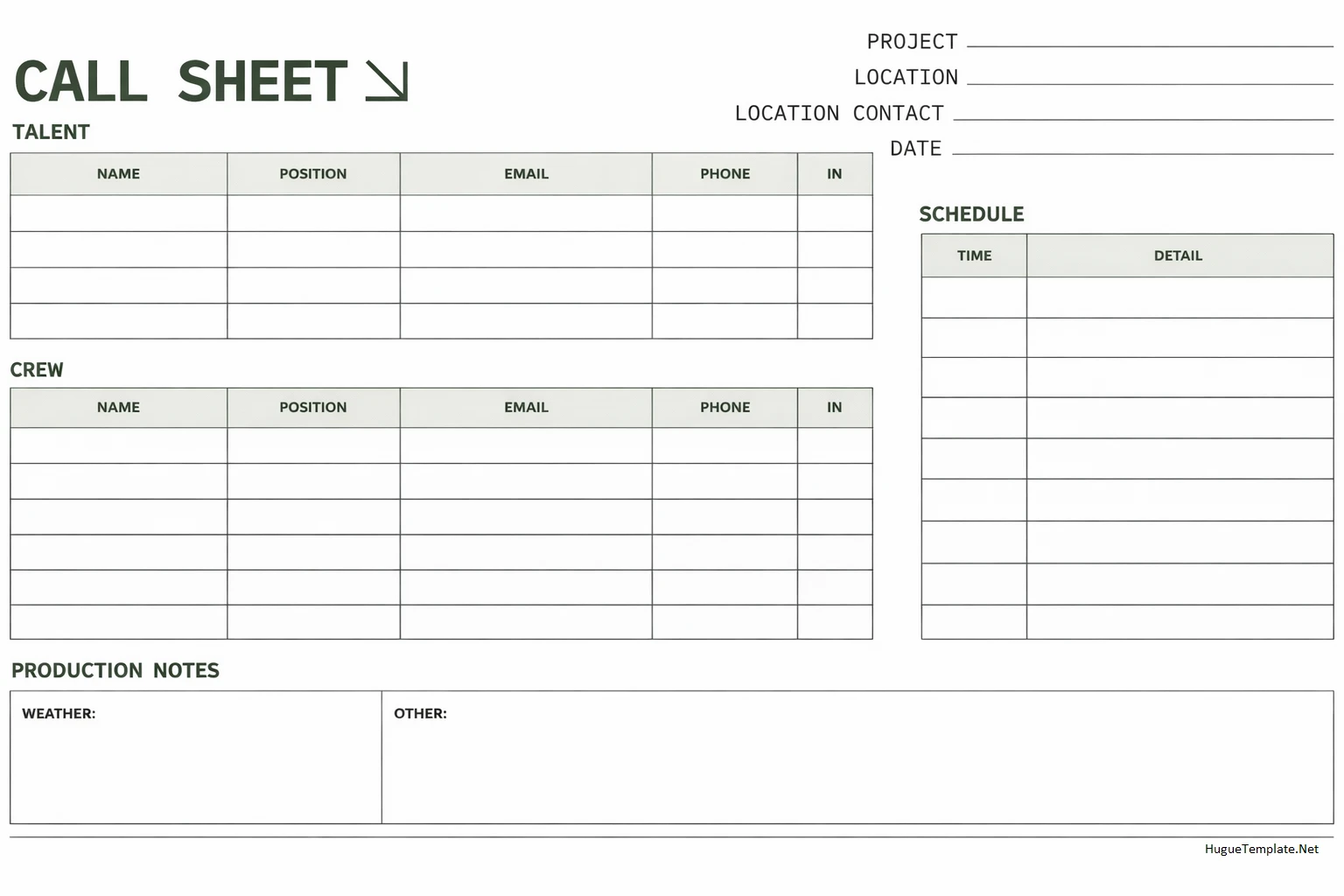
Regarding the intricate world of film production, one of the most crucial documents that keeps the entire operation running smoothly is the call sheet. Serving as the essential daily production schedule, the call sheet centralizes crucial information for cast and crew to ensure everyone knows where to be, when, and what to expect for a day of filming.
By preventing confusion and costly delays, the call sheet acts as a daily blueprint for the set, keeping all departments synchronized for efficient shooting.
What is a Call Sheet?
A call sheet is a detailed document that outlines all the necessary information for a day of filming. It includes important details such as call times, locations, scene details, and contact information for all key personnel.
The purpose of the call sheet is to ensure that everyone involved in the production knows exactly what is expected of them and where they need to be at any given time.
Why are Call Sheets Important?
Call sheets are essential in film production for several reasons.
Preventing Confusion
Confusion on a film set can lead to costly mistakes and delays in production. By providing detailed information on call times, locations, and scene details, call sheets help minimize confusion among cast and crew members. Everyone knows where they need to be and what is expected of them, reducing the likelihood of misunderstandings or missed cues during filming.
Efficiency and Time Management
Efficiency is crucial in film production to stay on schedule and within budget. Call sheets play a key role in ensuring that all departments are working together harmoniously to achieve the day’s filming goals. By outlining the schedule and key details in advance, call sheets help streamline operations and maximize time management, ultimately leading to a more efficient production process.
Communication and Coordination
Effective communication and coordination are vital for the success of any film production. Call sheets act as a centralized source of information that helps all team members stay informed and connected throughout the day. By providing contact information for key personnel and clear instructions for the day’s activities, call sheets facilitate seamless communication and coordination among the cast and crew.
Key Elements of a Call Sheet
Several key elements are typically included in a call sheet. These elements ensure that all necessary information is communicated clearly to all cast and crew members. Some of the key elements of a call sheet include:
Call Time
The call time listed on a call sheet specifies when each cast and crew member is required to be on set. This time is crucial for the smooth running of the production, as it allows for proper planning and preparation before filming begins. Call times are typically staggered to accommodate the different roles and responsibilities of team members.
Location Details
Location details on a call sheet provide specific information about where filming will take place. This includes the address of the location, as well as any additional directions or landmarks to help team members find their way. Clear location details help prevent delays and ensure that everyone arrives at the right place at the right time.
Scene Details
Scene details outline what will be filmed during the day, including specific scenes, sequences, or shots that need to be captured. This section of the call sheet provides a breakdown of the day’s filming schedule, helping team members prepare for each scene and understand the creative vision for the project. Scene details may also include any special requirements or considerations for filming.
Contact Information
Contact information for key personnel is essential for facilitating communication and coordination on set. This section of the call sheet typically includes the names and phone numbers of important team members, such as the director, producer, production coordinator, and department heads. Having easy access to contact information helps team members address issues or questions that may arise during filming.
Special Instructions
Special instructions on a call sheet provide additional details or considerations for the day’s filming activities. This section may include information about specific props or costumes needed, safety precautions to be followed, or any other important notes for team members to be aware of. Special instructions help ensure that filming runs smoothly and that all team members are prepared for any unique requirements.
How to Create a Call Sheet
Creating a call sheet requires careful attention to detail and organization. Here are some steps to follow when creating a call sheet:
Gather Information
Before creating a call sheet, gather all the necessary details for the day of filming. This includes call times, locations, scene details, contact information, and any special instructions or considerations. Having all the information in one place will help you create a comprehensive call sheet that addresses the needs of all team members.
Use a Template
Utilize a call sheet template to ensure that all key elements are included and that the information is presented in a clear and organized manner. Templates can help streamline the call sheet creation process and ensure consistency in formatting and content. There are many available templates online that you can customize to fit the specific requirements of your production.
Distribute the Call Sheet
Once the call sheet is completed, distribute it to all cast and crew members in advance of the day of filming. This gives team members time to review the information and ask any questions they may have. Distributing the call sheet in advance helps ensure that everyone is prepared and informed, leading to a more efficient and productive day of filming.
Update as Needed
Be prepared to make any necessary changes or updates to the call sheet throughout the day as production requirements evolve. Filming schedules can be fluid, with last-minute adjustments or additions to the plan. It’s important to communicate any changes to team members promptly and update the call sheet accordingly to keep everyone on the same page.
Tips for Effective Call Sheet Management
To ensure that call sheets are effectively managed and utilized in film production, consider the following tips:
Be Clear and Concise
When creating a call sheet, it’s essential to be clear and concise in presenting information. Use simple language and formatting to make the document easy to read and understand. Avoid unnecessary jargon or complex wording that could lead to confusion among team members. Clear and concise call sheets help streamline communication and ensure that everyone knows what is expected of them.
Communicate Changes Promptly
If any changes need to be made to the call sheet, communicate them to all relevant parties as soon as possible. Timely communication of updates or revisions helps prevent misunderstandings or missed information on set. Whether it’s a change in call times, locations, or scene details, keeping team members informed ensures that everyone is on the same page and can adjust their plans accordingly.
Follow Up
Check in with cast and crew members to ensure that they have received and understood the call sheet. Following up with team members after distributing the call sheet can help clarify any questions or concerns they may have. It also provides an opportunity to address any issues or discrepancies before filming begins, ensuring that everyone is prepared and informed for the day ahead.
Keep a Digital Record
Maintain a digital record of all call sheets for future reference and documentation. Keeping an organized archive of past call sheets can help review production details, track progress, or reference information for future projects. Digital records are also easier to share and distribute among team members, ensuring that everyone has access to the most up-to-date information.
Seek Feedback
Encourage cast and crew members to provide feedback on the call sheet process to identify areas for improvement. Feedback from team members can offer valuable insights into how the call sheet can be enhanced to better meet the needs of the production. By seeking input from those directly involved in the filming process, you can refine the call sheet template and management practices for futurefilm productions, leading to smoother operations and more efficient filming days.
Regularly Update Contact Information
It’s essential to regularly update contact information on the call sheet to ensure that team members can reach the right people when needed. Changes in personnel or contact details can occur throughout the production process, so it’s important to keep the call sheet current. By maintaining accurate and up-to-date contact information, you can facilitate effective communication and coordination among the cast and crew.
Maximizing the Benefits of Call Sheets
Call sheets play a vital role in the success of film productions by providing a centralized source of information for cast and crew members. By outlining call times, locations, scene details, and contact information, call sheets help prevent confusion and costly delays, keeping all departments synchronized for efficient shooting.
Effective call sheet management is essential for ensuring that film productions run smoothly and that all key personnel are informed and prepared for each day of filming.
Call Sheet Template – DOWNLOAD
