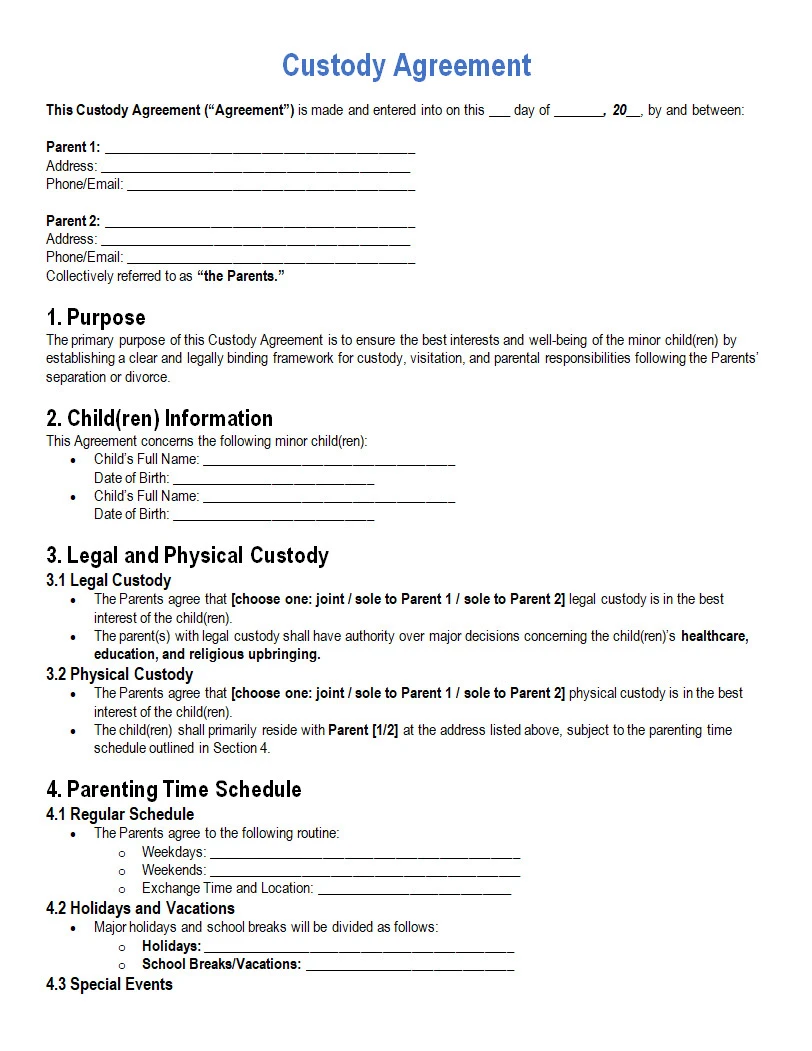
Navigating the complexities of a custody agreement can be a daunting task for parents going through a divorce or separation. A custody agreement is a legal document that outlines the terms and conditions regarding the custody of children, including where they will live, visitation schedules, decision-making responsibilities, and more.
It is crucial to create a comprehensive custody agreement that prioritizes the well-being of the children involved while also taking into account the needs and schedules of both parents.
What is a Custody Agreement?
A custody agreement, also known as a parenting plan or custody arrangement, is a written document that details how parents will share the responsibilities of raising their children after a divorce or separation.
This agreement typically addresses important aspects such as custody schedules, visitation rights, decision-making authority, communication guidelines, and dispute resolution processes. The goal of a custody agreement is to provide a clear and structured framework for co-parenting that prioritizes the best interests of the children involved.
Why is a Custody Agreement Important?
A custody agreement is essential for establishing clear expectations and boundaries for co-parenting. Without a formal agreement in place, disagreements and misunderstandings between parents can arise, leading to conflict and instability for the children. By creating a custody agreement, parents can proactively address potential issues and establish a roadmap for effective co-parenting.
This document can also serve as a valuable reference point in case of disputes or legal proceedings in the future.
What to Include in a Custody Agreement
When creating a custody agreement, it is important to include the following key elements to ensure clarity and consistency in co-parenting:
- Custody and Visitation Schedule: Outline the physical custody arrangements, including where the child will reside on specific days and holidays.
- Decision-Making Authority: Specify how major decisions regarding the child’s education, healthcare, and upbringing will be made.
- Communication Plan: Define how parents will communicate with each other and with the child, including methods of contact and frequency of communication.
- Child Support: Detail the financial responsibilities of each parent, including child support payments and expenses related to the child’s care.
- Dispute Resolution Process: Establish a procedure for resolving conflicts or disagreements that may arise between parents.
- Travel and Relocation Guidelines: Address any restrictions or requirements related to traveling with the child or relocating to a different area.
- Parenting Time Modifications: Include provisions for adjusting the custody and visitation schedule as needed due to changes in circumstances.
How to Create a Custody Agreement
Creating a custody agreement can be a collaborative process between parents, or it can be mediated with the assistance of a family law attorney or mediator. Here are some steps to help you create a comprehensive custody agreement:
1. Open Communication: Start by having open and honest discussions with the other parent about your preferences and concerns regarding custody arrangements.
2. Seek Legal Advice: Consult with a family law attorney to understand your legal rights and obligations when creating a custody agreement.
3. Consider the Child’s Best Interests: Prioritize the well-being and needs of the child when making decisions about custody and visitation.
4. Be Flexible: Remain open to compromise and be willing to adjust the custody agreement as needed to accommodate changing circumstances.
5. Document Everything: Ensure that the custody agreement is clearly written and includes all necessary details to avoid misunderstandings in the future.
6. Review and Revise: Regularly review the custody agreement to make sure it continues to meet the needs of both parents and the child.
Tips for Successful Co-Parenting with a Custody Agreement
Successfully co-parenting with a custody agreement requires ongoing effort and cooperation from both parents. Here are some tips to help you navigate the challenges of co-parenting:
- Communicate Effectively: Maintain open and respectful communication with the other parent to discuss any issues or concerns that may arise.
- Put the Child First: Always prioritize the best interests of the child when making decisions or resolving conflicts related to custody.
- Follow the Agreement: Adhere to the terms and conditions outlined in the custody agreement to promote consistency and stability for the child.
- Seek Support: Consider joining a co-parenting support group or seeking guidance from a therapist or counselor to help navigate the emotional challenges of co-parenting.
- Stay Flexible: Be willing to make adjustments to the custody agreement as needed to accommodate changes in schedules, preferences, or circumstances.
In Conclusion
Creating a custody agreement is an important step in establishing a framework for effective co-parenting after a divorce or separation. By including key elements such as custody schedules, decision-making authority, communication guidelines, and dispute resolution processes, parents can create a comprehensive agreement that prioritizes the well-being of the children involved. With open communication, flexibility, and a commitment to putting the child first, parents can successfully navigate the challenges of co-parenting with a custody agreement.
Custody Agreement Template – DOWNLOAD
