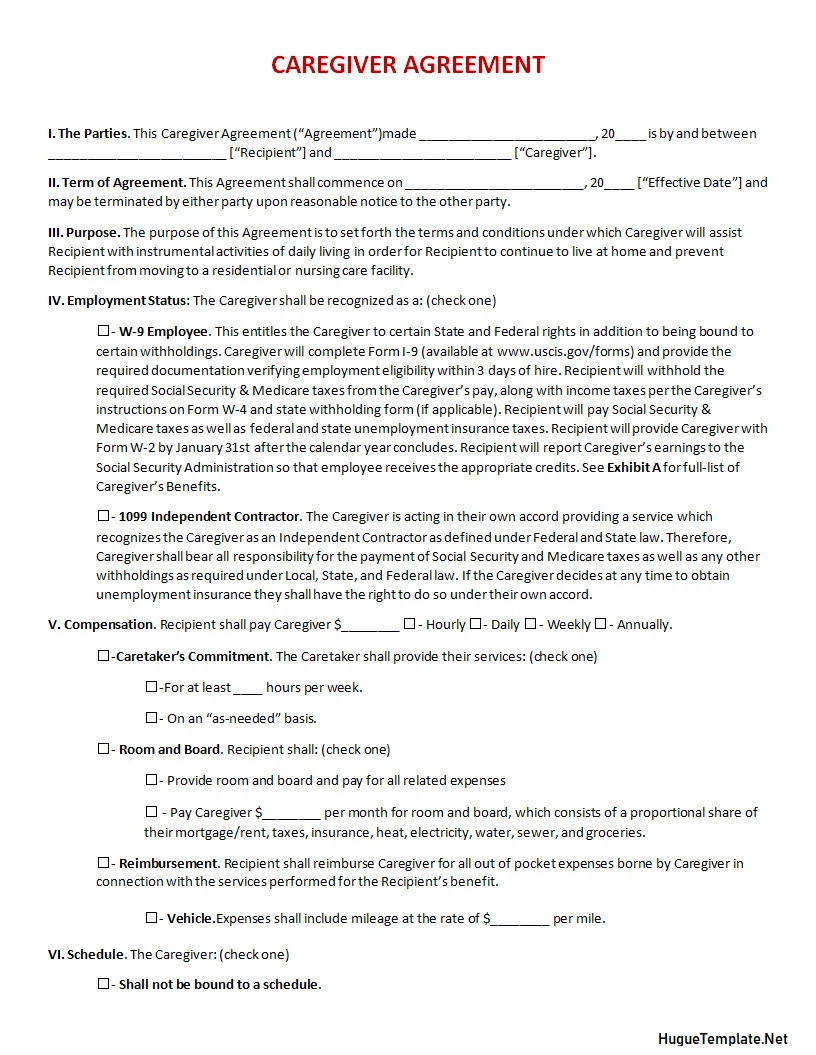
When providing care for a loved one, especially in the case of a family member, navigating the financial aspects can be challenging. This is where a caregiver agreement comes into play.
A caregiver agreement is a formal, legal contract that clearly outlines the services, schedules, and compensation involved in the caregiving relationship. By establishing this agreement, both the care recipient and the caregiver can prevent misunderstandings, avoid family disputes over finances, and ensure that legitimate expenses are accounted for in Medicaid planning or asset protection.
What is a Caregiver Agreement?
A caregiver agreement is a written contract between a care recipient and their caregiver, often a family member, that outlines the terms of the caregiving arrangement.
This agreement is essential for formalizing the relationship and ensuring that both parties are on the same page regarding responsibilities, schedules, and compensation. By creating a caregiver agreement, families can avoid potential conflicts and ensure that the caregiver is fairly compensated for their time and effort.
Why Should You Create a Caregiver Agreement?
There are several important reasons why creating a caregiver agreement is beneficial for both the care recipient and the caregiver:
- Clarity: A caregiver agreement provides clarity on the services to be provided, schedules, and compensation, reducing the likelihood of misunderstandings.
- Legal Protection: By formalizing the caregiving arrangement in a written contract, both parties are protected legally in case of any disputes or issues.
- Financial Planning: A caregiver agreement helps establish legitimate expenses for Medicaid planning or asset protection, ensuring that the caregiver’s services are recognized and reimbursable.
- Fair Compensation: The caregiver agreement sets out a fair compensation structure for the caregiver, ensuring that they are adequately paid for their time and effort.
- Government Aid Eligibility: By documenting the caregiving arrangement in a formal agreement, families can protect their eligibility for government aid programs.
What to Include in a Caregiver Agreement
When creating a caregiver agreement, it’s important to include the following key elements:
- Services Provided: Clearly outline the specific caregiving tasks and responsibilities that the caregiver will be performing.
- Schedule: Define the caregiving schedule, including days and hours of care, as well as any flexibility or changes that may be needed.
- Compensation: Detail the payment structure, including the hourly rate, method of payment, and frequency of payment.
- Expenses: Specify any reimbursable expenses that the caregiver may incur while providing care, such as transportation or supplies.
- Termination Clause: Include a clause that outlines the conditions under which the agreement can be terminated by either party.
How to Create a Caregiver Agreement
Creating a caregiver agreement is a straightforward process that involves open communication and collaboration between the care recipient and the caregiver. Follow these steps to create a comprehensive caregiver agreement:
- Discuss Expectations: Sit down with the care recipient and caregiver to discuss expectations, responsibilities, and compensation.
- Document Agreement: Write down all the agreed-upon terms in a formal contract, ensuring that both parties understand and agree to the terms.
- Review and Revise: Review the agreement periodically to make any necessary updates or changes based on the evolving needs of the care recipient.
- Seek Legal Advice: Consider consulting with a legal professional to ensure that the caregiver agreement complies with state laws and regulations.
Tips for Successful Caregiver Agreements
To ensure the success of a caregiver agreement, consider the following tips:
- Communicate Openly: Maintain open and honest communication with the care recipient and caregiver to address any issues or concerns.
- Keep Detailed Records: Document all caregiving activities, expenses, and payments to track the progress of the agreement.
- Regularly Review: Review the caregiver agreement regularly to ensure that it remains relevant and up-to-date.
- Seek Professional Help: If needed, seek advice from legal or financial professionals to ensure that the caregiver agreement is legally sound.
- Consider Mediation: In case of disputes or conflicts, consider engaging a mediator to help resolve issues amicably.
By creating a caregiver agreement, families can establish a clear and formalized structure for the caregiving relationship, ensuring that both the care recipient and the caregiver are protected and fairly compensated. This legal document not only prevents misunderstandings and disputes but also helps families navigate the complexities of Medicaid planning and asset protection. With proper communication and documentation, a caregiver agreement can provide peace of mind and security for all parties involved in the caregiving process.
Caregiver Agreement Template – DOWNLOAD
