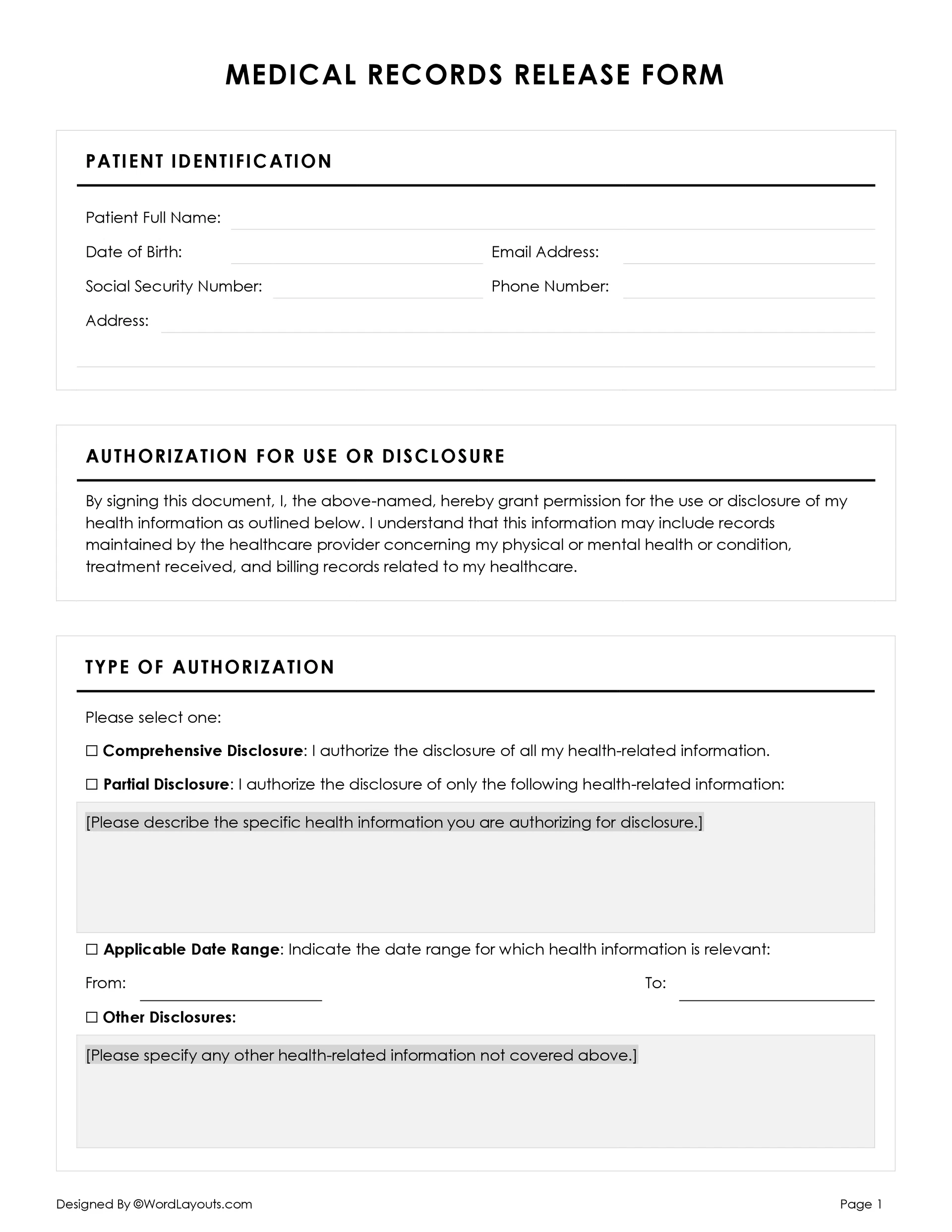
Medical records are an essential component of healthcare, providing crucial information about a patient’s medical history, treatments, and outcomes. When patients need to transfer their medical records from one healthcare provider to another, they are required to fill out a medical records release form. This form authorizes the healthcare provider to release the patient’s medical information to the designated recipient. In this comprehensive guide, we will explore everything you need to know about medical records release forms.
What is a Medical Records Release Form?
A medical records release form, also known as a medical authorization form or a medical information release form, is a document that allows healthcare providers to share a patient’s medical information with other entities. This form is necessary when a patient wants to transfer their medical records to a new healthcare provider, insurance company, attorney, or any other designated recipient. By signing the medical records release form, the patient gives consent for the release of their medical information.
Why is a Medical Records Release Form Important?
Medical records release forms play a crucial role in ensuring the continuity of care for patients. By authorizing the release of their medical records, patients enable their new healthcare providers to have access to their complete medical history, including past diagnoses, treatments, medications, and test results. This information is vital for making informed decisions about the patient’s healthcare and treatment plan.
1. Ensure Continuity of Care
When patients switch healthcare providers or specialists, having access to their complete medical records helps the new provider understand the patient’s medical history and make informed decisions about their care.
2. Facilitate Insurance Claims
Insurance companies may require access to a patient’s medical records to process claims for medical services or treatments. A medical records release form allows the healthcare provider to share the necessary information with the insurance company.
3. Legal Purposes
In legal cases such as personal injury claims or disability claims, medical records may be required as evidence. Patients can authorize the release of their medical records to their attorney or legal representative through a medical records release form.
What to Include in a Medical Records Release Form
When filling out a medical records release form, it is essential to include specific information to ensure that the proper medical records are released to the designated recipient. Here are some key elements that should be included in a medical records release form:
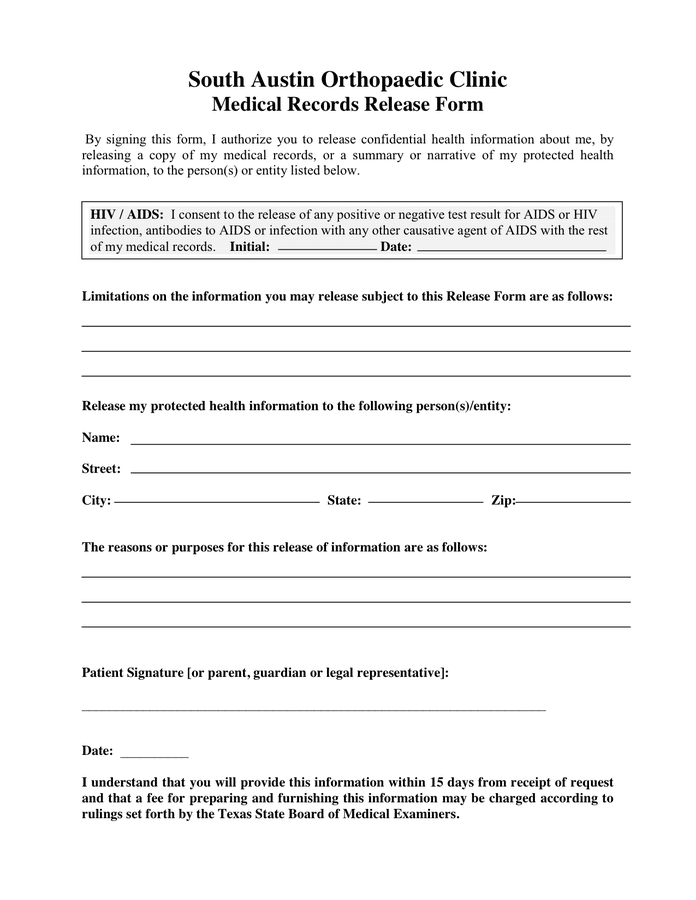
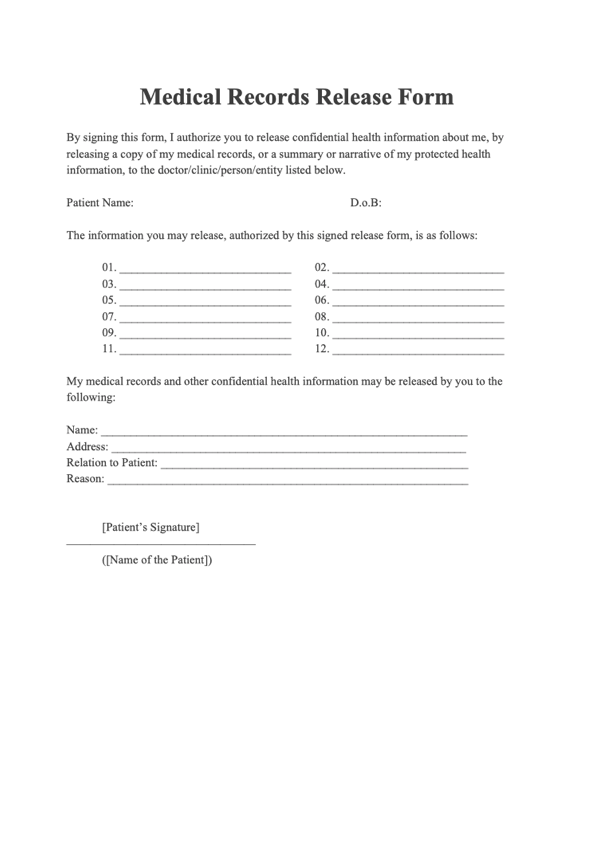
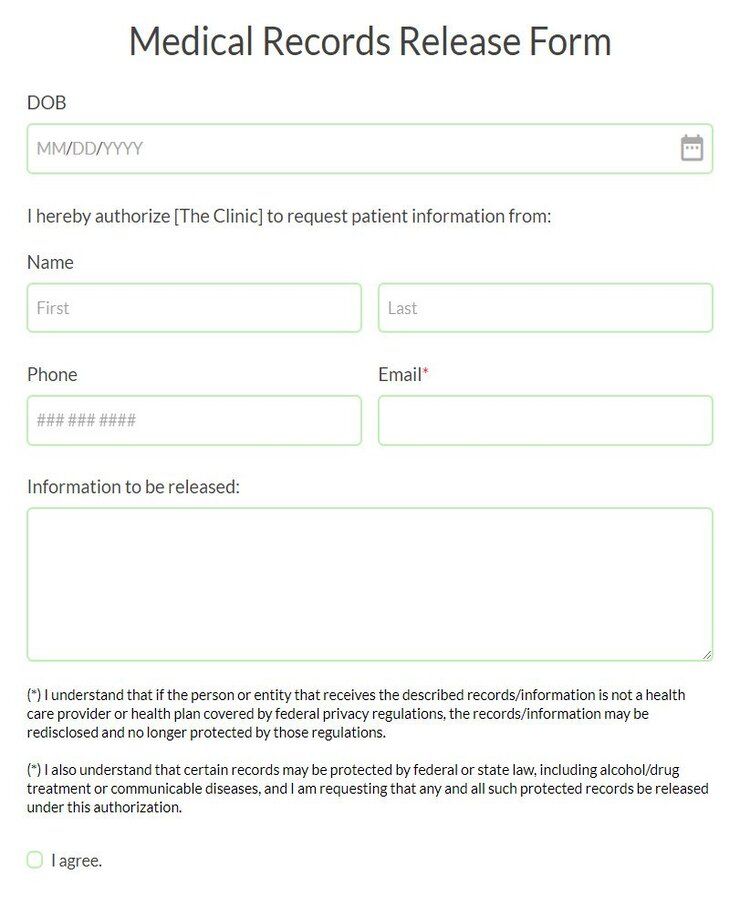
- Patient Information: Full name, date of birth, address, and contact information of the patient.
- Healthcare Provider Information: Name, address, and contact information of the healthcare provider releasing the medical records.
- Recipient Information: Name, address, and contact information of the individual or entity receiving the medical records.
- Specific Information to be Released: Details about the specific medical information to be released, such as medical history, test results, diagnoses, medications, and treatment plans.
- Authorization Signature: The patient’s signature authorizing the release of their medical information.
- Date of Authorization: The date when the patient signed the medical records release form.

How to Fill Out a Medical Records Release Form
Filling out a medical records release form is a straightforward process, but it is essential to provide accurate and complete information to ensure that the correct medical records are released. Here are the steps to follow when filling out a medical records release form:
1. Obtain the Form
Request a medical records release form from your healthcare provider or download it from their website. Make sure you are using the official form provided by the healthcare facility to ensure compliance with privacy regulations.
2. Complete Patient Information
Fill in your full name, date of birth, address, and contact information as requested on the form. Double-check the accuracy of the information before proceeding.
3. Provide Healthcare Provider Information
Enter the name, address, and contact details of the healthcare provider who will be releasing your medical records. This information is essential for identifying the correct medical records to be transferred.
4. Specify Recipient Information
Include the name, address, and contact information of the individual or entity that will be receiving your medical records. This could be a new healthcare provider, insurance company, attorney, or any other designated recipient.
5. Detail Specific Information to be Released
Specify the exact medical information that you want to be released, such as your complete medical history, test results, diagnoses, medications, and treatment plans. Be as specific as possible to ensure that the recipient receives the necessary information.
6. Sign and Date the Form
Read the authorization statement carefully and sign the form to authorize the release of your medical information. Make sure to date the form on the day you sign it to indicate when the authorization was granted.
Tips for Successful Medical Records Release
To ensure a smooth and successful transfer of your medical records, consider the following tips:
- Communicate Directly: Speak with your healthcare provider to understand the process of releasing medical records and address any questions or concerns you may have.
- Review the Information: Before signing the medical records release form, review the specific information that will be released to ensure accuracy and completeness.
- Keep a Copy: Make a copy of the signed medical records release form for your records in case you need to refer to it in the future.
- Follow Up: After submitting the medical records release form, follow up with the recipient to confirm that they have received the requested medical records.
- Protect Your Privacy: Ensure that the release of your medical records complies with privacy regulations and that only the necessary information is shared with the designated recipient.
Conclusion
Medical records release forms are essential documents that enable patients to transfer their medical information to new healthcare providers, insurance companies, attorneys, or other designated recipients. By understanding the purpose of these forms and following the necessary steps to complete them accurately, patients can ensure the seamless transfer of their medical records while protecting their privacy and confidentiality.
Medical Records Release Form Template
