Excuse letters are a common form of written communication used to explain the reasons behind missing work, school, or other important events. Whether you’re feeling under the weather, dealing with a family emergency, or simply need a mental health day, knowing how to craft a well-written excuse letter is essential.
In this guide, we will explore the What, Why, What to Include, How to, and Tips for writing an effective excuse letter that will help you communicate your situation clearly and professionally.
What is an Excuse Letter?
An excuse letter is a formal document that is written to inform someone of the reasons why you are unable to fulfill a commitment or attend a scheduled event. It is commonly used in situations where an individual needs to be absent from work, school, or any other obligation due to personal reasons. E
xcuse letters can vary in length and format depending on the circumstances, but they typically include a brief explanation of the situation, the duration of the absence, and any necessary supporting documentation.
Why Write an Excuse Letter?
There are many reasons why you may need to write an excuse letter. Some common situations where an excuse letter may be necessary include:
- Illness: If you are feeling unwell and need to take a sick day.
- Family Emergency: In the event of a sudden family crisis or emergency.
- Personal Reasons: When you need to take time off for personal matters.
- Legal Obligations: For jury duty, court appearances, or other legal obligations.
- Mental Health: When you need a mental health day to prioritize your well-being.
What to Include in an Excuse Letter
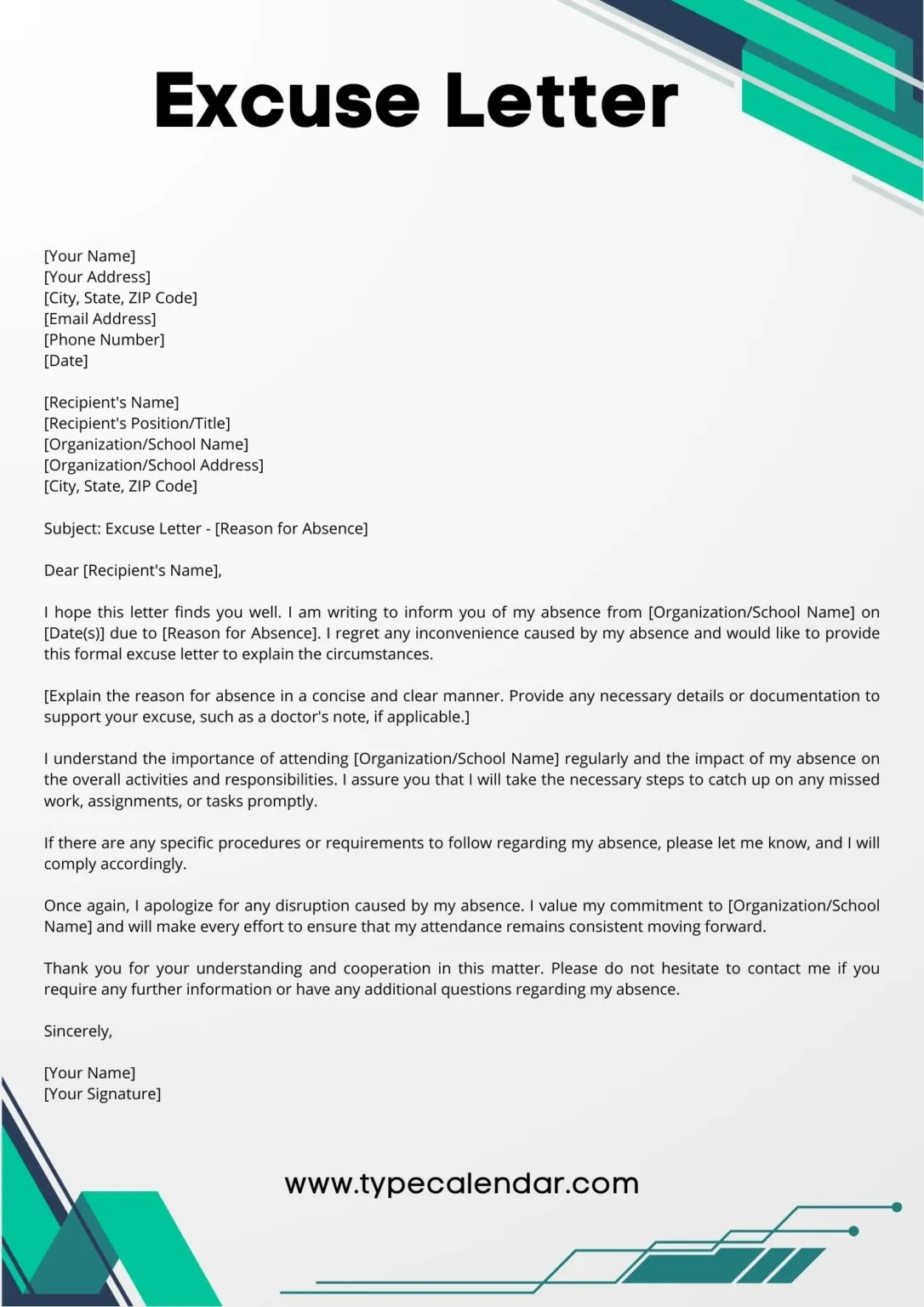
When writing an excuse letter, it is important to include the following key elements to ensure that your message is clear and effective:
- Date: Begin your letter by including the date at the top.
- Recipient’s Information: Address the letter to the appropriate recipient or authority figure.
- Reason for Absence: Clearly state the reason why you are unable to fulfill your commitment.
- Date of Absence: Specify the date(s) of your absence or the duration of your leave.
- Contact Information: Provide a way for the recipient to contact you if necessary.
- Supporting Documentation: If applicable, attach any relevant documents or proof to support your excuse.
- Closing: End your letter with a polite closing, such as “Sincerely” or “Best regards.”
Examples
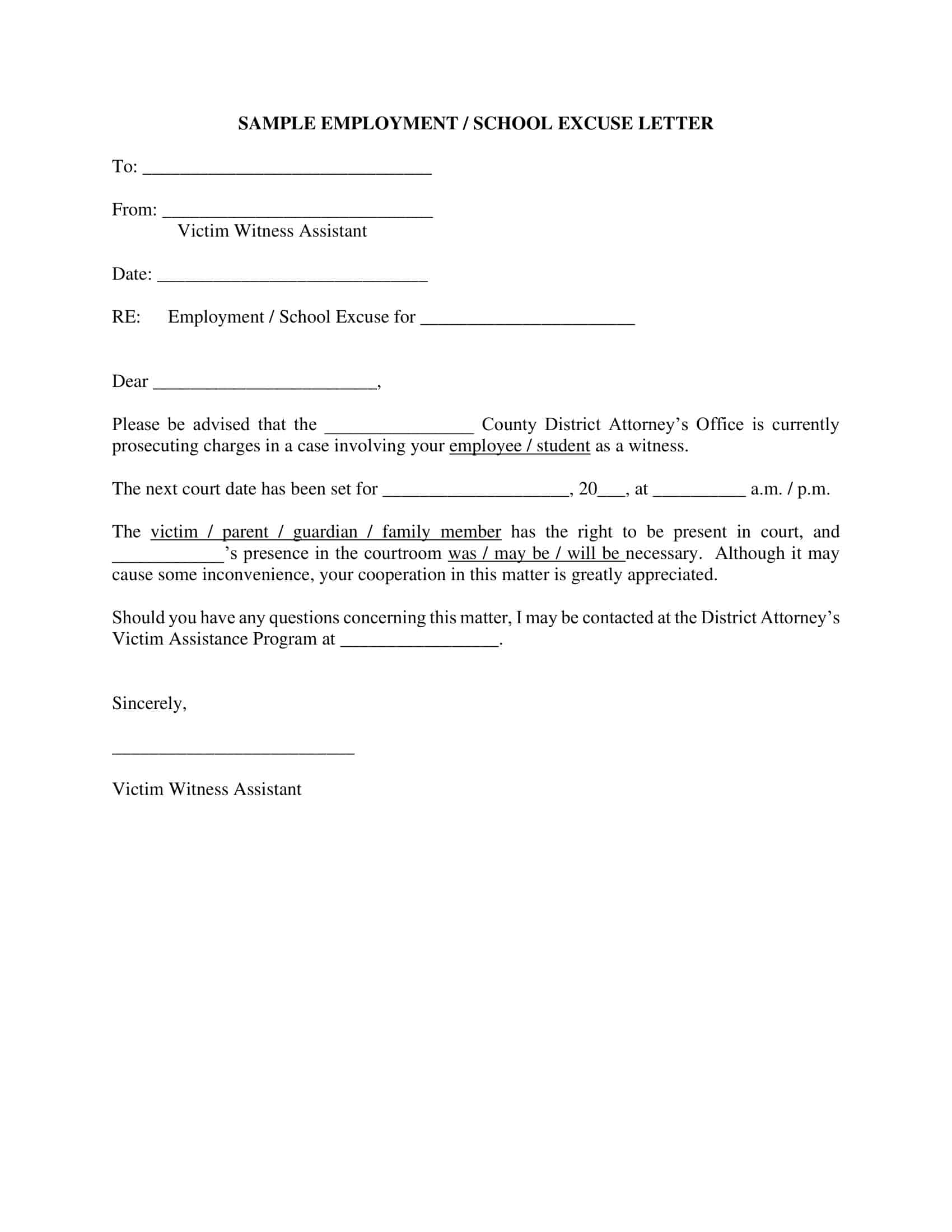
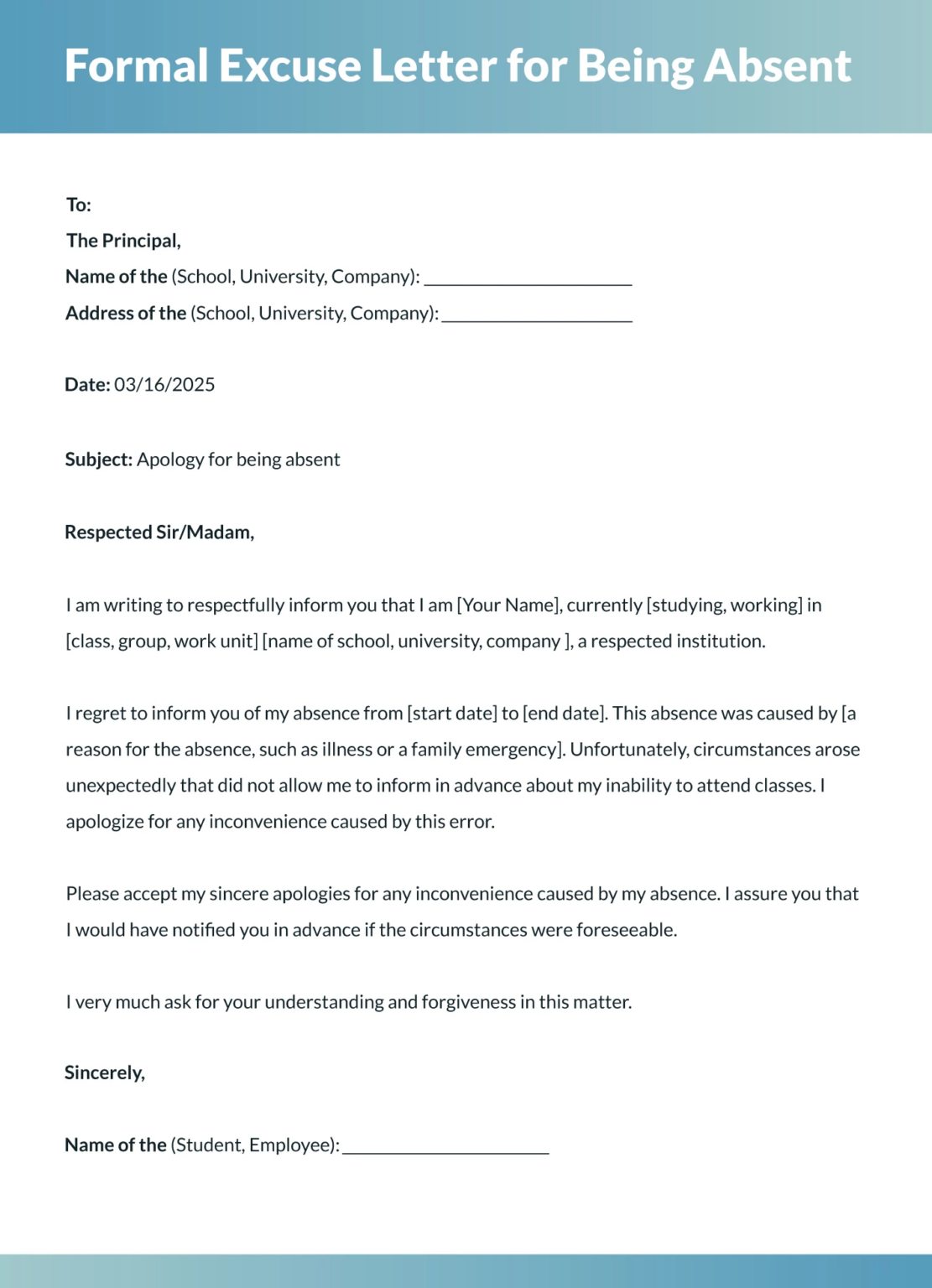
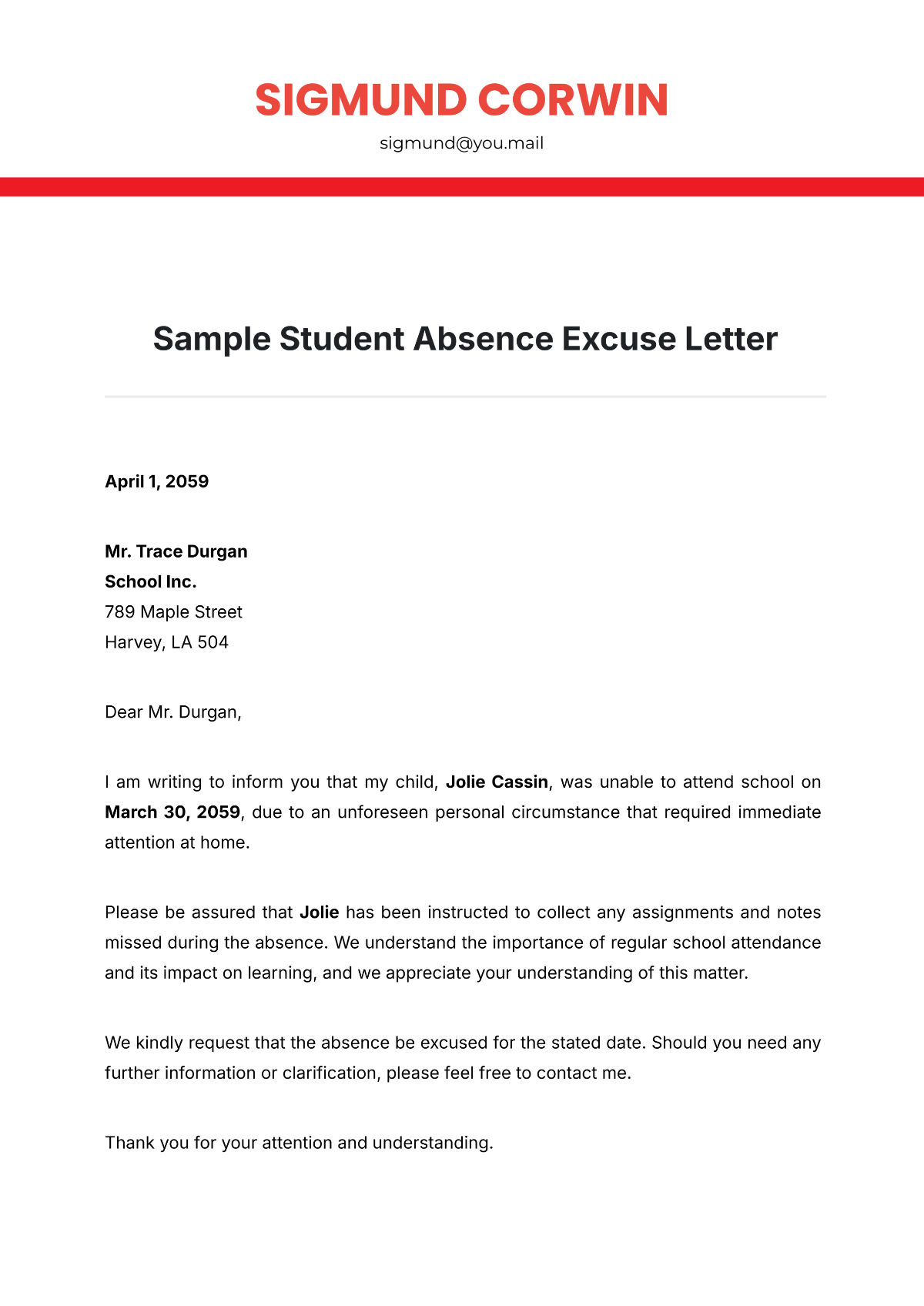
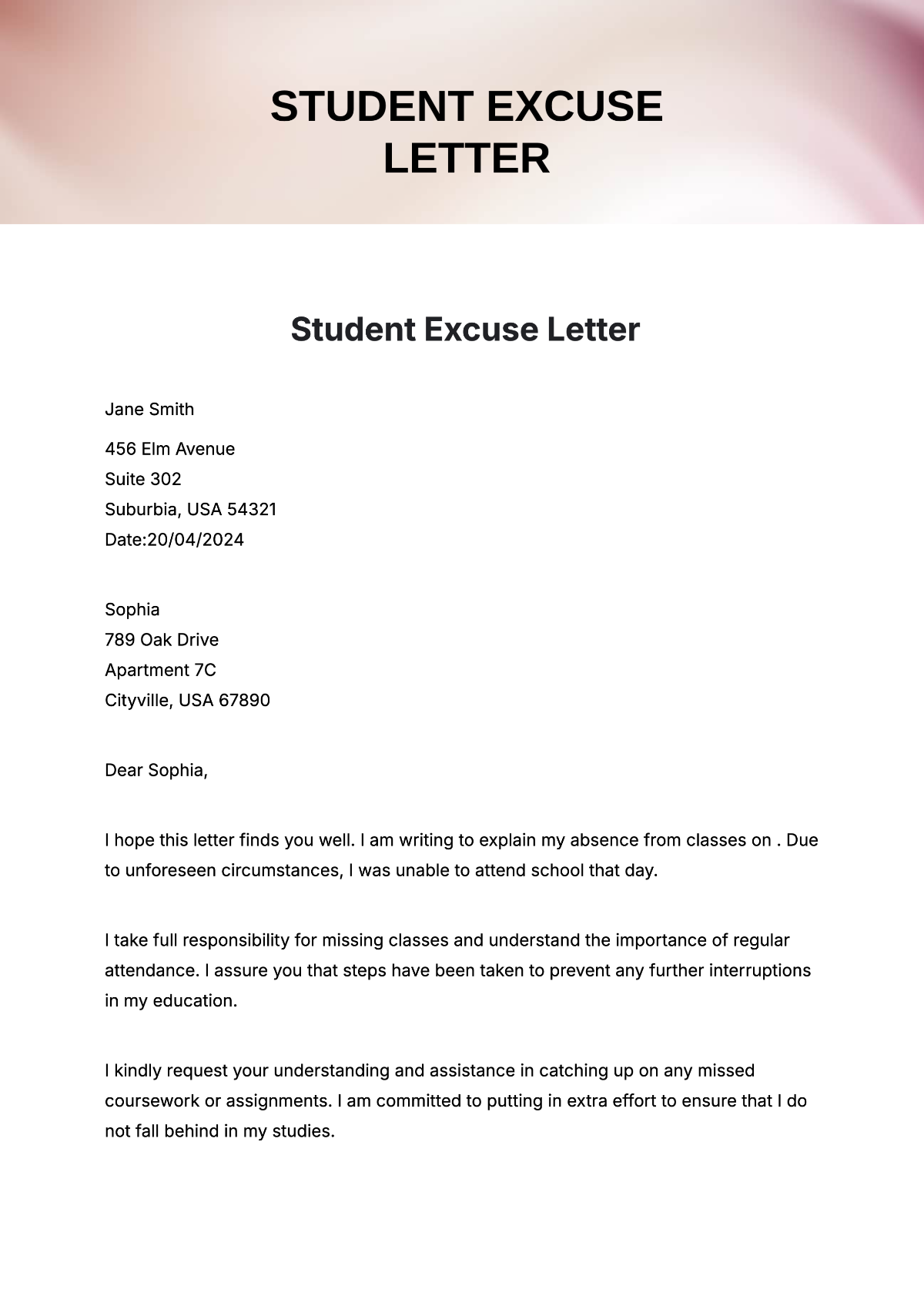
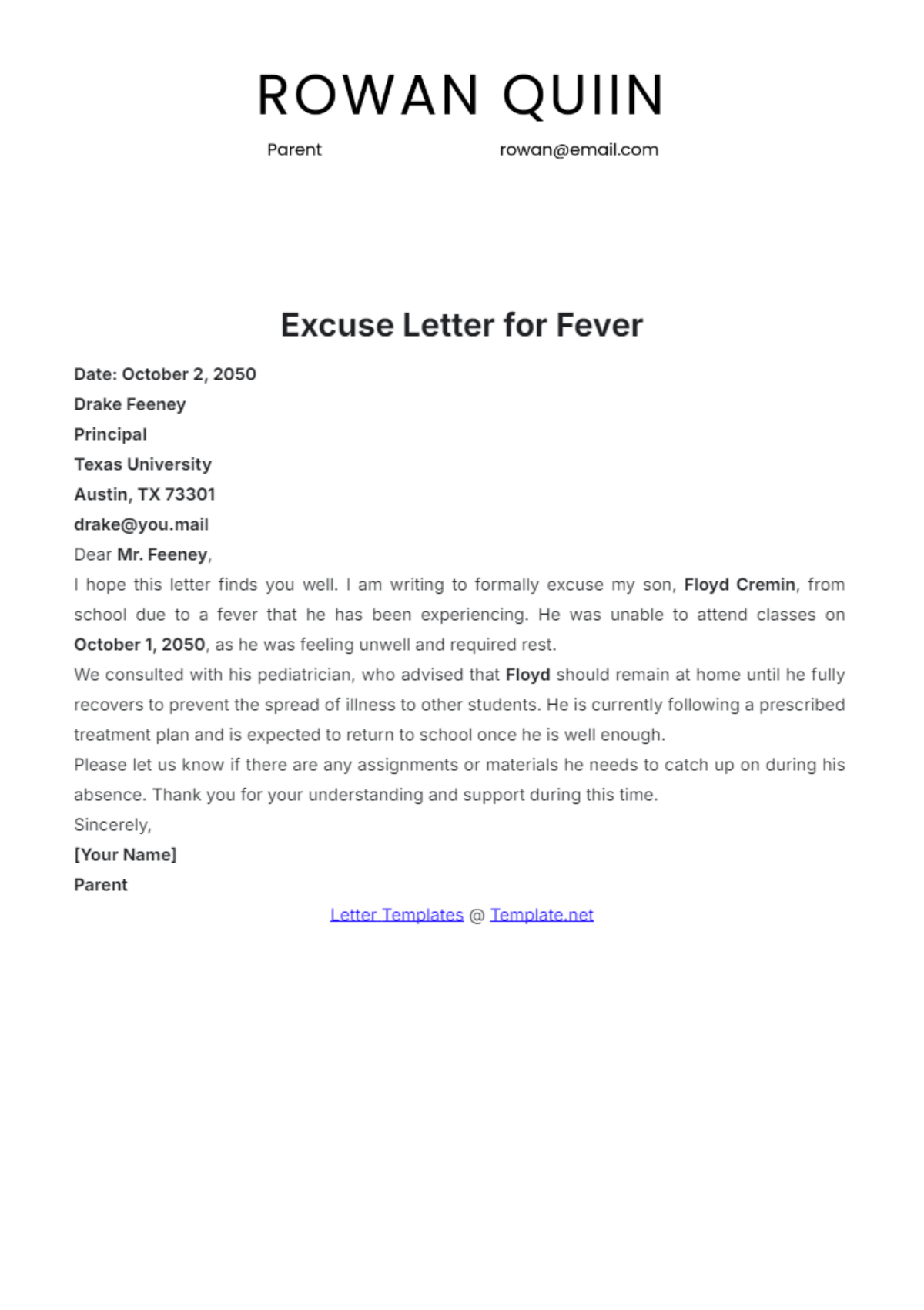
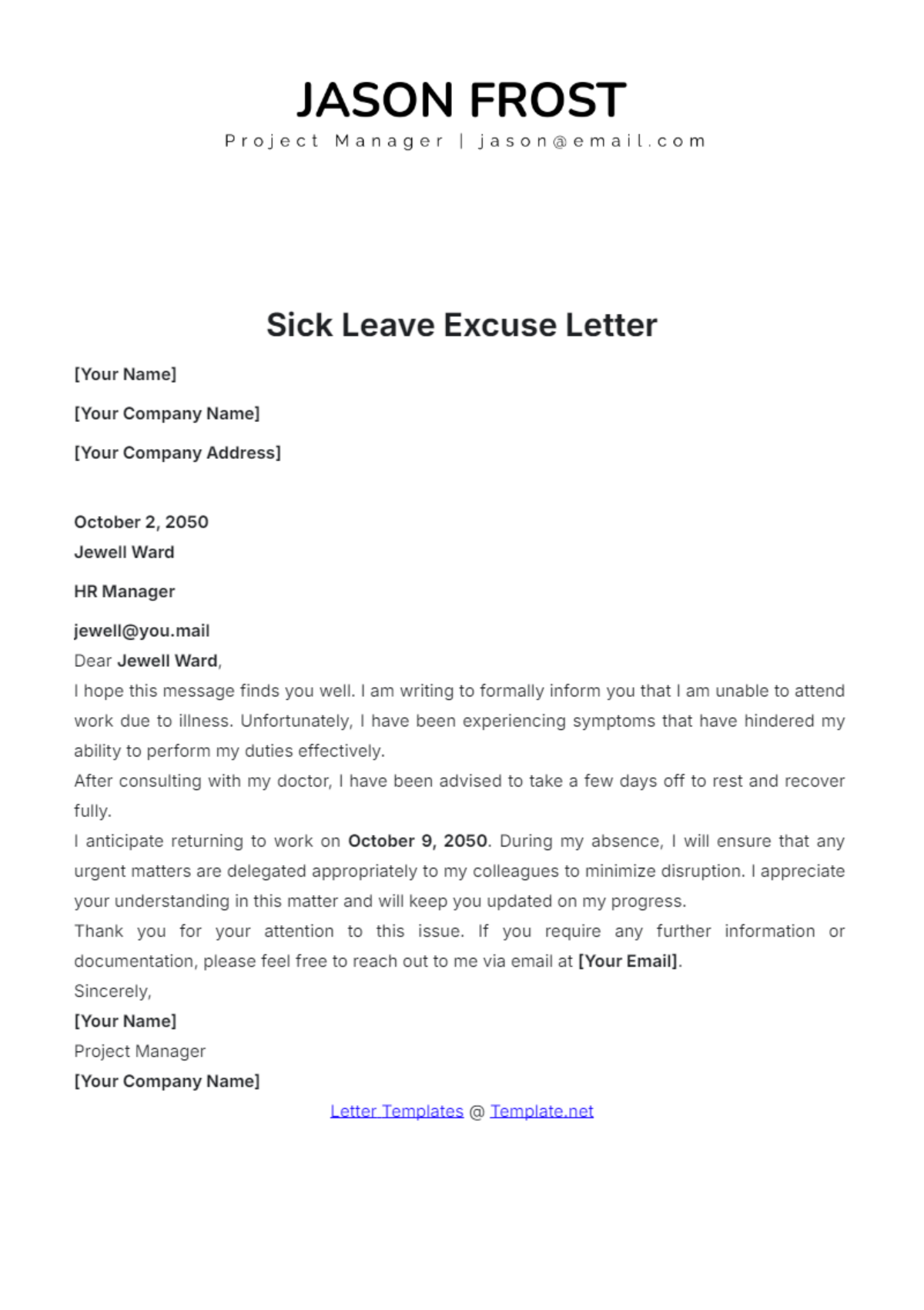
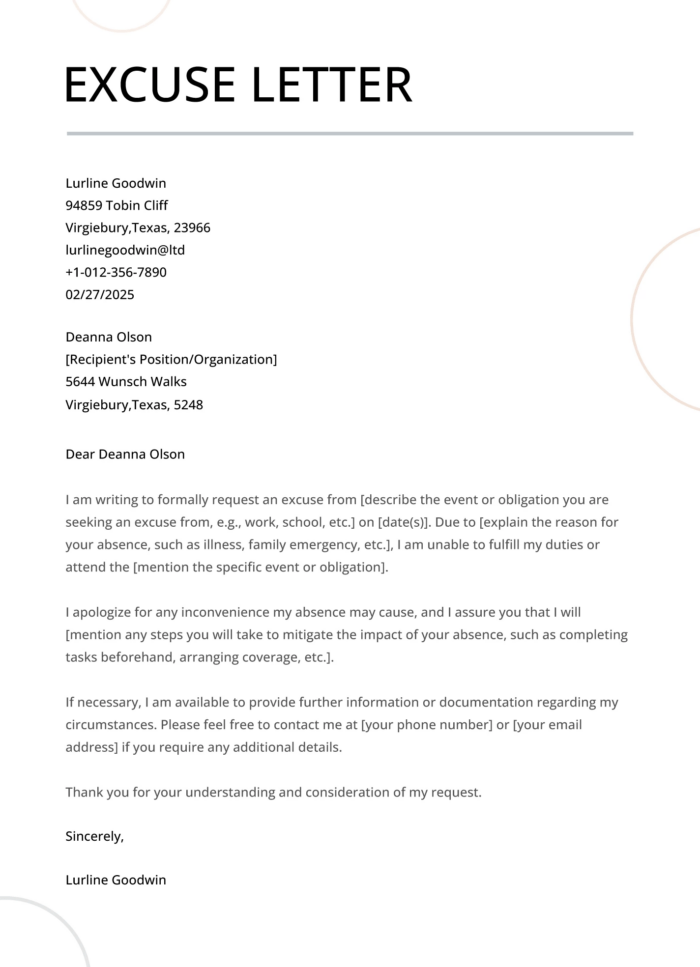
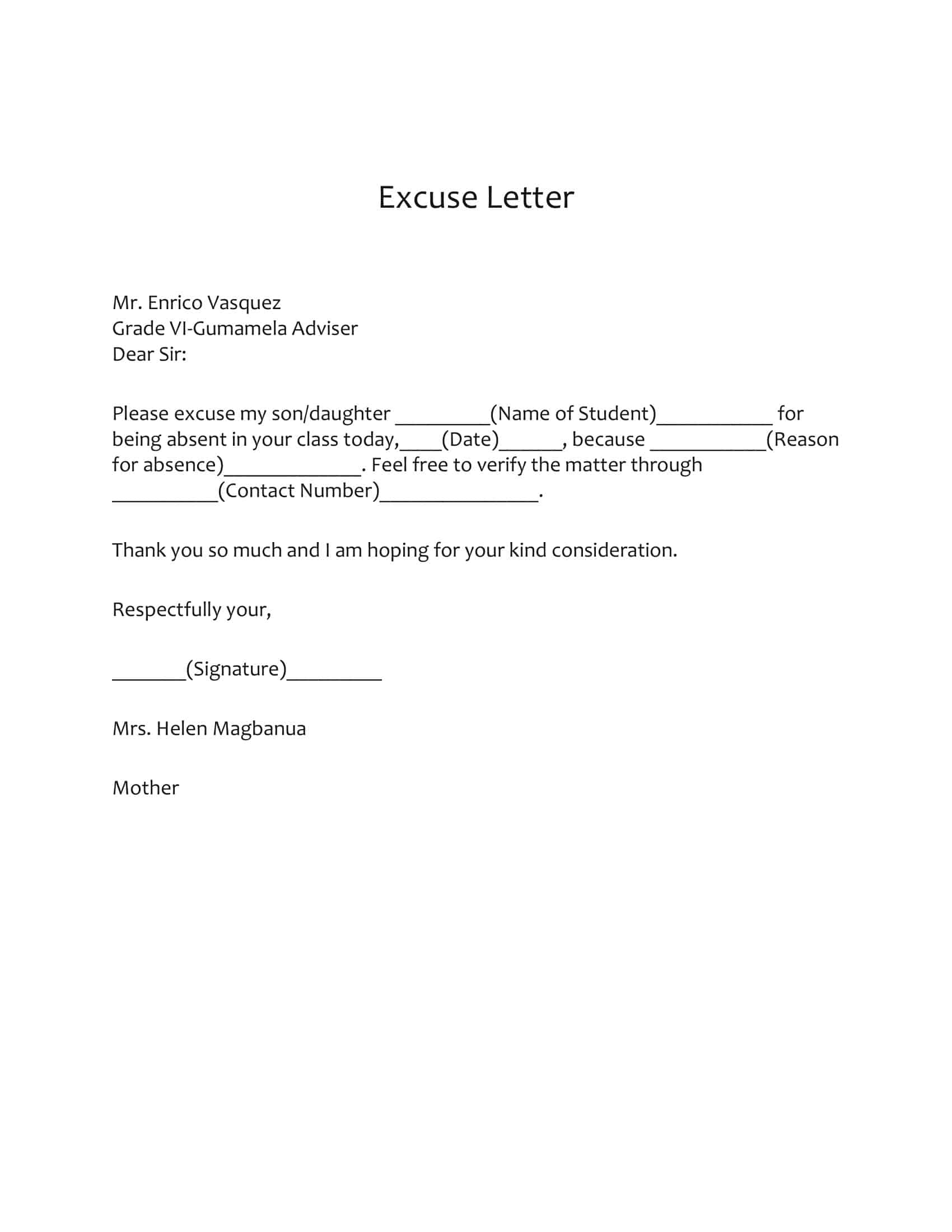
How to Write an Excuse Letter
Writing an excuse letter may seem daunting, but following these simple steps can help you create a well-crafted and professional document:
- Start with a Polite Greeting: Begin your letter with a formal greeting, addressing the recipient by name if possible.
- Explain Your Situation: Clearly and concisely explain the reasons behind your absence, providing as much detail as necessary.
- Apologize for the Inconvenience: Express your regret for any inconvenience caused by your absence and show understanding of the impact it may have.
- Provide Contact Information: Include your contact information in case the recipient needs to reach you for further clarification.
- Close with a Professional Sign-Off: End your letter with a polite closing, such as “Thank you for your understanding” or “Sincerely.”
Tips for Writing an Effective Excuse Letter
To ensure that your excuse letter is well-received and serves its purpose, consider the following tips when crafting your message:
- Be Honest: Always be truthful about the reasons for your absence to maintain credibility.
- Be Concise: Keep your letter clear and to the point, avoiding unnecessary details or explanations.
- Be Professional: Use a formal tone and language when writing your excuse letter to convey professionalism.
- Be Timely: Submit your excuse letter as soon as possible to give the recipient ample notice of your absence.
- Be Grateful: Show appreciation for the recipient’s understanding and consideration of your situation.
- Proofread: Review your letter for any spelling or grammatical errors before sending it to ensure clarity and professionalism.
Writing an excuse letter may not be the most enjoyable task, but it is an essential skill to have in your communication toolkit. By following the guidelines outlined in this guide and considering the tips provided, you can effectively communicate your reasons for absence in a professional and respectful manner. Remember, honesty and transparency are key when it comes to writing an excuse letter that will be well-received by the recipient.
Excuse Letter Template – Download
