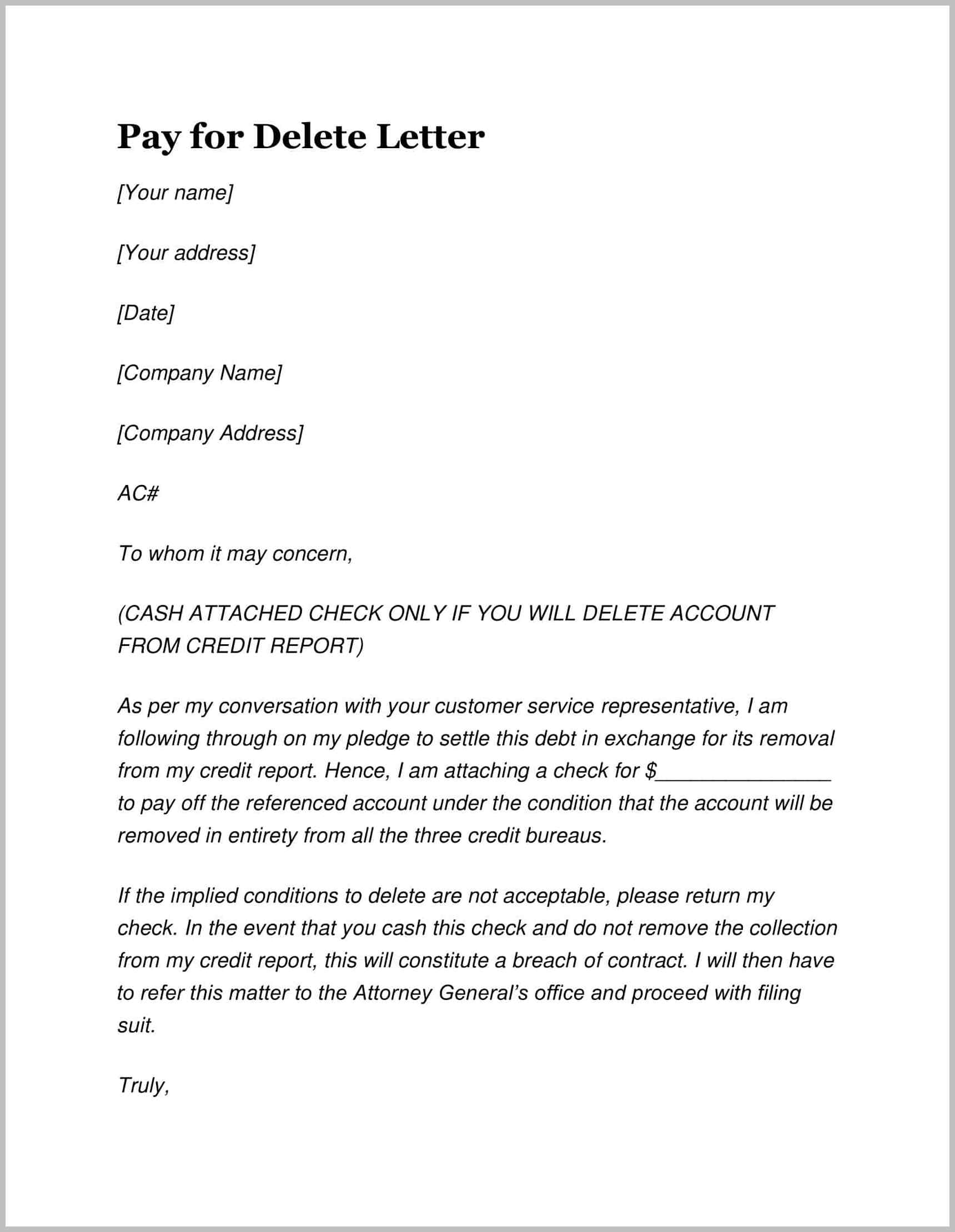
If you’ve ever had a negative mark on your credit report, you may have heard of a pay-for-delete letter as a potential solution. This article will provide you with a comprehensive guide on what pay-for-delete letters are, why they are used, what to include in one, how to go about sending one, and tips for successful negotiation. So, let’s dive in and explore the world of pay-for-delete letters.
What is a Pay-for-Delete Letter?
A pay-for-delete letter is a written agreement between a consumer and a creditor or collection agency. The purpose of this letter is to negotiate the removal of negative information from your credit report in exchange for payment. It’s important to note that pay-for-delete agreements are not guaranteed to work, as creditors and collection agencies are not obligated to comply with such requests. However, some may be willing to remove the negative information in exchange for payment.
Why Use a Pay-for-Delete Letter?
There are several reasons why someone might consider using a pay-for-delete letter. One of the main reasons is to improve their credit score. Negative marks on your credit report can significantly impact your score, making it harder to qualify for loans or credit cards. By removing these negative marks, you can potentially improve your creditworthiness and access better financial opportunities.
What to Include in a Pay-for-Delete Letter
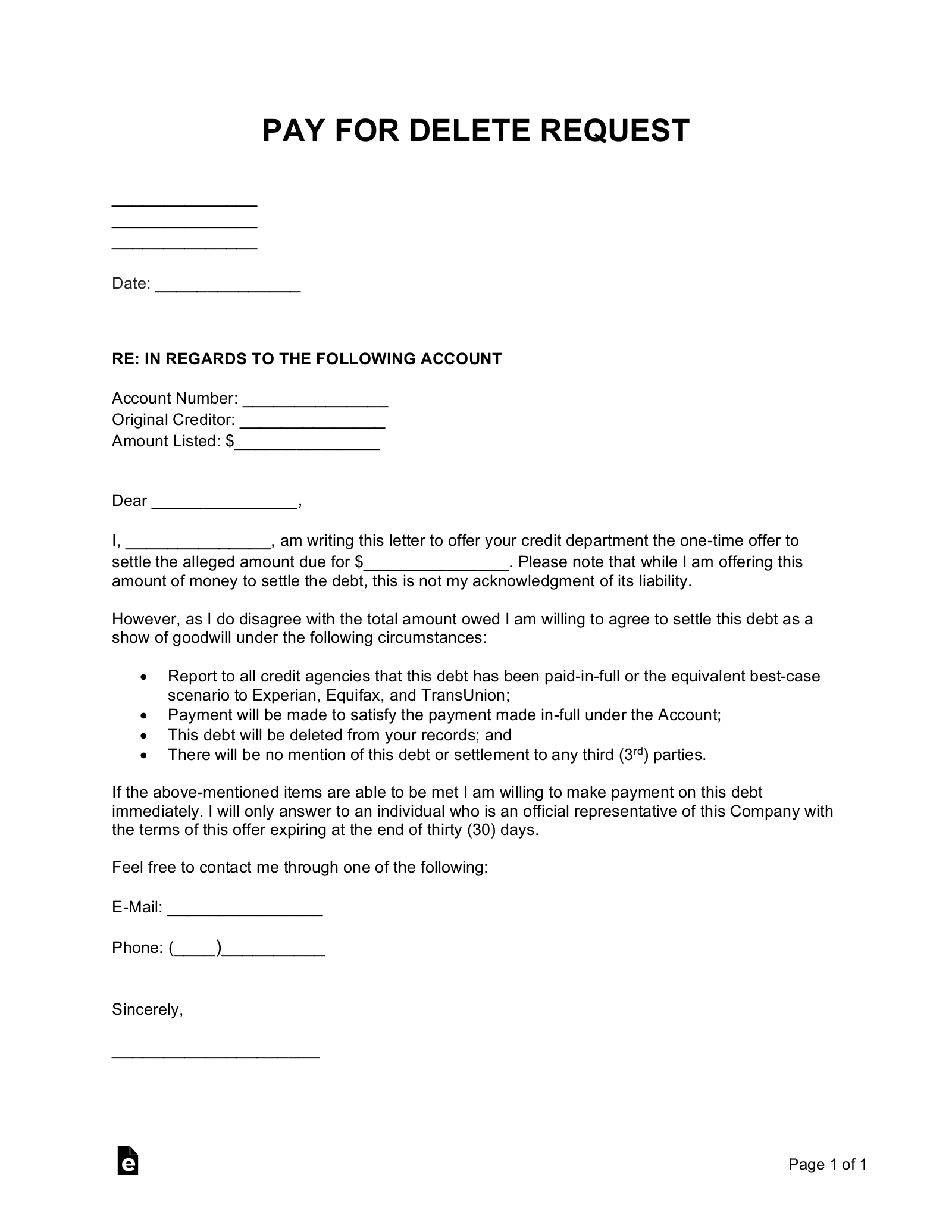
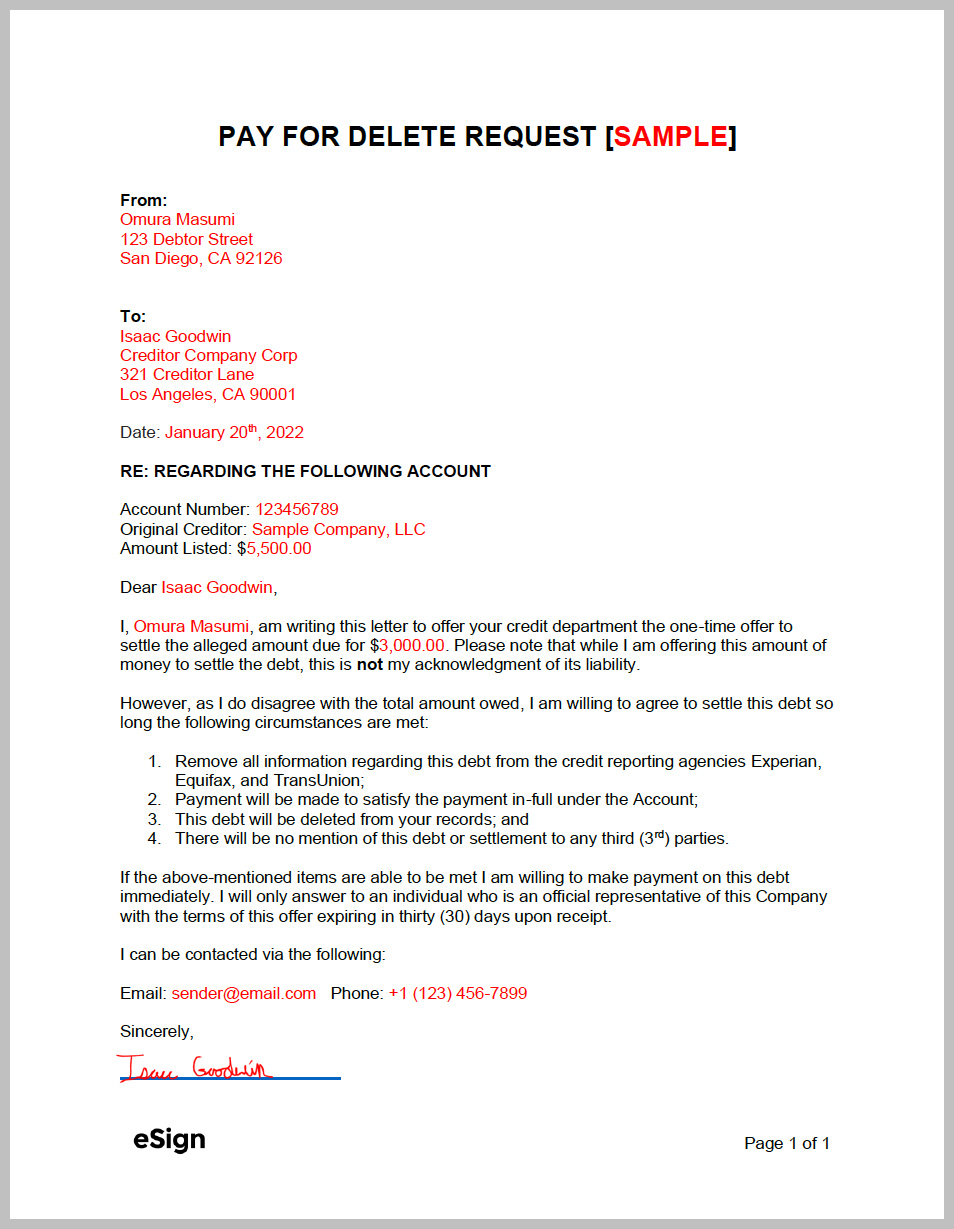
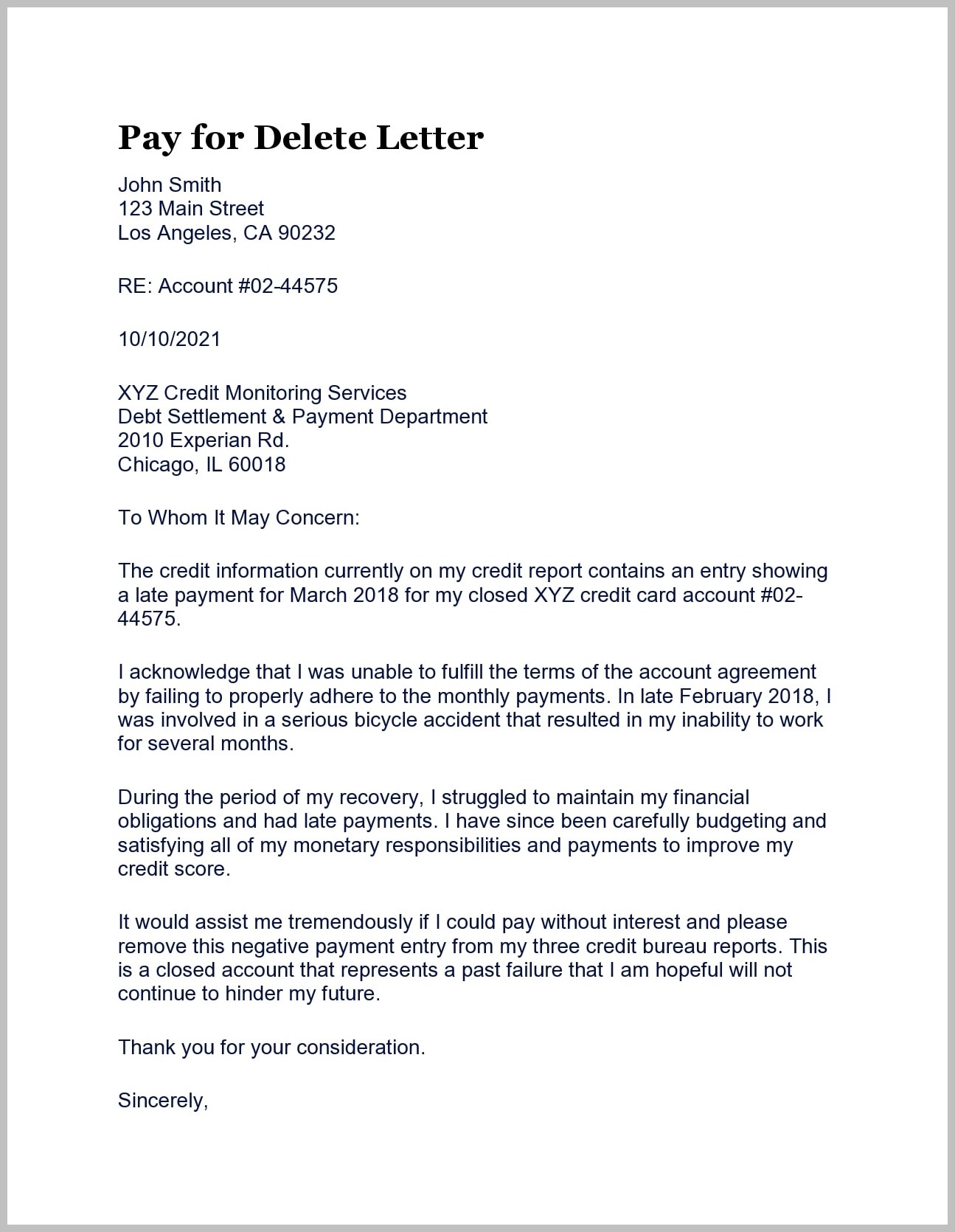
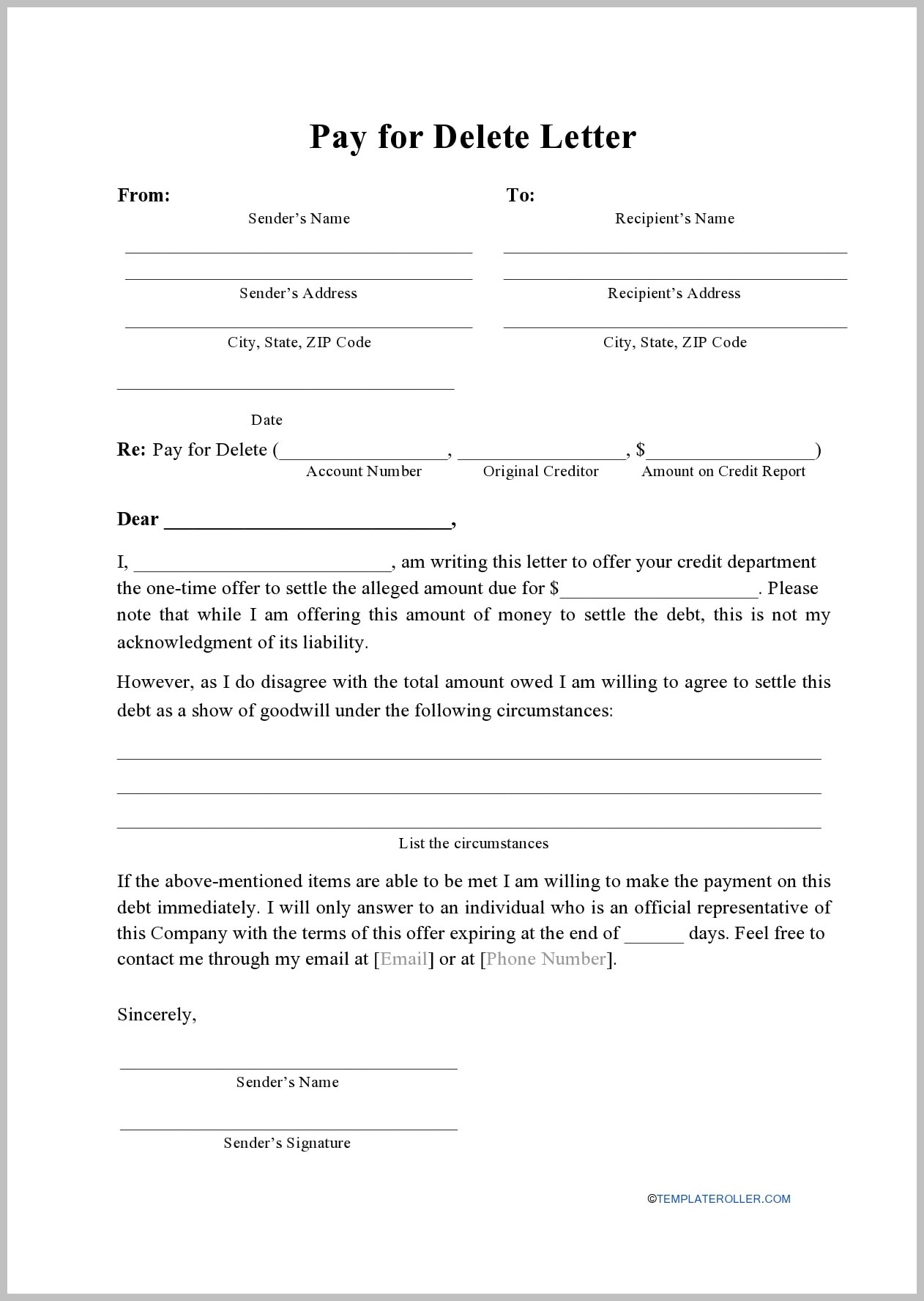
When writing a pay-for-delete letter, it’s essential to include specific details to increase the chances of success. Here are some key elements to include in your letter:
- Your personal information: Include your name, address, phone number, and account number.
- Details of the debt: Clearly state the amount owed and the reason for the debt.
- Negotiation offer: Specify the amount you are willing to pay in exchange for the deletion of the negative information.
- Request for confirmation: Ask for written confirmation of the agreement before making any payment.
Examples
How to Send a Pay-for-Delete Letter
Once you have drafted your pay-for-delete letter, you can send it to the creditor or collection agency via certified mail with a return receipt requested. This will provide you with proof that the letter was received. It’s essential to keep a copy of the letter for your records and follow up with the creditor or collection agency if you do not receive a response within a reasonable timeframe.
Tips for Successful Negotiation
When negotiating a pay-for-delete agreement, it’s crucial to approach the situation with professionalism and persistence. Here are some tips to increase the likelihood of a successful outcome:
- Be polite and respectful: Maintain a positive tone throughout your communication.
- Be prepared to negotiate: Be flexible with your offer and open to counteroffers from the creditor or collection agency.
- Get everything in writing: Ensure that all agreements are documented in writing before making any payments.
- Follow up diligently: Stay on top of the negotiation process and follow up as needed to ensure a timely resolution.
- Seek professional help if needed: If you are unsure about how to proceed, consider seeking advice from a credit counselor or financial advisor.
Conclusion
Pay-for-delete letters can be a useful tool for improving your credit score and removing negative information from your credit report. While there is no guarantee of success, approaching the negotiation process with the right mindset and preparation can increase your chances of a positive outcome. By following the tips outlined in this guide and being persistent in your efforts, you may be able to successfully negotiate a pay-for-delete agreement with your creditors or collection agencies.
Pay-for-Delete Letter Template
