In the healthcare industry, protecting patient data is paramount. With the rise of digital information exchange, healthcare providers often rely on third-party vendors to handle sensitive patient information. This is where Business Associate Agreements (BAAs) come into play, legally obligating these vendors to adhere to strict standards set forth by the Health Insurance Portability and Accountability Act (HIPAA).
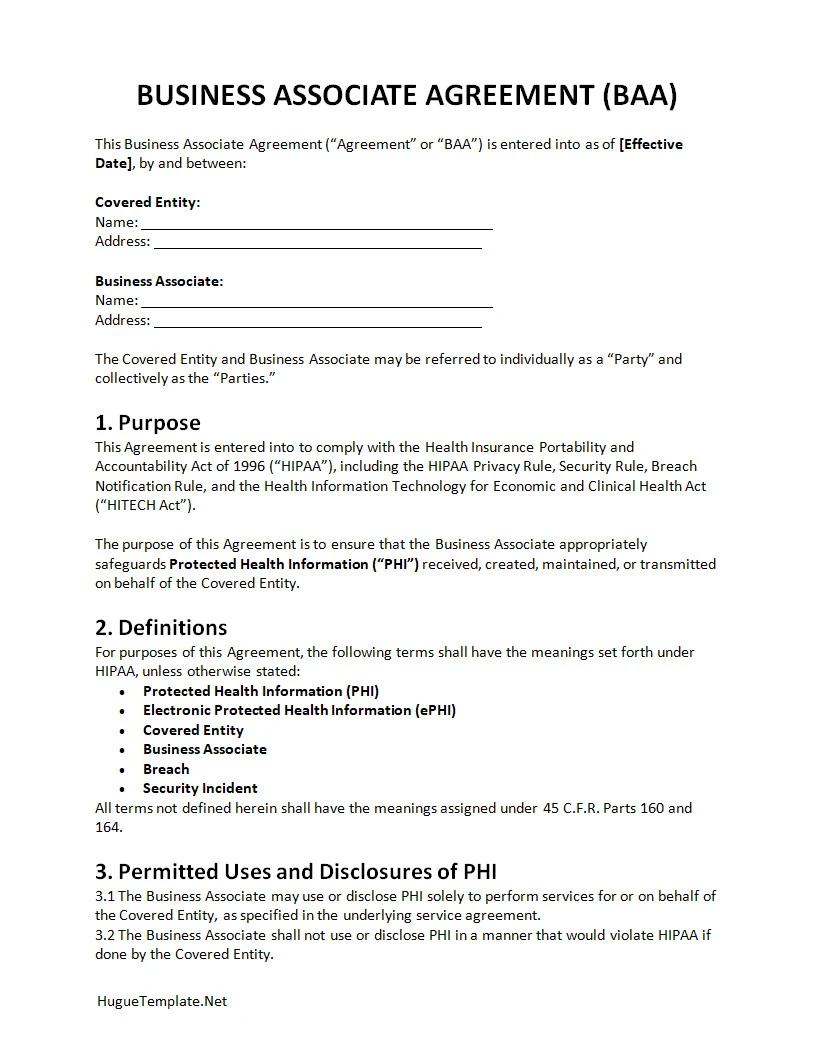
Through BAAs, healthcare providers ensure that their Business Associates handle, secure, and disclose Protected Health Information (PHI) with the same level of care and security as they do.
What is a Business Associate Agreement?
A Business Associate Agreement is a legally binding contract between a healthcare provider (Covered Entity) and a third-party vendor (Business Associate) that outlines the responsibilities and obligations of each party when it comes to protecting patient data.
HIPAA requires these agreements to ensure that Business Associates comply with the same rules and regulations that Covered Entities follow in safeguarding PHI.
Why Are BAAs Important?
Protecting Patient Privacy
One of the primary reasons why Business Associate Agreements are important is to protect patient privacy. With the increasing threat of data breaches and cyberattacks, safeguarding sensitive health information is crucial to maintaining patient trust and confidentiality. BAAs help ensure that Business Associates handle PHI with the utmost care and security.
Compliance with HIPAA Regulations
HIPAA regulations require Covered Entities to safeguard patient data and hold Business Associates to the same standards. By entering into a BAA, healthcare providers can ensure that their vendors comply with HIPAA requirements for data protection, privacy, and security. This helps avoid potential violations and penalties for non-compliance.
Risk Management
Business Associate Agreements are a key component of risk management in healthcare organizations. By clarifying the responsibilities and liabilities of each party, BAAs help mitigate the risk of data breaches and unauthorized disclosures of PHI. These agreements establish a framework for data security and outline procedures for responding to security incidents.
Accountability and Liability
BAAs establish clear accountability and liability for protecting patient data. In the event of a data breach or HIPAA violation, the agreement outlines the responsibilities of each party and assigns liability for any non-compliance. This helps ensure that Business Associates are held accountable for safeguarding PHI and adhering to data security best practices.
Building Trust and Confidence
By implementing Business Associate Agreements, healthcare providers can build trust and confidence with their patients. Patients expect that their health information will be kept secure and confidential, and BAAs demonstrate a commitment to protecting their privacy. Establishing strong data protection measures through BAAs can enhance the reputation and credibility of healthcare organizations.
What to Include in a Business Associate Agreement?
Definition of Responsibilities
The first step in creating a Business Associate Agreement is defining the responsibilities of each party. The Covered Entity should outline the specific tasks and obligations that the Business Associate must fulfill in handling PHI. This includes details on data access, storage, transmission, and disposal, as well as any security measures that need to be implemented.
Permissible Uses of PHI
Another critical component of a BAA is specifying the permissible uses of PHI by the Business Associate. The agreement should clearly outline the purposes for which PHI can be accessed, used, or disclosed. It should also identify any limitations on the disclosure of PHI to ensure compliance with HIPAA privacy rules and patient consent requirements.
Breach Notification Procedures
Business Associate Agreements should include detailed breach notification procedures to ensure prompt reporting and response to security incidents. The agreement should define what constitutes a data breach, who should be notified, the timeline for reporting breaches, and the steps to be taken to mitigate the impact of the breach. Clear procedures help ensure timely action and compliance with breach notification requirements.
Compliance Requirements
Compliance requirements are a crucial part of Business Associate Agreements to ensure that Business Associates adhere to HIPAA regulations. The agreement should outline the specific requirements for safeguarding PHI, including data security measures, access controls, encryption standards, and employee training. By clearly defining compliance expectations, healthcare providers can ensure that Business Associates meet the necessary standards for data protection.
Term and Termination
The term and termination clause of a BAA defines the duration of the agreement and the conditions under which it can be terminated. This section should specify the effective date of the agreement, the length of the term, and the circumstances under which either party can terminate the agreement. It should also outline the procedures for terminating the agreement and any requirements for data return or destruction upon termination.
Indemnification and Liability
Indemnification and liability provisions in a Business Associate Agreement allocate responsibility and risk between the Covered Entity and the Business Associate. These provisions outline the financial consequences of non-compliance or data breaches, including any costs associated with investigations, notifications, legal fees, and settlements. By clearly defining indemnification and liability terms, BAAs protect both parties from potential financial losses.
How to Implement Business Associate Agreements Successfully
Thoroughly Vet Business Associates
Before entering into a Business Associate Agreement, it is essential to thoroughly vet potential vendors to assess their security practices, compliance efforts, and overall reliability. Conducting due diligence can help ensure that Business Associates have the necessary safeguards in place to protect patient data and comply with HIPAA regulations.
Customize Agreements to Fit Specific Needs
Each Business Associate relationship is unique, and BAAs should be customized to address the specific needs and risks associated with the services provided by the vendor. Tailoring agreements to the nature of the business relationship, the type of data involved, and the security requirements can help ensure that the agreement effectively addresses the risks and compliance obligations of both parties.
Regularly Review and Update Agreements
Regulations and technologies in the healthcare industry are constantly evolving, making it essential to regularly review and update Business Associate Agreements. Periodic reviews can help ensure that the agreement reflects current HIPAA requirements, industry best practices, and any changes in the business relationship between the Covered Entity and the Business Associate. Updating agreements as needed helps maintain compliance with data protection standards.
Provide Ongoing Training and Support
Education is key to ensuring that Business Associates understand their obligations under the BAA and comply with HIPAA regulations. Providing ongoing training and support on data security practices, privacy requirements, and breach response protocols can help ensure that Business Associates have the knowledge and resources they need to protect patient data effectively. Regular training sessions and updates can reinforce the importance of data security and privacy in healthcare operations.
Monitor and Enforce Compliance
Monitoring and enforcing compliance with Business Associate Agreements is essential to ensure that Business Associates meet their obligations and protect patient data effectively. Implementing monitoring mechanisms, such as regular audits, security assessments, and performance evaluations, can help track compliance with the terms of the agreement and identify any potential risks or issues. Enforcing compliance through corrective actions or contract penalties can help mitigate the risk of data breaches and ensure that Business Associates take their data protection responsibilities seriously.
Business Associate Agreement Template – DOWNLOAD
