Preparing for a trip with a baby requires more planning than packing for yourself. From diapers and feeding supplies to extra clothing and sleep essentials, having everything organized can make traveling with an infant much easier. An infant packing list helps parents and caregivers prepare the necessary items without forgetting important baby supplies.
Whether you are planning a family vacation, visiting relatives, preparing a hospital bag, or getting your baby ready for daycare, a checklist can help you stay organized. Instead of remembering everything at the last minute, you can use a printable packing list to track each item as you prepare.
In this guide, you will find a practical infant packing list covering clothing, diapering, feeding, hygiene, sleep, and travel essentials. You will also discover helpful packing tips and learn how to customize your checklist for different situations.
What Is an Infant Packing List?
An infant packing list is a checklist used by parents and caregivers to organize essential items needed when caring for a baby away from home. It provides a structured way to prepare, track, and verify supplies before leaving.
A typical baby packing checklist includes everyday necessities such as diapers, wipes, baby clothes, bottles, feeding supplies, toiletries, and travel equipment. Depending on the purpose of the trip, it may also include additional items such as medical supplies, comfort items, and important documents.
Using a checklist is especially helpful because babies have different needs depending on their age, feeding routine, health, and daily schedule. Having everything written down makes preparation easier and helps reduce last-minute stress.
Free Printable Infant Packing List Template
Our printable infant packing list template provides an organized way to prepare everything your baby may need. The worksheet features clearly labeled sections with checkboxes, allowing you to mark each item as you pack it.
The simple layout makes it suitable for family vacations, overnight trips, daycare preparation, and everyday outings. You can also add personal items based on your baby’s routine and specific requirements.
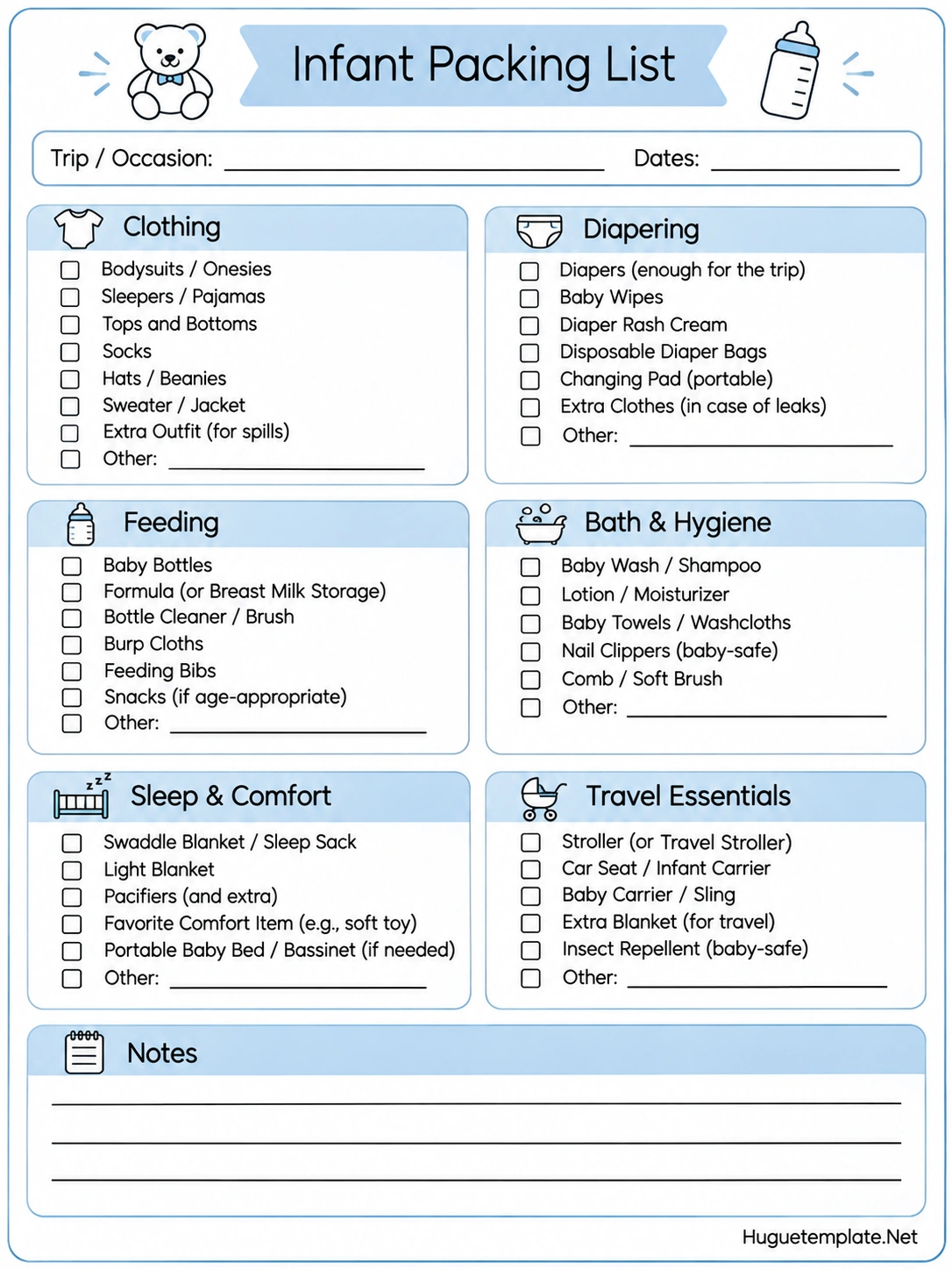
Print a copy and write down your trip details before checking off each item. The notes section also provides extra space for special instructions, additional supplies, or items specific to your baby.
Essential Infant Packing List
Every baby has different needs, but several basic supplies are useful for most trips and outings. The following categories can help you organize your baby’s belongings before departure.
1. Baby Clothing
Pack enough clothing to keep your infant comfortable throughout the trip. Babies can easily spill food, drool, or experience diaper leaks, so bringing a few extra outfits is a good idea.
- Bodysuits or onesies.
- Sleepers and pajamas.
- Tops and bottoms.
- Socks and booties.
- Hats or beanies, depending on the weather.
- Sweater or jacket for cooler temperatures.
- Extra outfits for unexpected spills.
- Weather-appropriate clothing.
Consider the destination’s climate when selecting baby clothes. Lightweight cotton outfits may be suitable for warm weather, while layered clothing can help keep your baby comfortable in cooler conditions.
2. Diapering Essentials
Diapering supplies are among the most important items on an infant travel checklist. Make sure you have enough supplies for the entire trip, along with additional items in case of unexpected delays.
- Disposable or reusable diapers.
- Baby wipes.
- Diaper rash cream.
- Portable changing pad.
- Disposable diaper bags.
- Hand sanitizer for caregivers.
- Extra baby clothes.
- Wet bag for soiled clothing.
Keep a small diaper-changing kit in your diaper bag so that essential supplies are easy to reach during outings. Store used diapers and soiled clothing separately from clean items.
3. Feeding Supplies
Feeding arrangements depend on whether your baby is breastfed, formula-fed, or eating age-appropriate solid foods. Prepare the supplies that match your baby’s regular feeding routine.
- Baby bottles.
- Formula or breast milk storage supplies, if needed.
- Bottle brush and cleaning supplies.
- Burp cloths.
- Feeding bibs.
- Breastfeeding cover, if preferred.
- Breast pump and accessories, if needed.
- Age-appropriate snacks or baby food, if applicable.
- Insulated feeding bag, if needed.
Plan feeding supplies according to the length of your trip and access to clean water, refrigeration, and bottle-cleaning facilities. Follow safe storage and preparation instructions for breast milk and infant formula.
4. Bath and Hygiene Supplies
Babies have delicate skin, so bringing familiar hygiene products can make it easier to maintain their usual care routine while traveling.
- Baby wash or shampoo.
- Baby lotion or moisturizer.
- Soft baby towels.
- Washcloths.
- Baby-safe nail clippers.
- Baby comb or soft brush.
- Diaper rash cream.
- Extra washcloths.
Choose products appropriate for your baby’s age and skin sensitivity. Travel-sized containers can also help reduce the amount of space required in your luggage.
5. Sleep and Comfort Essentials
Maintaining a familiar sleep routine can help babies settle more comfortably in a new environment. Pack the items needed to create a suitable sleep arrangement.
- Portable, safety-approved crib or bassinet, if needed.
- Fitted crib sheets designed for the sleep surface.
- Wearable blanket or appropriately sized sleep sack.
- Pacifiers and extra pacifiers, if used.
- Comfort items for supervised awake time.
- White noise machine, if normally used.
- Baby monitor, if needed.
Always follow safe sleep recommendations. Place your baby on their back on a firm, flat sleep surface with a fitted sheet. Keep pillows, loose blankets, stuffed toys, and other soft objects out of the baby’s sleep area. A familiar comfort toy should only be used during supervised awake time when appropriate.
6. Travel Essentials
Travel equipment helps keep your infant comfortable and secure while moving between destinations. Choose items based on your transportation method and the length of your journey.
- Age- and size-appropriate car seat.
- Stroller or travel stroller.
- Baby carrier or sling, if suitable.
- Diaper bag.
- Portable changing mat.
- Extra blanket for supervised use.
- Weather protection for the stroller.
- Baby travel documents, if required.
For car journeys, use a properly installed rear-facing car seat that meets applicable safety requirements. Follow the manufacturer’s instructions and never leave your baby unattended in a vehicle.
Infant Packing List for Different Situations
Not every trip requires the same supplies. Adjusting your baby packing checklist to match the occasion can help you avoid carrying unnecessary items.
Infant Packing List for a Day Trip
A short outing usually requires only the basic supplies needed for several hours away from home.
- Diapers and baby wipes.
- One or two extra outfits.
- Feeding supplies.
- Burp cloth and bib.
- Portable changing pad.
- Pacifier, if used.
- Baby blanket for appropriate supervised use.
Infant Packing List for an Overnight Trip
An overnight stay requires additional clothing, feeding supplies, and a safe sleeping arrangement.
- Multiple outfits and pajamas.
- Enough diapers and wipes, plus extras.
- Feeding supplies for the full stay.
- Baby toiletries.
- Portable crib or suitable bassinet.
- Fitted sheets and sleep sack.
- Extra pacifiers, if used.
- Necessary medications and health supplies.
Infant Packing List for Daycare
Preparing a daycare bag requires supplies that support your baby’s daily routine. Check with the childcare provider first because some facilities have specific labeling, feeding, and storage requirements.
- Extra changes of clothing.
- Diapers and wipes.
- Diaper cream, if permitted.
- Prepared feeding supplies according to daycare instructions.
- Breast milk or formula, if applicable.
- Pacifier, if used.
- Comfortable sleepwear, if requested.
- Written feeding and care instructions.
Infant Hospital or Birth Bag
Parents preparing for a newborn’s arrival may need a separate hospital bag. This list should focus on items requested by the hospital and supplies needed for the baby’s first days.
- Newborn bodysuits and sleepers.
- Going-home outfit.
- Newborn diapers, if not provided by the hospital.
- Baby wipes, if needed.
- Receiving blanket for supervised use or transportation.
- Newborn hat, if appropriate.
- Rear-facing infant car seat for the journey home.
Ask your hospital or birth center which newborn supplies are provided and what parents should bring. Requirements can vary between facilities.
Tips for Packing Baby Essentials Efficiently
Packing for an infant does not have to be complicated. A little preparation and organization can make the process more manageable.
- Start early: Prepare your baby’s supplies a day or two before departure whenever possible.
- Use separate packing bags: Organize clothing, feeding supplies, and diapering essentials into different compartments.
- Pack extra clothing: Include additional outfits for spills, leaks, and unexpected changes.
- Keep essentials accessible: Place diapers, wipes, and feeding supplies in an easy-to-reach diaper bag.
- Check the weather: Choose clothing and travel accessories that suit the destination.
- Follow your baby’s routine: Bring familiar feeding and care supplies to make the trip easier.
- Use a checklist: Mark each item as you pack it to avoid forgetting important supplies.
- Review your supplies before returning: Check what needs to be replenished before the next outing.
How to Customize Your Infant Packing List
A printable infant packing list is most useful when it reflects your baby’s individual needs. You can customize the checklist according to age, feeding method, travel duration, and destination.
For example, a newborn may require more frequent clothing changes and specific feeding supplies, while an older infant who eats solid foods may need bibs, utensils, and appropriate food containers.
Consider these factors when customizing your checklist:
- Baby’s age: Include supplies appropriate for your infant’s developmental stage.
- Trip duration: Adjust the number of diapers, outfits, and feeding supplies.
- Destination: Consider the climate, available facilities, and travel conditions.
- Feeding routine: Prepare the appropriate breast milk, formula, bottles, or solid food supplies.
- Special requirements: Include prescribed medications, medical equipment, or other necessary care items.
You can also use the notes section of the printable template to record special instructions, packing reminders, or items that need to be purchased before departure.
Frequently Asked Questions About Infant Packing Lists
What should I pack for an infant when traveling?
Essential items include diapers, wipes, extra clothing, feeding supplies, baby toiletries, a suitable sleep arrangement, and age-appropriate travel equipment. The exact list depends on your baby’s age, feeding routine, destination, and trip duration.
How many diapers should I pack for a trip?
Pack enough diapers for your baby’s usual changing frequency throughout the trip, plus extra supplies for delays or unexpected situations. Your baby’s age and individual routine will determine the amount needed.
What should I put in an infant diaper bag?
A basic diaper bag should include diapers, wipes, a portable changing pad, diaper cream, extra clothing, burp cloths, feeding supplies, and a bag for soiled items. Adjust the contents according to your baby’s needs and the length of your outing.
What clothes should I pack for a newborn?
Pack comfortable bodysuits, sleepers, socks, and weather-appropriate outerwear. Include extra outfits because newborns may need frequent clothing changes.
What should I pack for an infant staying overnight?
For an overnight stay, bring enough clothing, diapers, wipes, feeding supplies, toiletries, and safe sleep equipment. Include any necessary medications and familiar items for your baby’s supervised awake time.
What should I pack for a baby going to daycare?
Typical daycare supplies include extra clothing, diapers, wipes, feeding supplies, and a pacifier if used. Check the daycare provider’s instructions for labeling, food storage, and other required items.
Do I need a separate hospital bag for my newborn?
A separate newborn hospital bag can make preparation easier. It may include a going-home outfit, newborn clothing, diapers if required, and a suitable car seat for the journey home. Check with your hospital about which supplies are provided.
How can I avoid forgetting baby essentials?
Use a printable infant packing list and organize items into separate categories. Check each item as you pack it, and review the completed list before leaving home.
Conclusion
Preparing for a trip with an infant becomes much easier when you have a clear and organized packing plan. From clothing and diapering supplies to feeding equipment, hygiene products, and travel essentials, every category plays an important role in keeping your baby comfortable and cared for.
An infant packing list helps parents and caregivers track important items, avoid last-minute preparation, and customize their supplies for different situations. Whether you are planning a short outing, an overnight stay, a vacation, or daycare preparation, a printable checklist can make the process more organized.
Download and print the infant packing list template, customize it according to your baby’s needs, and check off each item as you prepare. With a little planning, you can feel more confident and ready for your next trip with your little one.
Download: Infant Packing List Template
