Moving to a new home can be exciting, but packing everything you own is often one of the most stressful parts of the process. Without a clear plan, it is easy to forget important belongings, pack items you still need, or lose track of what is inside each box. A moving packing list helps you stay organized and turn a complicated move into manageable steps.
A moving packing list is a room-by-room guide used to organize, sort, and track household belongings before moving day. It helps you decide what to pack, identify essential items, label boxes, and monitor your packing progress. Whether you are moving to an apartment, a house, or another city, a detailed checklist can make the entire process more efficient.
In this guide, you will find a practical moving checklist, packing suggestions for each room, a preparation timeline, and useful tips for keeping your belongings organized. You can also use a printable moving packing list template to track your progress from the first packed box to the final move.
What Is a Moving Packing List?
A moving packing list is an organized checklist that helps you prepare household items for relocation. It divides belongings into categories or rooms so you can pack systematically and keep track of what has already been packed.
Instead of putting everything into boxes without a plan, you can use a packing checklist to decide which items should be packed first, which should remain accessible, and which need special handling.
A typical household packing list includes:
- Kitchen appliances, cookware, dishes, and utensils.
- Living room furniture, electronics, books, and decorations.
- Bedroom clothing, bedding, shoes, and personal belongings.
- Bathroom toiletries, towels, and cleaning supplies.
- Home office equipment, documents, and office supplies.
- Garage tools, outdoor equipment, and storage items.
- Essential items needed during the first few days after moving.
A well-organized list can also include the number of boxes packed, box labels, special handling instructions, and a final inventory of important belongings.
Why Do You Need a Moving Packing Checklist?
Preparing for a move involves many small tasks. A moving packing checklist gives you a clear overview of what needs to be done and helps prevent important details from being overlooked.
1. Keeps Packing Organized
Packing one room at a time makes it easier to manage your belongings. You can finish one area before moving to another, reducing clutter and confusion throughout the home.
2. Prevents Forgotten Items
A written checklist helps you remember items stored in less obvious places, such as closets, cabinets, drawers, shelves, and storage areas. You can check each section before considering a room complete.
3. Saves Time on Moving Day
When boxes are labeled and grouped by room, movers or family members can place them in the correct areas at your new home. This reduces unnecessary searching and rearranging.
4. Protects Important Belongings
A packing inventory helps you identify fragile, valuable, and essential items that need special attention. You can keep important documents and personal valuables separate from regular moving boxes.
5. Makes Unpacking Easier
Knowing what is inside each box helps you prioritize unpacking. You can open the kitchen essentials box or bedroom bedding box first instead of searching through every container.
Complete Room-by-Room Moving Packing List
The easiest way to organize household packing is to divide your home into individual rooms. Use the following moving checklist as a starting point and adjust it to match your belongings.
1. Kitchen Packing List
The kitchen often takes longer to pack because it contains many small items, fragile dishes, and appliances. Start with things you rarely use and leave everyday essentials until closer to moving day.
- Pots, pans, lids, and baking trays.
- Plates, bowls, cups, and drinking glasses.
- Silverware and cooking utensils.
- Small appliances, such as a toaster and blender.
- Food containers and kitchen organizers.
- Sealed, non-perishable food items.
- Kitchen towels and cleaning supplies.
- Trash cans and replacement liners.
Wrap fragile dishes individually and use padding to prevent movement inside boxes. Avoid packing perishable food that may spoil during transportation.
2. Living Room Packing List
Living rooms usually contain furniture, electronics, books, and decorative items. Keep small accessories together so they are easier to find after the move.
- Television and remote controls.
- Speakers, gaming consoles, and electronics.
- Chargers, cables, and accessories.
- Books, magazines, and media collections.
- Picture frames and decorative objects.
- Throw pillows and blankets.
- Lamps and removable light fixtures.
- Small furniture and storage baskets.
Use protective packaging for screens, glass decorations, and other delicate items. Place cables and remote controls in labeled bags so they stay with the correct equipment.
3. Bedroom Packing List
Pack bedroom items by category to make unpacking easier. Keep a small selection of clothing and personal essentials available until the last day.
- Clothing sorted by type or season.
- Shoes and accessories.
- Sheets, blankets, comforters, and pillows.
- Nightstand contents.
- Jewelry and personal valuables.
- Hangers and closet organizers.
- Decorative items and bedroom accessories.
- Personal care products.
Use suitcases or wardrobe boxes for clothing when practical. Keep jewelry, important documents, and other valuables with you rather than placing them in the moving truck.
4. Bathroom Packing List
Bathrooms contain many small products that can leak or become damaged during transportation. Separate liquids, toiletries, and cleaning products before packing.
- Towels and washcloths.
- Shampoo, conditioner, and body wash.
- Toothbrushes and personal care products.
- Hair dryers and styling tools.
- First-aid supplies and medications.
- Cleaning and hygiene products.
- Bathroom rugs and shower curtains.
- Toilet paper and basic supplies.
Seal liquid containers in plastic bags and pack them upright. Keep essential medications and daily toiletries in a separate bag for easy access.
5. Home Office Packing List
Home offices may contain valuable equipment and important documents. Back up digital files and organize paperwork before packing.
- Desktop computers and laptops.
- Monitors, keyboards, and accessories.
- Printers, ink, and office equipment.
- Chargers, cables, and power adapters.
- Pens, paper, folders, and stationery.
- Books and reference materials.
- Important files and personal documents.
- Desk organizers and office supplies.
Use original packaging for electronics when available. Keep sensitive documents, backup drives, and valuable equipment secure during the move.
6. Garage and Storage Area Packing List
Garages, basements, and storage rooms often contain items that are easy to overlook. Sort these belongings early because some may require special packing or disposal.
- Hand tools and toolboxes.
- Gardening equipment and supplies.
- Outdoor furniture and accessories.
- Sports equipment and bicycles.
- Seasonal decorations.
- Storage bins and containers.
- Laundry supplies and household equipment.
- Pet supplies and accessories.
Check moving company rules before packing fuel, chemicals, paint, propane, or other hazardous materials. Some items may not be accepted for transportation.
Moving Day Essentials Box Checklist
An essentials box contains the items you may need immediately after arriving at your new home. Pack it separately and keep it accessible instead of loading it with boxes that may be difficult to reach.
Consider including:
- Important documents, identification, and moving paperwork.
- Medications and basic first-aid supplies.
- A change of clothes for each household member.
- Toothbrushes, soap, and basic toiletries.
- Phone chargers and essential electronics.
- Snacks and drinking water.
- Toilet paper and paper towels.
- Basic cleaning supplies.
- Scissors, tape, and a small set of basic tools.
- Pet food and essential pet supplies, if needed.
Keep this box in your personal vehicle when possible. That way, you can access essential belongings even if the moving truck arrives later than expected.
Moving Packing Timeline: When Should You Start Packing?
Starting early reduces last-minute stress and gives you enough time to sort belongings, purchase supplies, and organize transportation. The following timeline is a practical guide for a typical household move.
Four to Six Weeks Before Moving
- Review every room and create an inventory of belongings.
- Donate, sell, or discard items you no longer need.
- Collect boxes, packing tape, labels, and protective materials.
- Start packing seasonal items and rarely used belongings.
- Arrange a moving company or transportation if needed.
Two to Three Weeks Before Moving
- Pack books, decorations, spare linens, and extra kitchenware.
- Organize closets, storage areas, and the garage.
- Label boxes according to room and contents.
- Confirm moving arrangements and important dates.
- Prepare a separate inventory for valuable items.
One Week Before Moving
- Pack most remaining household belongings.
- Prepare the essentials box.
- Keep only necessary kitchen and bathroom supplies accessible.
- Confirm the moving schedule and destination address.
- Check that boxes are sealed and properly labeled.
One Day Before Moving
- Pack remaining daily-use items.
- Prepare personal bags and important documents.
- Charge phones and essential devices.
- Check closets, cabinets, drawers, and storage spaces.
- Keep cleaning supplies and basic tools accessible.
Essential Moving and Packing Supplies
Having the right packing materials helps protect your belongings and makes the process more efficient. Prepare supplies before you begin packing.
- Moving boxes: Use different sizes for books, clothing, kitchen items, and household goods.
- Packing tape: Secure box bottoms and lids properly.
- Bubble wrap: Protect fragile dishes, glassware, and delicate decorations.
- Packing paper: Wrap smaller household items and fill empty spaces.
- Labels and markers: Identify box contents and destination rooms.
- Furniture covers: Protect sofas, mattresses, and other large items.
- Plastic bags: Separate small parts, cables, and liquid containers.
- Scissors or box cutters: Keep basic packing tools available.
How to Label Moving Boxes Effectively
Clear labels make unpacking much easier. Every box should identify its destination room and provide a brief description of its contents.
Include the Destination Room
Write a clear room name, such as Kitchen, Bedroom, Bathroom, or Home Office. This helps movers place boxes in the correct location.
List Important Contents
Instead of writing only “Kitchen Items,” use more specific descriptions such as “Pots and Pans” or “Coffee Maker and Accessories.” This makes it easier to find particular belongings.
Mark Fragile Items
Use a visible fragile label for boxes containing glassware, ceramics, electronics, or delicate decorations. Add handling instructions when necessary.
Number Your Boxes
Assign each box a unique number and record its contents in a separate inventory. This can help you identify missing boxes and check whether everything has arrived.
Printable Moving Packing List Template
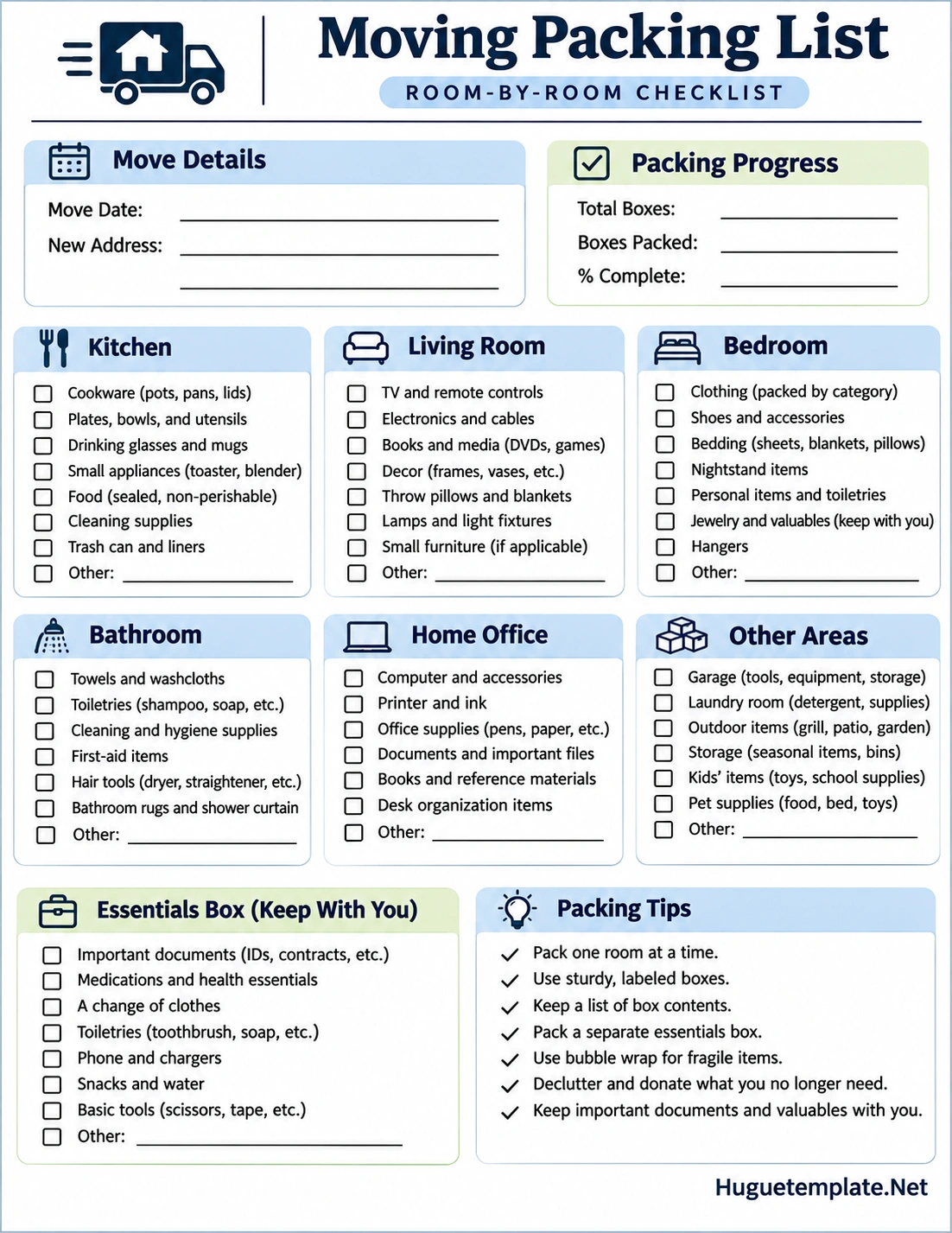
A printable moving packing list template provides a simple way to organize belongings and monitor packing progress. Instead of creating separate notes for every room, you can use one checklist to keep track of the entire household.
A useful moving checklist should include move details, room-by-room packing categories, checkboxes for individual items, and a packing progress section. You can also include an essentials box checklist and space for additional notes.
The sample below features a clean, modern layout with dedicated sections for the kitchen, living room, bedroom, bathroom, home office, and other areas. It also includes move details and packing progress fields to help you track your preparation.
Common Moving Packing Mistakes to Avoid
Even with a checklist, certain packing mistakes can create unnecessary stress. Avoid these common problems when preparing for your move.
- Starting too late: Begin sorting and packing several weeks ahead whenever possible.
- Overpacking large boxes: Use smaller boxes for heavy items such as books and larger boxes for lightweight belongings.
- Forgetting to label boxes: Mark each box with its destination room and a description of its contents.
- Mixing items from different rooms: Keep similar belongings together to make unpacking easier.
- Packing essentials too early: Keep daily-use items accessible until moving day.
- Ignoring fragile items: Use appropriate wrapping and cushioning to reduce the risk of damage.
- Leaving storage areas until last: Check garages, closets, cabinets, and outdoor spaces early.
- Not keeping an inventory: Record important boxes and valuable belongings before transportation.
Frequently Asked Questions About Moving Packing Lists
What should be included in a moving packing list?
A moving packing list should include household items organized by room, packing supplies, fragile belongings, important documents, and moving day essentials. It can also include box numbers, labels, and packing progress information.
When should I start packing before moving?
For most household moves, starting four to six weeks in advance provides enough time to sort belongings and pack gradually. Larger homes or long-distance moves may require additional preparation time.
What should I pack first when moving?
Start with items you rarely use, such as seasonal decorations, extra bedding, books, and stored belongings. Pack everyday essentials closer to moving day so you can continue using them.
What should go in an essentials box when moving?
An essentials box should contain items you may need immediately after arrival, including toiletries, medications, important documents, phone chargers, a change of clothes, snacks, basic cleaning supplies, and simple tools.
How do I organize moving boxes?
Organize boxes by destination room and category. Label each box with its room, general contents, and special handling instructions. Numbering boxes and keeping a separate inventory can provide additional organization.
How many moving boxes do I need?
The number depends on the size of your home, the number of people, and how many belongings you own. Walk through each room, estimate the number of boxes required, and purchase a few extra for unexpected items.
Should I pack one room at a time?
Yes. Packing one room at a time is an effective way to stay organized. It helps keep similar belongings together and makes it easier to identify which areas are finished.
What items should not be packed in a moving truck?
Moving companies may restrict hazardous or flammable materials, including gasoline, propane, certain chemicals, and some cleaning products. Check with your moving provider before transporting these items. Keep important documents, medications, valuables, and essential personal belongings with you.
Conclusion
A moving packing list helps make relocation more organized by dividing household packing into clear, manageable steps. By preparing a room-by-room checklist, gathering supplies, labeling boxes, and keeping essential belongings accessible, you can reduce confusion and save time on moving day.
Start early, pack systematically, and update your checklist as each room is completed. Whether you are moving across town or to a new city, a printable moving packing list template can help you stay organized and keep track of your belongings throughout the process.
With a practical packing plan, you can spend less time worrying about forgotten items and more time getting comfortable in your new home.
Download: Moving Packing List Template
