Getting ready for a camping trip in a camper or RV can be exciting, but packing everything you need takes careful planning. From sleeping essentials and cooking supplies to clothing and travel equipment, forgetting even a few important items can make your trip less comfortable. A Camper Packing List helps you organize your belongings and prepare for a smooth, enjoyable outdoor adventure.
Whether you are planning a weekend getaway, a family road trip, or an extended camping vacation, having a detailed packing checklist makes preparation easier. Instead of packing randomly or relying on memory, you can organize your supplies by category and check off each item as you load your camper.
In this guide, you will find a complete camper packing checklist covering essential camping gear, bedding, kitchen supplies, clothing, personal care products, travel equipment, and outdoor activities. You will also learn how to customize your packing list and avoid common mistakes before leaving home.
Why Do You Need a Camper Packing List?
A camper packing list is a practical tool for organizing everything you need before a camping trip. It helps you identify essential items, avoid unnecessary packing, and make sure important supplies are ready before departure.
Unlike traditional tent camping, camper trips often involve additional equipment and supplies. You may need to prepare kitchen accessories, bedding, electrical connections, water equipment, and vehicle-related essentials.
Using a printable camping checklist offers several benefits:
- Prevents forgotten items: A checklist reminds you to pack important supplies before leaving home.
- Saves preparation time: Organizing items by category makes packing faster and more efficient.
- Reduces unnecessary luggage: You can identify what you actually need instead of bringing too many belongings.
- Improves organization: Separate lists for kitchen supplies, clothing, and camping equipment make everything easier to find.
- Supports family travel: Everyone can help prepare and check off their own belongings.
- Makes future trips easier: You can reuse and update the same packing checklist for your next adventure.
With a little preparation, you can spend less time worrying about forgotten supplies and more time enjoying your trip.
Complete Camper Packing List
Before organizing your camper, start with a master packing list. The following categories cover the most important supplies for a comfortable camping experience. Adjust the quantities and items according to your destination, trip duration, camper type, and personal needs.
1. Camping Gear and Outdoor Equipment
Even when traveling with a camper, some traditional camping equipment can make your outdoor experience more comfortable. These supplies are especially useful when spending time outside your vehicle.
- Camping chairs.
- Foldable outdoor table.
- Portable awning or shade shelter.
- Lanterns and camping lights.
- Headlamp or flashlight.
- Extra batteries.
- Tarps and ground covers.
- Rope or bungee cords.
- Outdoor storage containers.
- Portable folding equipment.
2. Sleeping Essentials
Comfortable sleeping arrangements can make a significant difference during a camping vacation. Prepare your bedding according to the number of travelers and the sleeping facilities available in your camper.
- Pillows and pillowcases.
- Bed sheets and blankets.
- Sleeping bags, if needed.
- Extra blankets for cold nights.
- Mattress protectors.
- Comfortable sleeping clothes.
- Eye masks and earplugs.
- Extra bedding for children or guests.
3. Kitchen and Cooking Supplies
One of the advantages of traveling in a camper is having access to a convenient cooking area. Bringing the right kitchen supplies allows you to prepare meals, store food, and enjoy convenient dining during your trip.
- Portable stove or grill, if needed.
- Pots, pans, and cooking utensils.
- Plates, bowls, and cups.
- Forks, spoons, and knives.
- Cutting board.
- Reusable water bottles.
- Food storage containers.
- Cooler and ice packs.
- Dish soap and sponge.
- Dish towels and drying rack.
- Trash bags.
- Paper towels and napkins.
- Basic spices and cooking ingredients.
Check which kitchen appliances and utensils are already included in your camper rental before packing additional equipment.
4. Food and Drinks
Planning meals before departure can help you avoid unnecessary grocery trips and reduce food waste. Choose ingredients that are easy to store, prepare, and transport.
- Drinking water.
- Breakfast ingredients.
- Lunch and dinner supplies.
- Easy-to-prepare snacks.
- Canned and packaged food.
- Fresh fruits and vegetables.
- Coffee, tea, and other beverages.
- Condiments and cooking oils.
- Reusable food storage bags.
Consider the available refrigerator and freezer capacity when deciding how much food to bring.
5. Clothing and Footwear
Your clothing choices should match the weather, activities, and length of your camping trip. Pack comfortable layers so you can adjust to changing temperatures throughout the day.
- T-shirts and long-sleeve shirts.
- Pants and shorts.
- Sweaters or warm jackets.
- Rain jacket or poncho.
- Socks and underwear.
- Comfortable hiking shoes or boots.
- Sandals or slip-on shoes.
- Hat and sunglasses.
- Swimwear, if needed.
- Sleepwear.
- Extra clothing for unexpected weather.
6. Toiletries and Personal Care
Personal hygiene supplies are essential for maintaining comfort during your trip. Keep frequently used toiletries together in a waterproof bag or dedicated storage container.
- Toothbrushes and toothpaste.
- Soap or body wash.
- Shampoo and conditioner.
- Towels and washcloths.
- Deodorant.
- Hairbrush or comb.
- Sunscreen.
- Insect repellent.
- Personal medications.
- First-aid kit.
- Hand sanitizer.
- Toilet paper and tissues.
Bring sufficient personal medication for the entire trip, along with a reasonable backup supply when appropriate.
7. Camper and Travel Essentials
Camper travel requires several practical items that help you operate your vehicle and manage campsite connections. These supplies are particularly important when staying at campgrounds with electrical and water hookups.
- Camper keys and important documents.
- Vehicle registration and insurance information.
- Driver’s license.
- GPS device or offline maps.
- Phone and charger.
- Portable power bank.
- Extension cord and compatible adapters.
- Freshwater hose and appropriate fittings.
- Water pressure regulator, if required.
- Water filter, if needed.
- Leveling blocks.
- Basic tool kit.
- Duct tape and repair supplies.
- Wheel chocks.
- Spare tire and roadside emergency equipment.
Always check your camper manufacturer’s recommendations and campground requirements. Not every vehicle uses the same electrical, water, or waste connections.
8. Outdoor Recreation and Entertainment
Camping is not just about staying in a camper. Many travelers enjoy hiking, fishing, cycling, sightseeing, and other outdoor activities during their vacations.
- Hiking backpack.
- Walking poles.
- Bicycles and helmets.
- Fishing equipment, if permitted.
- Binoculars.
- Camera.
- Books or e-reader.
- Playing cards and board games.
- Outdoor sports equipment.
- Portable speaker.
- Activity guides and trail maps.
Choose activities based on your destination and available facilities. Check local rules before bringing fishing equipment, bicycles, or other recreational gear.
9. Miscellaneous Items
Some small items may not fit into the main packing categories but can still be useful during a camper vacation.
- Notebook and pen.
- Reusable shopping bags.
- Zip-top storage bags.
- Laundry bag.
- Extra batteries.
- Small emergency cash reserve.
- Personal identification.
- Emergency contact information.
- Travel documents and reservations.
- Cleaning cloths and multipurpose supplies.
Free Printable Camper Packing List Template
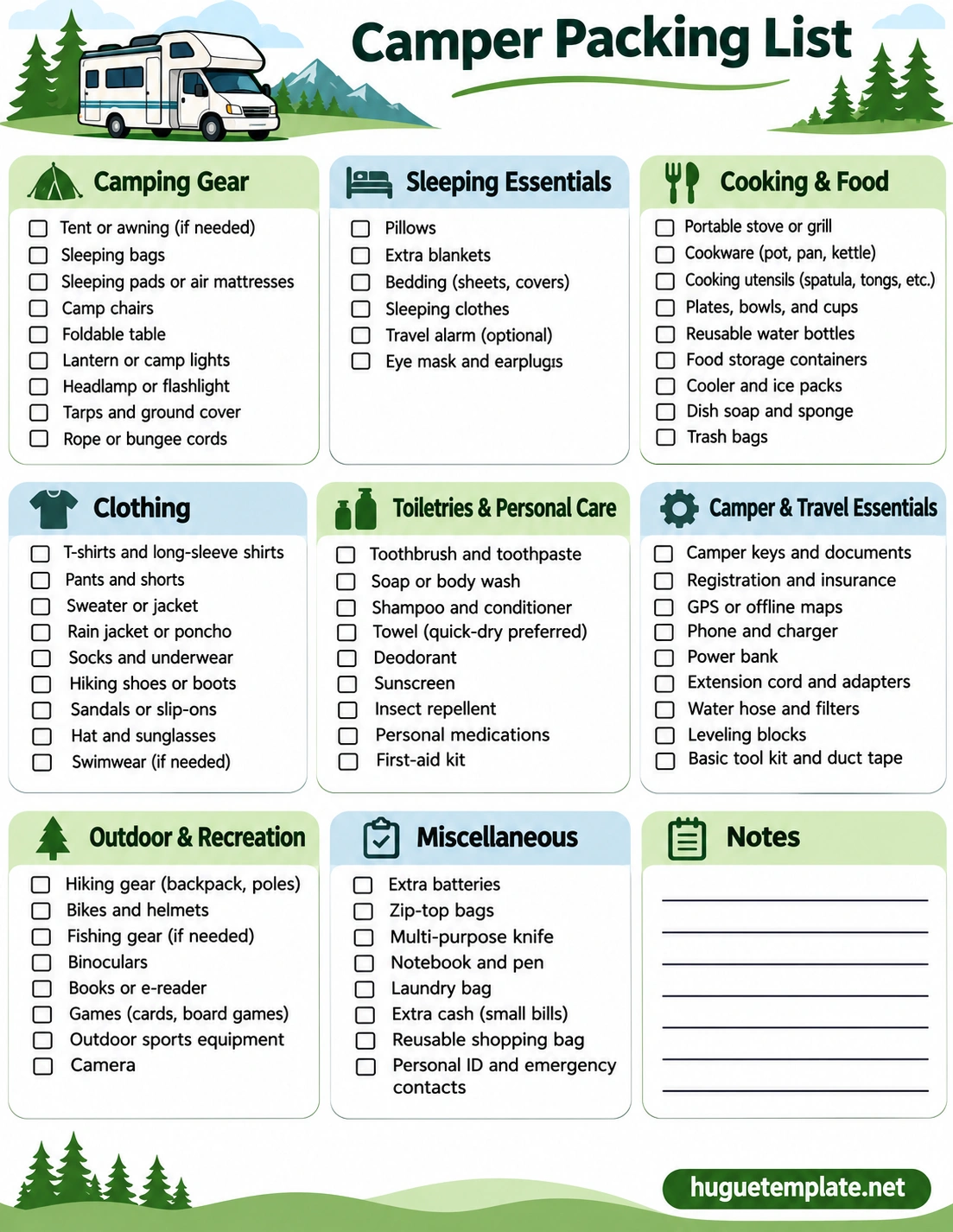
If you want an easier way to prepare for your next camping trip, a printable camper packing list template can help you organize everything in one place.
This checklist is divided into practical categories, including camping gear, sleeping essentials, cooking supplies, clothing, toiletries, camper equipment, outdoor recreation, and miscellaneous items.
Each category includes checkboxes so you can mark items as you pack them. There is also a notes section where you can write down additional supplies, special requirements, or items you need to purchase before departure.
Use this printable checklist to:
- Organize camping supplies by category.
- Check off items as you pack them.
- Keep track of essential camper equipment.
- Prepare personal belongings for every traveler.
- Record additional items in the notes section.
How to Pack a Camper Efficiently
Having a complete packing list is only the first step. Organizing your belongings properly can help maximize storage space and make your camper more comfortable.
Step 1: Check What Is Already Included
Before packing, review the equipment and supplies already available in your camper. Rental vehicles may include bedding, kitchen utensils, cleaning products, or basic tools.
Confirming these details helps prevent unnecessary duplication and saves valuable storage space.
Step 2: Organize Items by Category
Group similar belongings together using labeled storage containers or bags. Keep kitchen supplies, toiletries, clothing, and outdoor equipment in separate areas.
This approach makes it easier to locate items without unpacking everything.
Step 3: Prioritize Essential Items
Pack frequently used and important items where they are easy to reach. Keep travel documents, medications, first-aid supplies, and emergency equipment accessible.
Step 4: Distribute Weight Properly
Store heavy equipment securely and follow the camper manufacturer’s weight and loading guidelines. Avoid placing excessive weight in one area or exceeding the vehicle’s permitted carrying capacity.
Step 5: Secure Everything Before Driving
Check cabinets, drawers, appliances, and loose equipment before moving the camper. Secure all belongings to prevent them from shifting during travel.
Step 6: Review Your Checklist Before Departure
Walk through your packing list one final time. Check that essential supplies are packed, the vehicle is prepared, and all necessary travel arrangements are confirmed.
Essential Safety Items for a Camper Trip
Safety should always be part of your camping preparation. In addition to regular packing supplies, make sure your camper has the appropriate safety equipment.
- First-aid kit with suitable supplies.
- Flashlights and spare batteries.
- Working smoke and carbon monoxide alarms, where applicable.
- Fire extinguisher suitable for the vehicle and its equipment.
- Emergency roadside kit.
- Reflective warning triangles or roadside visibility equipment.
- Emergency contact information.
- Drinking water for unexpected delays.
- Appropriate weather protection.
Check safety equipment before every trip and follow the camper manufacturer’s instructions. Never ignore warning alarms or operate equipment that appears damaged or unsafe.
Tips for Creating Your Own Camper Packing Checklist
Every camping trip is different, so a standard packing list may need a few adjustments. Use these tips to create a checklist that matches your travel plans.
- Consider the weather: Bring additional layers for cold destinations and rain protection for wet conditions.
- Think about trip duration: A weekend getaway requires different clothing and food quantities than a two-week vacation.
- Consider the number of travelers: Adjust bedding, towels, toiletries, and food supplies according to your group size.
- Review your planned activities: Add hiking, fishing, swimming, or cycling equipment when necessary.
- Check campground facilities: Find out whether electricity, water hookups, laundry, and other amenities are available.
- Leave room for essentials: Avoid overpacking and keep some storage space available for groceries and additional supplies.
- Save your previous checklist: Record what you actually used so you can improve your packing routine for future trips.
Frequently Asked Questions About Camper Packing Lists
What should I pack for a camper trip?
Essential camper packing items include bedding, clothing, toiletries, kitchen supplies, food, camping chairs, lighting, travel documents, vehicle equipment, and safety supplies. Your exact list should depend on your destination, trip duration, weather, and available camper facilities.
What should I not forget when camping in a camper?
Do not forget important documents, medications, a first-aid kit, phone chargers, bedding, drinking water, appropriate clothing, and essential vehicle equipment. Check your camper’s electrical and water requirements before departure.
What food should I bring on a camper vacation?
Bring easy-to-prepare meals, breakfast ingredients, snacks, drinking water, canned food, fruits, vegetables, and basic cooking ingredients. Choose foods that fit your refrigerator capacity and can be stored safely during travel.
How do I pack a camper without overpacking?
Start with a categorized packing checklist and bring only items that match your travel needs. Check what is already included in the camper, use compact storage containers, and avoid packing duplicate equipment.
What kitchen supplies do I need for a camper?
Common camper kitchen supplies include pots, pans, cooking utensils, plates, bowls, cups, cutlery, food containers, dish soap, sponges, reusable water bottles, and trash bags. Some campers already include basic kitchen equipment.
What safety equipment should I bring in a camper?
Important safety equipment includes a first-aid kit, flashlight, spare batteries, fire extinguisher, emergency roadside kit, and appropriate warning equipment. Also check that required smoke and carbon monoxide alarms are functioning properly.
How many clothes should I pack for a camper trip?
The number of clothing items depends on your trip length, weather, activities, and access to laundry facilities. Pack versatile outfits that can be layered and bring additional socks and underwear for unexpected changes.
Should I bring my own bedding to a camper rental?
Check the rental agreement before packing. Some camper rentals provide pillows, blankets, and sheets, while others require travelers to bring their own bedding. Confirming this information can save space and prevent forgotten essentials.
Can I reuse the same camper packing list for every trip?
Yes. A reusable camper packing checklist is a convenient starting point for future vacations. You can update it based on the season, destination, number of travelers, and activities planned for each trip.
Conclusion
A Camper Packing List makes preparing for a camping vacation easier, more organized, and less stressful. By grouping supplies into categories such as camping gear, sleeping essentials, kitchen items, clothing, personal care, and travel equipment, you can make sure important belongings are ready before departure.
A printable checklist also helps you avoid overpacking, keep track of essential equipment, and prepare for different travel conditions. Whether you are planning a short weekend getaway or an extended RV vacation, having a reliable packing system can make a big difference.
Use the Camper Packing List Template in this guide to organize your supplies, check off completed items, and prepare confidently for your next outdoor adventure.
Download: Camper Packing List Template
