A cruise packing list helps you prepare for your vacation without forgetting important travel documents, clothing, medications, and everyday essentials. Whether you are taking a tropical Caribbean cruise, exploring the Mediterranean, or sailing to colder destinations, packing carefully can make your trip more comfortable and stress-free.
Unlike a typical vacation, a cruise involves several different environments. You may spend time by the pool, attend formal dinners, explore ports of call, and enjoy air-conditioned indoor spaces, all during the same trip. You also need to follow your cruise line’s baggage policies and restrictions on prohibited items.
This cruise packing list covers the essentials you should bring, optional items that can make life onboard easier, clothing for different occasions, and items you should leave at home. Use the checklist to organize your luggage before departure and customize it for your itinerary, destination, and personal needs.
What Should You Pack for a Cruise?
The best cruise packing list includes travel documents, clothing, toiletries, medications, electronics, and items for activities both onboard and on shore. Your exact packing needs depend on the length of your cruise, the weather, planned excursions, and the dress code of your cruise line.
Start with these essential categories:
- Travel documents: Passport, required visas, booking confirmation, and travel insurance details.
- Clothing: Casual outfits, swimwear, evening attire, comfortable shoes, and weather-appropriate layers.
- Toiletries: Toothbrush, toothpaste, shampoo, deodorant, sunscreen, and personal care products.
- Medications: Prescription medicines, motion sickness remedies, and basic first-aid supplies.
- Electronics: Phone, chargers, camera, and compatible power accessories.
- Cabin essentials: A reusable water bottle, sleep mask, earplugs, and a small day bag.
- Shore excursion gear: Comfortable walking shoes, sun protection, and suitable clothing for planned activities.
Review your cruise line’s official packing guidance before finalizing your luggage. Rules for luggage size, electrical devices, beverages, and restricted items can differ between cruise operators and ships.
1. Travel Documents and Important Information
Travel documents should be at the top of your cruise packing list because missing paperwork can prevent you from boarding or entering certain destinations. Keep essential documents accessible rather than packing them in checked luggage.
- Passport with sufficient validity for your itinerary.
- Required visas and entry documents.
- Cruise booking confirmation and boarding documents.
- Government-issued identification, where appropriate.
- Travel insurance policy and emergency contact details.
- Flight, hotel, and ground transportation confirmations.
- Copies of important travel documents, stored securely.
- Prescription information and relevant medical documentation.
- Payment cards and a small amount of local currency or cash.
Check the entry requirements for every country on your itinerary, including any transit destinations. Some itineraries have specific passport validity or visa requirements, even when passengers expect to remain onboard during a port stop.
Keep digital copies of important documents in a secure location, but do not rely exclusively on your phone. A printed backup may be useful if your device loses power or internet access is unavailable.
2. Cruise Clothing Checklist
Clothing is one of the most important parts of a cruise packing list because you may encounter several dress codes and weather conditions. Pack versatile items that can be combined into multiple outfits instead of bringing a separate outfit for every activity.
Everyday and Casual Clothing
- T-shirts, shirts, and casual tops.
- Shorts, trousers, skirts, or lightweight pants.
- Underwear and socks for each day, plus a few extras.
- Sleepwear and comfortable lounge clothing.
- A light sweater, cardigan, or jacket for cool indoor spaces.
- Lightweight rain jacket or waterproof layer when appropriate.
Swimwear and Pool Essentials
- Swimsuits or swimming trunks.
- Cover-ups or beachwear.
- Flip-flops or sandals suitable for pool areas.
- Sun hat or cap.
- Sunglasses with UV protection.
- Lightweight clothing for returning from the pool or beach.
Consider packing more than one swimsuit if you expect to swim frequently. Having a dry option available can make it easier to move between pool activities and other plans.
Formal and Evening Clothing
Some cruises include elegant evenings, specialty restaurant dress codes, or themed events. Other ships have a more relaxed atmosphere. Check your cruise line’s guidance before deciding how much formal clothing to bring.
- Smart-casual outfits for dinner.
- A dress, suit, or other formal outfit if required or desired.
- Comfortable dress shoes.
- Accessories that coordinate with multiple outfits.
- Theme-night clothing if you plan to participate.
Choose pieces that are easy to coordinate and do not require excessive ironing. A few versatile outfits can save luggage space while still giving you suitable options for different occasions.
3. Toiletries and Personal Care Items
Although many cruise cabins provide basic toiletries, you may prefer your usual products or need specialized items. Packing personal care essentials also reduces the risk of having to find replacements onboard or in port.
- Toothbrush, toothpaste, and dental floss.
- Shampoo and conditioner.
- Body wash or soap.
- Deodorant.
- Moisturizer and skincare products.
- Sunscreen appropriate for your destination and activities.
- Hairbrush, comb, and hair accessories.
- Razor and shaving products.
- Makeup and makeup remover, if used.
- Contact lenses, glasses, and lens solution, if applicable.
- Personal hygiene products.
- Hand sanitizer and travel tissues.
Choose travel-size containers where practical and follow airline liquid restrictions if you are flying to the cruise departure port. Pack sunscreen and other sun protection products for outdoor activities, particularly in tropical or high-UV destinations.
4. Medications and Health Essentials
Health supplies deserve a dedicated place in your cruise packing list. Access to particular medicines may be limited onboard or in some ports, so bring the items you normally need and prepare for common travel discomforts.
- Prescription medications in their original labeled packaging when possible.
- Copies of prescriptions or relevant medical information.
- Motion sickness medication or other remedies recommended for you.
- Basic first-aid supplies, such as adhesive bandages.
- Pain relief medication suitable for your needs.
- Any required medical devices and their accessories.
- Hand sanitizer and other personal health supplies.
- Travel insurance and emergency contact information.
Carry essential medications in your hand luggage rather than checked baggage. Check medication rules for your destination countries, particularly for controlled or restricted medicines, and consult a healthcare professional if you need advice about travel health or seasickness prevention.
5. Cabin Essentials That Make a Cruise More Comfortable
Cruise cabins can be compact, so practical accessories can help you stay organized without taking up too much space. You do not need every gadget marketed for cruise travel; prioritize items that solve a real problem for your cabin or itinerary.
- Reusable water bottle: Useful for carrying drinking water when permitted and refilling at approved stations.
- Phone charger: Bring the correct cable and charging accessories for your devices.
- Portable power bank: Helpful during long shore excursions, subject to airline and cruise line rules.
- Small day bag: Keeps excursion essentials together when leaving the ship.
- Sleep mask and earplugs: May help you rest in unfamiliar surroundings.
- Lanyard or card holder: Convenient for carrying your cruise card, if appropriate for your ship.
- Magnetic hooks: Some cabin walls may support them, but confirm that accessories are allowed and avoid damaging surfaces.
- Book or e-reader: Useful for quiet time by the pool or in the cabin.
- Small laundry bag: Separates worn clothing from clean items.
Check the cruise line’s electrical appliance policy before packing extension cords, power strips, irons, steamers, or similar equipment. Some items are prohibited because of fire safety risks, even when they are commonly used at home.
6. Shore Excursion and Port Day Essentials
Shore excursions may involve walking tours, beaches, sightseeing, boat trips, or outdoor adventures. Your cruise packing list should include items suited to the activities you have booked and the weather expected at each destination.
- Comfortable walking shoes.
- Lightweight, breathable clothing.
- Daypack or small backpack.
- Sun hat and sunglasses.
- Sunscreen and insect repellent, where appropriate.
- Reusable water bottle.
- Portable phone charger or power bank.
- Water shoes or snorkeling equipment, if needed.
- Light rain jacket or compact umbrella, when suitable.
- Travel towel for selected beach or outdoor activities.
Before leaving the ship, check the port’s weather, your excursion instructions, and the ship’s return time. Carry the identification, cruise card, and other documents required by the cruise line for going ashore and returning onboard.
For independent excursions, allow a comfortable time buffer to return to the ship. The vessel’s departure rules may be strict, and passengers are generally responsible for returning on time unless an excursion is covered by the cruise line’s arrangements.
7. Electronics and Useful Travel Accessories
Electronics can make a cruise more convenient, but bringing too many devices adds weight and creates more charging needs. Focus on the items you will actually use during the voyage.
- Smartphone and charging cable.
- Camera and spare memory card, if needed.
- Tablet, laptop, or e-reader, if desired.
- Compatible travel power adapter.
- Headphones or earbuds.
- Portable power bank that meets applicable airline rules.
- Waterproof phone pouch for suitable water activities.
Confirm the electrical outlets and device policies for your ship. Avoid assuming that every cabin has the same outlets or that every charging accessory is permitted. Download boarding documents, maps, entertainment, and other useful information before departure if you expect limited connectivity.
8. What Not to Pack on a Cruise
Cruise lines commonly restrict certain items for safety, security, or operational reasons. The exact rules vary, so consult your cruise operator’s current prohibited-items policy before packing.
- Weapons, illegal substances, and other prohibited items.
- Candles, incense, and open-flame devices.
- Irons, steamers, or other heating appliances where prohibited.
- Power strips or extension cords that do not meet the ship’s rules.
- Drones or other devices subject to restrictions.
- Alcoholic beverages or glass containers that violate the cruise line’s policy.
- Oversized luggage that exceeds the operator’s limits.
- Any item specifically prohibited by the cruise line or destination regulations.
Do not rely on a generic checklist alone for restricted items. Cruise lines can have different policies regarding beverages, electrical equipment, recreational devices, and other belongings. Check the official policy for your specific ship and itinerary before departure.
9. How to Pack for a Cruise Without Overpacking
Overpacking makes luggage harder to manage, especially when your trip includes flights, hotel stays, transfers, and multiple ports. A thoughtful packing strategy helps you bring what you need without filling every available space.
- Plan outfits in advance: Choose clothing that works for several occasions.
- Check the weather: Review conditions for the departure port and each destination.
- Use a day-by-day list: Identify what you will need for sea days, excursions, pool time, and evenings.
- Pack versatile layers: Lightweight layers work for changing temperatures and air-conditioned spaces.
- Limit duplicate items: Bring only the shoes, accessories, and electronics you expect to use.
- Keep essentials accessible: Store travel documents, medications, valuables, and embarkation-day necessities in your carry-on bag.
- Leave room for souvenirs: Avoid filling your luggage to its maximum capacity before the trip begins.
- Weigh your bags: Check airline baggage allowances if your cruise involves flights.
If your cruise lasts a week or longer, consider whether laundry facilities or laundry services are available. Reusing versatile clothing can significantly reduce the number of items you need to bring.
Free Printable Cruise Packing List Template
A printable cruise packing list makes it easier to track your preparations and check off items as you pack. Instead of repeatedly reviewing several notes, you can use one organized checklist for travel documents, clothing, toiletries, cabin essentials, shore excursions, and health supplies.
The printable template below also includes a section for items to leave at home and space for additional notes. You can customize the list to match your cruise length, destination, travel companions, and planned activities.
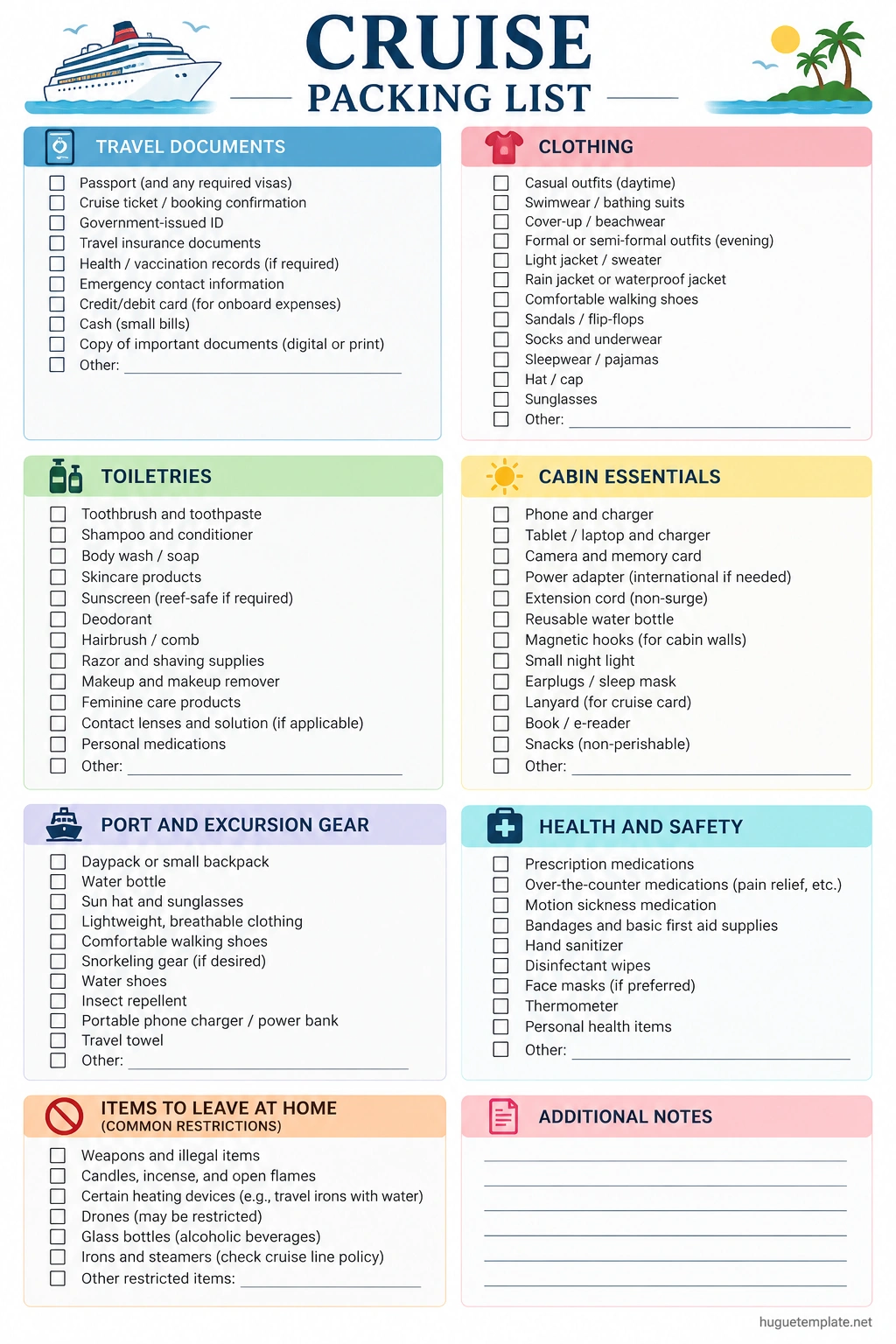
Print the checklist before packing and mark each item as you place it in your luggage. Add destination-specific items and any special requirements from your cruise line. Review the restricted-items section separately against the operator’s current policy.
Frequently Asked Questions About Cruise Packing Lists
What are the most important items to pack for a cruise?
The most important items include required travel documents, medications, suitable clothing, comfortable walking shoes, toiletries, phone chargers, and any essentials required for your itinerary. Keep boarding documents and essential medicines accessible in your carry-on bag.
How many outfits should I pack for a seven-day cruise?
The number depends on your activities, dress codes, and access to laundry facilities. A practical starting point is one versatile daytime outfit per day, swimwear, sleepwear, comfortable shoes, and a few evening options. Add layers for changing weather and any special events you plan to attend.
Should I pack a carry-on bag for embarkation day?
Yes. A carry-on bag is useful for documents, medications, valuables, a phone charger, swimwear if you plan to use the pool, and other immediate essentials. Checked luggage may not reach your cabin immediately, so keep anything you need during boarding with you.
Can I bring my own toiletries on a cruise?
Usually, passengers can bring personal toiletries, subject to the cruise line’s rules and applicable transportation restrictions. Check any special requirements for aerosols, flammable products, sharp grooming tools, or other restricted items.
Do I need formal clothing for a cruise?
It depends on the cruise line and itinerary. Some ships offer formal or elegant evenings, while others have more relaxed dress codes. Check the onboard dress guidance and pack suitable clothing for specialty restaurants or events you intend to attend.
What items are prohibited on cruise ships?
Prohibited items may include weapons, illegal substances, open-flame devices, certain heating appliances, restricted electrical accessories, and other items identified by the operator. Rules vary, so review the current prohibited-items policy for your specific cruise before departure.
Should I bring medication for seasickness?
If you are concerned about motion sickness, consider discussing preventive options with a healthcare professional before traveling. Bring any medication you normally use or that has been recommended for you, and check destination-specific rules if the medicine is restricted.
How can I avoid overpacking for a cruise?
Plan outfits around your itinerary, select versatile clothing, limit duplicate shoes and accessories, and use a printable checklist to track essentials. Review your luggage weight and remove items that do not serve a specific purpose.
Conclusion
A well-organized cruise packing list helps you prepare for life onboard, changing weather, evening dress codes, and shore excursions. By organizing travel documents, clothing, toiletries, medications, electronics, and cabin essentials in advance, you can reduce last-minute stress and avoid unnecessary purchases during your trip.
Use the printable cruise packing list template to check off each item, add personal requirements, and review your cruise line’s baggage and prohibited-items policies. Adjust the list to your destination, trip length, and planned activities rather than packing every possible item.
With thoughtful preparation and a practical checklist, you can board with greater confidence and focus on enjoying your cruise vacation.
Download: Cruise Packing List Template
