A panel schedule is an essential document for organizing and identifying the electrical circuits in a building. It records which circuits are connected to an electrical panel, what equipment or areas they serve, and the relevant breaker and load information. A well-organized panel schedule makes electrical systems easier to understand, maintain, and troubleshoot.
Whether you are an electrician, electrical contractor, building manager, or property owner, a panel schedule template can help you document circuit information in a consistent format. Instead of relying on handwritten notes or incomplete labels, you can maintain a clear record of the electrical panel and its connected loads.
In this guide, you will learn what a panel schedule is, what information it should contain, how to complete a panel schedule worksheet, and how to keep the information accurate. You will also find practical tips and frequently asked questions to help you understand this important electrical document.
What Is a Panel Schedule?
A panel schedule is a table that lists the circuits associated with an electrical panelboard or distribution panel. It typically identifies circuit numbers, the areas or equipment served, breaker ratings, pole configurations, and load information when applicable.
Electricians use a panel schedule to identify circuits during installation, inspection, maintenance, and troubleshooting. Building owners and facility managers can also use it as a reference when planning electrical work or documenting changes to a building.
A panel schedule is sometimes called an electrical panel schedule, circuit schedule, or panelboard schedule. The exact format depends on the building, panel type, electrical design, and documentation requirements.
Panel Schedule Template: Printable Worksheet
This printable panel schedule template provides a structured layout for recording panel information, project details, circuit descriptions, breaker sizes, connected loads, and notes. Its black, white, and gray-blue design is intended to keep the information organized and easy to read.
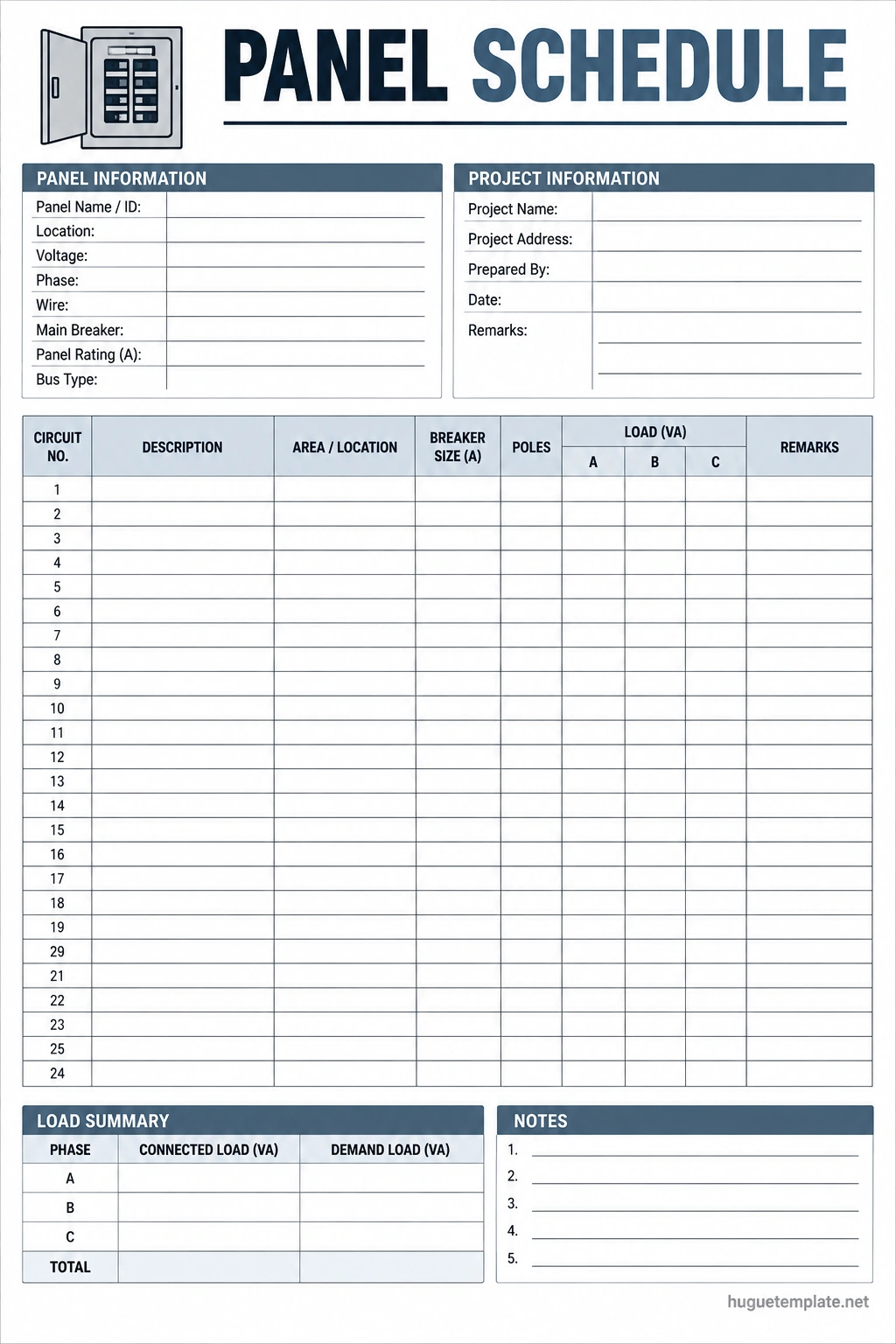
Print the worksheet on standard US Letter paper and complete it using verified project information. The template is a documentation aid, not a substitute for electrical design calculations, required inspections, or applicable electrical codes.
What Information Should a Panel Schedule Include?
A useful panel schedule should identify the panel and provide enough detail to help a qualified person understand the circuits it serves. The exact fields may vary according to the electrical installation and local requirements.
1. Panel Identification
Record the panel name or identification number and its location in the building. Examples might include “Panel A – First Floor” or “LP-1 – Office Area.” Use the same identification consistently across drawings, directories, and maintenance records.
2. Electrical System Information
Include relevant system details such as nominal voltage, phase, wire configuration, main breaker rating, panel rating, and bus information when applicable. These details should come from verified equipment labels, approved plans, or other reliable electrical documentation.
3. Circuit Numbers
List the circuit numbers according to the panel’s actual configuration. Circuit numbering and physical breaker positions depend on the panelboard design, so do not assume that every panel follows the same arrangement.
4. Circuit Descriptions
Describe the areas, equipment, or loads served by each circuit. Useful descriptions include “Kitchen receptacles,” “Office lighting,” “Air-conditioning unit,” or “Water heater,” provided each description accurately reflects the installation.
Avoid vague labels such as “Miscellaneous” when a more precise description can be established. Clear circuit descriptions help qualified personnel identify the relevant circuit more efficiently.
5. Breaker Size and Pole Configuration
Record the breaker rating and number of poles where these fields are relevant. The information must match the installed equipment and approved electrical design.
Never select or change a breaker rating simply to fill in a schedule. Breaker selection depends on conductor ratings, equipment requirements, circuit design, and applicable electrical codes.
6. Connected Load and Load Calculations
Some panel schedules include connected load values, phase assignments, demand loads, or other load calculation information. These entries help document the electrical design and support appropriate load analysis.
Use the units and calculation methods required by the project. Do not treat a blank template’s load columns as a completed engineering calculation, and do not assume that connected load and demand load are interchangeable.
7. Notes and Remarks
Use the notes section to record relevant information such as equipment references, special circuit identification, documentation references, or verified updates. Avoid placing sensitive information in a panel schedule unless it is necessary for the work.
How to Fill Out a Panel Schedule Template
Completing a panel schedule requires accurate information about the existing installation or approved electrical design. The following steps help keep the record consistent and useful.
Step 1: Identify the Panel
Record the panel ID, location, and relevant equipment details. Compare the information with the panel nameplate, approved electrical drawings, and project records.
Step 2: Verify Circuit Information
Document the circuit numbers and the equipment or areas served by each circuit. Circuit identification should be verified by a qualified electrician using appropriate procedures. Do not rely solely on old handwritten labels if their accuracy is uncertain.
Step 3: Record Breaker Details
Enter the installed breaker ratings and pole configurations where required. Confirm the details against the actual panel and approved design rather than estimating them from appearance.
Step 4: Enter Load Information
Record load data using verified design documents, equipment information, or calculations prepared by a qualified professional. Make sure the units and phase assignments are clearly identified where relevant.
Step 5: Review and Date the Schedule
Check the descriptions, panel identification, and technical details for consistency. Add the preparer’s name and date if the project documentation process requires them.
Update the schedule whenever authorized electrical work changes the circuits, connected equipment, or other documented information. Keep the current version with the building’s electrical records.
Why Is an Accurate Panel Schedule Important?
An accurate electrical panel schedule supports safer, more efficient maintenance and helps prevent confusion when electrical work is required.
- Faster troubleshooting: Clear circuit descriptions help qualified personnel locate the circuits associated with equipment or areas.
- Better maintenance records: A consistent schedule provides a useful reference for inspections and future service.
- Improved project coordination: Electricians and contractors can refer to the same circuit documentation.
- Easier modifications: Existing circuit information helps professionals review the installation before planning authorized changes.
- Clearer building documentation: Facility managers can maintain organized electrical records for the property.
- Support for inspections: Accurate documentation can assist the review process, although it does not replace required testing or inspection.
Common Panel Schedule Mistakes to Avoid
Incomplete or inaccurate panel schedules can cause confusion and lead to wasted time during maintenance. Avoid these common documentation problems.
- Using vague circuit descriptions: Identify the actual area or equipment served whenever it can be verified.
- Recording incorrect breaker ratings: Check the installed equipment and approved documentation.
- Leaving outdated information: Update the schedule after authorized modifications.
- Mixing units: Clearly identify whether load values are expressed in VA, kVA, amperes, or another required unit.
- Assuming all panels use the same layout: Follow the actual panelboard configuration and manufacturer documentation.
- Guessing circuit connections: Have a qualified electrician verify uncertain circuit identification.
- Ignoring load calculations: Use appropriate engineering methods rather than treating a simple circuit list as proof of available capacity.
- Failing to keep a current copy: Store the revised schedule with the relevant electrical drawings and maintenance records.
Panel Schedule vs. Circuit Directory
A panel schedule and a circuit directory are related documents, but they may serve different purposes depending on the installation.
Panel Schedule
A panel schedule is often a more detailed technical table used in electrical design, construction, and facility documentation. It may include breaker ratings, pole information, load calculations, phase assignments, and panel characteristics.
Circuit Directory
A circuit directory is commonly a simpler list identifying the rooms, equipment, or areas controlled by individual circuits. It is often used to help occupants or qualified personnel identify the relevant circuit.
The two documents can overlap. The appropriate format depends on the project, equipment, and applicable code requirements. A detailed panel schedule does not automatically replace any circuit directory or labeling required for the installation.
Best Practices for Maintaining an Electrical Panel Schedule
Creating a schedule is only the first step. Maintaining accurate records over time is equally important.
- Use consistent naming: Keep panel IDs and circuit descriptions consistent across schedules and drawings.
- Record revisions: Include a revision date and identify the person responsible for an update where appropriate.
- Verify changes: Update the schedule after authorized modifications have been completed and verified.
- Keep supporting documents: Store approved drawings, equipment data, and relevant calculations with the project records.
- Protect the documentation: Keep records accessible to authorized maintenance personnel and safeguard digital copies.
- Follow applicable codes: Have qualified professionals confirm that the installation and its labeling meet local requirements.
Frequently Asked Questions About Panel Schedules
What is a panel schedule used for?
A panel schedule documents the circuits associated with an electrical panel. It helps electricians and facility personnel identify circuit loads, review breaker information, support troubleshooting, and maintain electrical records.
What information goes on an electrical panel schedule?
A typical panel schedule may include the panel ID, location, voltage, phase, circuit numbers, circuit descriptions, breaker ratings, pole configurations, load information, and notes. The required fields depend on the electrical system and project.
Who should complete a panel schedule?
A qualified electrician or an appropriately qualified electrical design professional should prepare or verify technical information, depending on the project. Circuit identification and load data should not be guessed.
What is the difference between a panel schedule and a circuit breaker list?
A circuit breaker list may simply identify the areas or equipment served by each breaker. A panel schedule can provide additional technical information, such as breaker ratings, phase assignments, and load calculations.
How often should a panel schedule be updated?
Update the schedule whenever authorized work changes the circuits, equipment, or other documented details. Verify the changes and retain a current version with the building’s electrical records.
Can I use a panel schedule template for a residential building?
Yes. A panel schedule template can help organize residential electrical panel information. However, the fields should match the actual panel configuration, and technical entries should be verified by a qualified professional.
Does a panel schedule replace electrical inspection?
No. A panel schedule is a documentation tool. It does not replace required electrical inspections, testing, load calculations, permits, or compliance with applicable codes.
Can I fill out a panel schedule myself?
You can organize known project information, but technical circuit details, breaker ratings, and load calculations should be verified by a qualified electrician or electrical professional. Never open an energized panel or perform electrical testing unless properly qualified and authorized.
Conclusion
A panel schedule is a valuable document for recording electrical panel information, identifying circuits, and maintaining an organized record of the building’s electrical system. It can support troubleshooting, maintenance, project coordination, and future modifications when the information is accurate and current.
Using a printable panel schedule template makes it easier to organize circuit descriptions, breaker information, and load data in one place. Customize the worksheet to match the actual panel and project requirements, verify technical entries, and update the schedule after authorized electrical work.
For reliable electrical documentation, combine a clear panel schedule with approved drawings, appropriate inspections, and work performed by qualified professionals. Accurate records make electrical systems easier to understand and maintain over time.
Download: Panel Schedule Template
