A raffle ticket is a simple and effective way to raise funds, promote an event, or create excitement around a prize giveaway. Organizations, schools, charities, and community groups often use raffle tickets to encourage participation while supporting a meaningful cause.
Whether you are organizing a school fundraiser, planning a charity event, or hosting a community raffle, well-designed tickets help keep the process organized. They provide essential information about the drawing, identify each entry with a unique number, and give participants a convenient record of their purchase.
Creating professional raffle tickets does not have to be complicated. With a suitable raffle ticket template, you can customize the ticket price, prize details, drawing date, and organization name. This guide explains what to include, how to design printable tickets, and how to organize a raffle effectively.
What Is a Raffle Ticket?
A raffle ticket is a numbered entry that gives its holder a chance to win a prize in a drawing. Depending on the event, tickets may be sold to raise money for a cause or distributed as part of an organized giveaway.
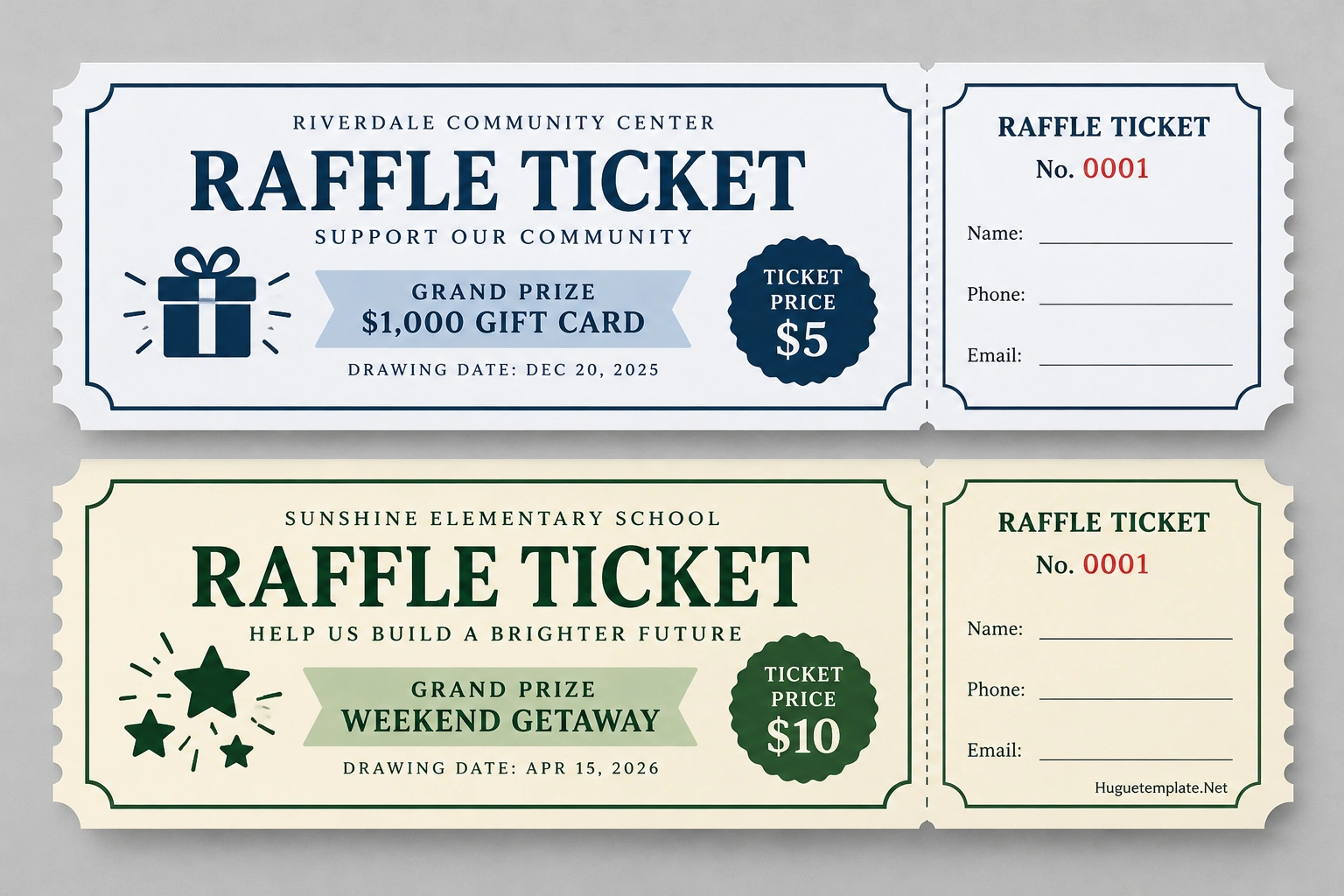
Each ticket typically includes a unique number, prize information, the drawing date, and the name of the organization hosting the event. Many printed raffle tickets also feature a detachable stub for collecting participant details and matching each entry to the corresponding ticket number.
Raffle tickets are commonly used by schools, nonprofit organizations, sports clubs, local businesses, and community groups. They can be printed in different sizes and styles to suit the event, prize, and intended audience.
Why Use Raffle Tickets for Fundraising?
Raffle tickets offer a straightforward way to involve supporters in a fundraising campaign. They are easy to distribute, simple to customize, and suitable for many types of community events.
1. Encourage Community Participation
A raffle gives participants an opportunity to support an organization while entering a prize drawing. Schools can use raffles to support educational activities, while charities may raise funds for community programs or special projects.
Choosing a relevant prize and explaining the purpose of the fundraiser can help people understand why their participation matters.
2. Make Ticket Sales Easier to Manage
Numbered raffle tickets help organizers record entries and reconcile tickets sold, distributed, and remaining. A consistent numbering system also makes it easier to identify the winning entry during the drawing.
For larger events, maintain a separate sales record showing ticket numbers, quantities, payments, and the person responsible for each batch.
3. Create a Professional Event Experience
A well-designed raffle ticket communicates important information clearly. Consistent branding, readable text, and organized sections help participants understand the event without needing additional explanations.
Professional tickets can also make a school fundraiser, charity raffle, or community celebration feel more organized and trustworthy.
What Information Should a Raffle Ticket Include?
A useful raffle ticket contains the details participants need to understand the drawing and identify their entry. The exact information depends on the event and any applicable requirements.
1. Event or Organization Name
Include the name of the school, charity, business, club, or organization hosting the raffle. A short event title can also help distinguish the ticket from other fundraising activities.
2. Ticket Number
Assign each ticket a unique number. Sequential numbering, such as 0001, 0002, and 0003, makes entries easier to track and verify.
Make sure the number on the main ticket matches the number on its detachable stub. Avoid duplicate numbers unless the rules specifically account for them.
3. Prize Description
Describe the prize clearly so participants understand what they may win. Depending on the event, the prize could be a gift basket, donated product, experience, or another permitted item.
If important conditions apply, such as an expiration date or restrictions on redeeming the prize, explain them in the official raffle rules.
4. Ticket Price and Drawing Date
If tickets are sold, display the price clearly. Include the drawing date and, when helpful, the time and location of the drawing.
Check that the displayed information matches the official event schedule. If the drawing date changes, communicate the update through the appropriate channels.
5. Detachable Stub
A detachable stub can help organizers collect information associated with each ticket. It commonly repeats the ticket number and provides space for the participant’s name and selected contact details.
Collect only the personal information needed to administer the raffle. Store participant records securely and explain how the information will be used when appropriate.
6. Rules and Additional Information
Depending on the event and local requirements, the ticket or accompanying materials may need to identify eligibility rules, the organizer, the method of selecting winners, prize conditions, and other disclosures.
Because raffle and lottery regulations vary by location, verify the applicable requirements before printing or distributing tickets.
How to Design a Professional Raffle Ticket
A good raffle ticket design balances visual appeal with practical information. The ticket should attract attention while remaining easy to read, print, separate, and track.
Choose a Suitable Color Scheme
Select colors that match the event or organization’s branding. Navy and white can create a classic appearance, while green and cream may suit school fundraisers or community events. Bright colors can work well for family celebrations and informal gatherings.
Maintain sufficient contrast between the text and background. If tickets will be printed in large quantities, consider a simple black-and-white design to reduce printing costs.
Use Clear Typography
Make the words “Raffle Ticket” easy to recognize. Use readable fonts for the ticket number, prize description, ticket price, and drawing date.
A decorative font can add character to the heading, but essential information should remain clear at the final printed size. Avoid using too many font styles on a single ticket.
Include a Perforated Stub
A perforated or detachable stub allows organizers to retain an entry while the participant keeps the main ticket. This format is useful when the drawing relies on physical ticket entries.
Place the ticket number on both sections and ensure the cutting or perforation line is easy to follow. Leave enough space for participant details if the stub will be completed by hand.
Choose the Right Ticket Size
The ticket dimensions should suit the amount of information you need to include. A compact ticket works well for a simple drawing, while a wider format may accommodate a detailed prize description and participant stub.
Consider the final paper size, margins, printer capabilities, and cutting method before selecting a layout. Print a test sheet to confirm that all text remains legible and each ticket can be separated cleanly.
How to Create Printable Raffle Tickets Step by Step
You can create raffle tickets using a word processor, a graphic design application, or an editable raffle ticket template. A structured process helps prevent numbering errors and missing information.
Step 1: Define the Purpose of the Raffle
Determine whether the event is intended to raise funds, celebrate a community occasion, promote a permitted activity, or support another objective.
Identify the organizer, target audience, prize, drawing date, and distribution method before designing the tickets.
Step 2: Choose a Raffle Ticket Template
A raffle ticket template provides a ready-made layout for the ticket number, event name, prize details, and detachable stub. It can save time and help maintain a consistent design across the entire batch.
Choose a template that can be edited in your preferred software. Confirm that the ticket dimensions, text areas, and numbering format match your needs.
Step 3: Add the Event Details
Customize the template with the organization name, prize description, ticket price, drawing date, and any required information. Keep the wording concise so participants can understand the details quickly.
Review every field carefully before duplicating the design. Correcting mistakes before printing is easier than replacing a large batch of tickets.
Step 4: Generate Unique Ticket Numbers
Assign a unique number to every ticket and repeat that number on the corresponding stub. Keep a master record of the number range and the quantities printed or distributed.
If multiple volunteers sell tickets, divide the batch into documented number ranges. This makes it easier to reconcile sales and identify missing or unused tickets.
Step 5: Print and Check the Tickets
Use suitable paper and confirm that the printed text is sharp and readable. Check the margins, colors, ticket numbers, and perforation lines before producing the full batch.
Count the finished tickets and verify that the numbering sequence is complete. Store the printed tickets securely until they are distributed.
How to Organize a Raffle Effectively
Successful raffle administration requires more than an attractive ticket. Organizers should establish clear rules, maintain accurate records, and provide a transparent process for selecting winners.
Set Clear Rules Before Ticket Sales Begin
Explain the entry process, eligibility requirements, drawing date, prize details, and winner notification procedure. Make the rules available to participants before they purchase or receive a ticket.
Check whether the event requires a permit, registration, specific disclosures, age restrictions, or other legal conditions. Some jurisdictions restrict raffles to eligible organizations or impose requirements on how proceeds may be used.
Track Ticket Distribution and Sales
Maintain a record of tickets printed, tickets assigned to sellers, tickets sold, unused tickets, and any voided entries. Reconcile the records before the drawing to reduce mistakes.
For paid raffles, record payments using a consistent process. Keep financial records separate from the ticket numbering system so organizers can check both accurately.
Conduct a Fair and Transparent Drawing
Follow the published rules when selecting the winner. Confirm that the winning number corresponds to a valid entry and document the result.
Explain how the winner will be contacted and how long they have to claim the prize. Keep a record of the outcome and any required reporting.
Common Raffle Ticket Mistakes to Avoid
A few simple checks can help organizers avoid problems during ticket sales and the final drawing.
- Duplicate ticket numbers: Use a controlled numbering sequence and verify the complete batch.
- Missing drawing details: Clearly state the drawing date and relevant event information.
- Unclear prize descriptions: Describe the prize accurately and explain important conditions.
- Hard-to-read designs: Use sufficient contrast and readable text sizes.
- Poor recordkeeping: Track ticket assignments, sales, payments, and unused entries.
- Unclear rules: Publish eligibility requirements and explain how the winner will be selected.
- Ignoring legal requirements: Confirm that the raffle is permitted and comply with relevant regulations before selling tickets.
Raffle Ticket Template Ideas and Examples
A printable raffle ticket template can be adapted to many different events. The best layout depends on the audience, prize, branding, and amount of information that must appear on each ticket.
A school fundraiser might use a cheerful design with the school name, a prize description, a ticket number, and a detachable contact stub. A charity event may benefit from a more formal layout that highlights the cause and includes the drawing details.
A community festival could use bright colors and simple decorative elements, while a business promotion might use a restrained design that matches the company’s branding.
Before choosing a raffle ticket template, consider whether it supports unique numbering, clear prize details, a detachable stub, and convenient printing. Customize the design to fit the actual event, and verify the rules before distributing tickets.
Frequently Asked Questions About Raffle Tickets
What is a raffle ticket used for?
A raffle ticket provides an entry into a drawing for one or more prizes. Organizations often use raffle tickets for fundraising, community events, school activities, and other permitted prize drawings.
What should be printed on a raffle ticket?
A raffle ticket commonly includes the event or organization name, unique ticket number, prize description, ticket price, drawing date, and relevant rules. A detachable stub may include the same number and space for necessary participant details.
How do I number raffle tickets?
Use a unique sequential number for each ticket, such as 0001, 0002, and 0003. Repeat the number on the detachable stub and maintain a master record of the ticket range. Check for missing or duplicated numbers before distribution.
Can I make raffle tickets using Microsoft Word?
Yes. Microsoft Word can be used to create a printable raffle ticket with text, borders, numbers, and a detachable stub. An editable template can make the process faster, especially when you need a consistent layout for multiple tickets.
What size should a raffle ticket be?
There is no single standard size for every raffle. Choose dimensions that accommodate the required information and fit your printing method. A detachable stub may require additional width, while a simple ticket can use a more compact format.
Can raffle tickets be used for charity fundraising?
Raffle tickets are commonly used in fundraising, but the activity must comply with applicable local laws. Before selling tickets, verify whether the organization is eligible, whether authorization is required, and which rules apply to prizes and fundraising proceeds.
Should raffle tickets have a detachable stub?
A detachable stub is useful when organizers need a physical entry for the drawing. It can repeat the ticket number and collect limited participant information. However, the best format depends on how entries will be managed and how the drawing will operate.
How can I make raffle tickets look professional?
Use a consistent color scheme, readable typography, a clear prize description, and a unique ticket number. Keep the layout uncluttered and ensure the main ticket and stub are easy to separate. Always print a test copy before producing the full batch.
Conclusion
A raffle ticket is a practical tool for organizing prize drawings, supporting fundraising campaigns, and encouraging community participation. A clear design helps participants understand the event, while unique numbering and accurate records make ticket management easier.
Start by defining the purpose of the raffle, selecting a suitable template, and adding the necessary event details. Check the numbering sequence, print a test batch, and establish clear rules before distributing tickets.
Whether you are organizing a school fundraiser, a charity event, or a community celebration, well-designed raffle tickets can support a more organized and engaging experience. Careful planning and compliance with local requirements are essential for running the event responsibly.
Download: Raffle Ticket Template
