A proforma invoice helps businesses communicate the estimated cost and details of a transaction before an order is finalized. It gives buyers a clear overview of the products or services they plan to purchase, including quantities, prices, shipping costs, and payment terms. Unlike a standard commercial invoice, a proforma invoice is generally a preliminary document rather than a request for payment.
Businesses often use a proforma invoice when preparing quotations, handling international trade, confirming bulk orders, or providing customers with an estimated total before delivery. A well-organized document can reduce misunderstandings, support purchasing decisions, and make business transactions easier to manage.
Whether you are a small business owner, supplier, wholesaler, exporter, or service provider, a proforma invoice template can help you prepare consistent and professional estimates. This guide explains what a proforma invoice is, what information to include, how to create one, and when to use it.
What Is a Proforma Invoice?
A proforma invoice is a preliminary commercial document that outlines the expected costs and conditions of a proposed sale. It is usually issued by a seller to a potential buyer before the goods are shipped or the final transaction is completed.
The document typically lists the products or services involved, estimated prices, quantities, shipping charges, taxes where applicable, and other relevant terms. It allows the buyer to review the proposed transaction before making a final commitment.
Although it resembles a regular invoice, a proforma invoice generally does not serve as a demand for payment. It communicates the expected transaction details rather than confirming that a completed sale has occurred.
What Is a Proforma Invoice Used For?
A proforma invoice can support several stages of the sales and purchasing process. Its purpose depends on the type of business, the transaction, and any applicable legal or commercial requirements.
Providing a Preliminary Price Estimate
Sellers use a proforma invoice to show buyers how much an order is expected to cost. The document can include product prices, service fees, delivery expenses, insurance, and other anticipated charges. This information helps customers evaluate their budgets before proceeding.
Confirming Order Details
Before production, shipping, or fulfillment begins, both parties can review the proposed quantities, product descriptions, specifications, and delivery arrangements. Identifying errors at this stage can help prevent costly misunderstandings later.
Supporting International Trade
Exporters and importers frequently use proforma invoices to communicate the estimated value and details of an international shipment. Buyers may need the information for internal purchasing approval, import planning, or discussions with customs brokers and financial institutions.
However, a proforma invoice is not automatically accepted as a substitute for every customs, tax, banking, or import document. Requirements vary by country and transaction, so businesses should verify the applicable rules before shipping goods.
Helping Buyers Request Approval
Companies often require written estimates before approving purchases. A proforma invoice gives purchasing departments, managers, or finance teams a document they can review when evaluating the expected expense.
Proforma Invoice Template: What to Include
A professional proforma invoice template should make the transaction easy to understand. Include enough information for the buyer to identify the seller, review the proposed purchase, and understand the estimated total.
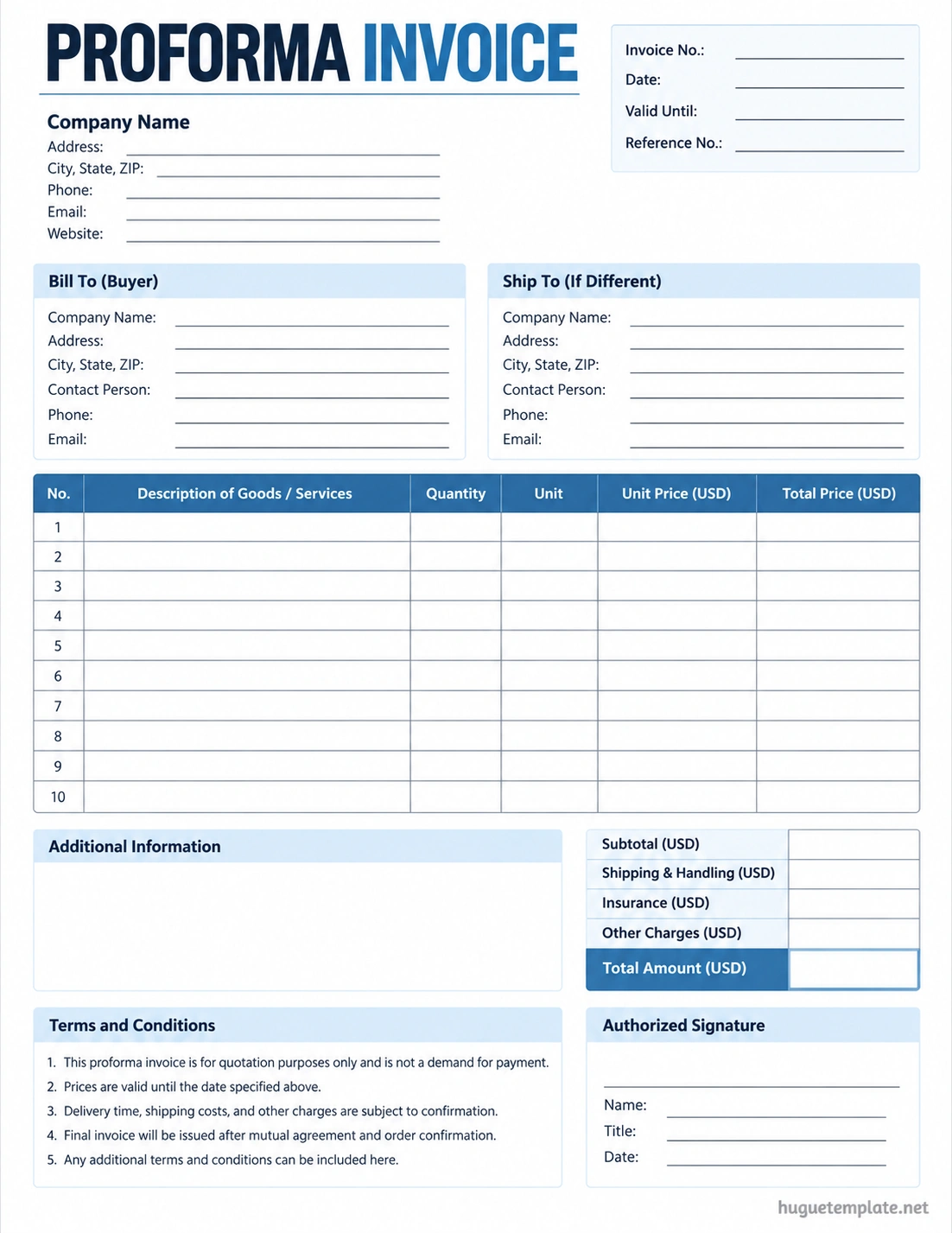
Seller and Buyer Information
Start with the names and contact details of both parties. Depending on the transaction, include:
- Seller or company name
- Business address, phone number, and email address
- Buyer or customer name
- Billing address and shipping address, if different
- Relevant contact person or business identification details
Invoice Identification and Dates
Assign a unique reference number so the document can be tracked easily. Include the issue date and, when appropriate, a validity date indicating how long the quoted prices or terms are expected to remain available.
- Proforma invoice number
- Date of issue
- Quotation validity date
- Purchase order or reference number, if applicable
Product or Service Details
Describe every item clearly enough for the buyer to understand what is being offered. For each line item, include the description, quantity, unit of measure, unit price, and estimated line total.
For service-based transactions, describe the service, project scope, hours, or other relevant pricing units. Clear descriptions help both parties compare the estimate with the final order.
Subtotal, Shipping, Taxes, and Total
Show how the estimated total is calculated. Depending on the transaction, the breakdown may include:
- Subtotal for goods or services
- Shipping and handling charges
- Estimated insurance costs
- Applicable taxes or duties, where appropriate
- Discounts or additional fees
- Estimated total amount and currency
Clearly label amounts as estimates when they have not yet been confirmed. For international transactions, specify the currency to avoid confusion about exchange rates and payment expectations.
Terms and Conditions
Include relevant commercial conditions, such as the expected delivery date, estimated production time, quotation validity, shipping arrangements, and proposed payment terms. If the final price depends on confirmation of freight charges or other variables, explain that clearly.
You can also state that the proforma invoice is provided for quotation or planning purposes and is not itself a request for payment. Adapt the wording to the transaction and any applicable contractual requirements.
How to Create a Proforma Invoice
Creating a proforma invoice is straightforward when you follow a consistent process. Use these steps to prepare a document that is accurate, readable, and useful to the buyer.
Identify the Parties
Enter the seller’s business information and the buyer’s details. Confirm spelling, addresses, and contact information before sending the document.
Describe the Proposed Transaction
List the products or services, quantities, specifications, and unit prices. Make sure the descriptions match the buyer’s request or the preliminary purchase agreement.
Calculate the Estimated Costs
Multiply each quantity by its unit price to calculate the line total. Add the line totals to determine the subtotal, then include any applicable shipping, insurance, taxes, discounts, or additional charges. Check the calculations carefully.
Specify the Conditions
State the currency, quotation validity period, expected delivery arrangements, and other relevant terms. For international shipments, confirm whether shipping responsibilities and costs are described using the appropriate agreed trade terms.
Review and Send the Document
Check the invoice number, dates, item descriptions, calculations, and contact details. Save the completed document as a PDF or another format agreed upon with the buyer. Keep a copy for your business records.
Proforma Invoice vs. Commercial Invoice
Although both documents contain transaction details, a proforma invoice and a commercial invoice serve different purposes.
- Proforma invoice: Provides preliminary information about a proposed sale, including estimated prices and expected transaction terms.
- Commercial invoice: Records the actual sale and is commonly used in billing, accounting, and international shipping or customs procedures.
- Timing: A proforma invoice is generally issued before the sale is finalized, while a commercial invoice is normally issued when the transaction reaches the appropriate billing or shipping stage.
- Payment: A proforma invoice is generally not a payment demand. A commercial invoice may request payment according to the agreed terms.
The exact requirements depend on the transaction and local rules. Businesses should use the document required for their particular accounting, tax, payment, and shipping needs.
Proforma Invoice vs. Quotation
A quotation and a proforma invoice both communicate expected prices before a transaction is completed. A quotation usually focuses on the price and scope of an offer, while a proforma invoice often presents those details in an invoice-style format with buyer information, itemized costs, and transaction references.
The distinction is not universal. Some businesses use these documents in similar ways, and their legal or commercial effect depends on the wording, agreement, and applicable law. If a transaction requires a formal quotation, purchase order, or contract, a proforma invoice may not replace it.
Practical Tips for Using a Proforma Invoice Template
A good template saves time, but the information entered into it must still be accurate. Apply these practical tips before sending your document.
- Use a consistent format. Keep the company name, contact details, invoice numbering, and layout consistent across transactions.
- Make estimates clear. Label prices and delivery costs as estimated when they are not final.
- Specify the currency. This is particularly important when the buyer and seller operate in different countries.
- Check every calculation. Confirm quantities, unit prices, subtotals, and additional charges.
- Set a validity period when needed. This helps clarify how long the proposed prices or conditions are expected to apply.
- Keep the document readable. Use clear headings, aligned columns, and enough space for product descriptions.
- Protect business information. Share the document with the intended recipient and retain a copy according to your recordkeeping practices.
- Confirm local requirements. Verify whether additional documents are needed for customs, taxes, financing, or regulated transactions.
Who Should Use a Proforma Invoice?
A proforma invoice can be useful for businesses that need to communicate estimated costs before completing a sale. Common users include:
- Manufacturers and wholesalers: To estimate the cost of bulk orders and production runs.
- Exporters and importers: To share preliminary shipment values and transaction details.
- Retailers and suppliers: To confirm the expected cost of special orders.
- Freelancers and service providers: To outline proposed service fees before work begins.
- Small business owners: To give customers a written estimate in a consistent, professional format.
The document is especially useful when a buyer needs to review the expected costs before approving an order. However, the seller should still issue the appropriate final invoice or other required documents when the transaction progresses.
Frequently Asked Questions About Proforma Invoices
Is a proforma invoice a legal invoice?
A proforma invoice is generally a preliminary document rather than the final commercial invoice. Its legal effect depends on its wording, the parties’ agreement, and applicable law. Do not assume that it replaces a contract, tax invoice, or other legally required document.
Does a proforma invoice mean payment is due?
Usually, no. It normally communicates estimated costs before the sale is finalized rather than demanding payment. If a seller requires a deposit or advance payment, the payment request and its terms should be stated clearly and supported by the appropriate documentation.
Can a proforma invoice be used for international shipping?
Yes, it is commonly used to communicate preliminary transaction details for international trade. However, customs authorities, carriers, and financial institutions may require additional or different documents. Confirm the requirements for the destination country and shipment.
Can I create a proforma invoice in Excel or Word?
Yes. You can use a spreadsheet, word processor, accounting platform, or printable proforma invoice template. Choose a format that makes it easy to calculate costs, update transaction details, and save a copy for your records.
What is the difference between a proforma invoice and a receipt?
A proforma invoice outlines the expected details of a proposed transaction. A receipt generally confirms that a payment has been received. They serve different purposes and should not be treated as interchangeable documents.
Should a proforma invoice include tax?
It may include estimated taxes when relevant to the transaction. Whether tax should be charged, how it should be displayed, and which document is required depend on the jurisdiction and type of sale. Verify the applicable rules before issuing the final invoice.
Does a proforma invoice need a signature?
A signature is not universally required for every proforma invoice. Some businesses include an authorized signature or approval field for internal control or customer acceptance. Check the requirements of the parties and the transaction.
Conclusion
A proforma invoice provides a clear overview of the anticipated costs and conditions of a proposed transaction. By listing buyer and seller details, item descriptions, quantities, estimated prices, additional charges, and relevant terms, businesses can help customers make informed decisions before an order is finalized.
Using a professional proforma invoice template makes it easier to prepare consistent estimates, reduce errors, and communicate transaction details clearly. Review the information carefully, explain which amounts are estimates, and confirm any applicable legal, tax, customs, or payment requirements before proceeding with the sale.
Download: Proforma Invoice Template
