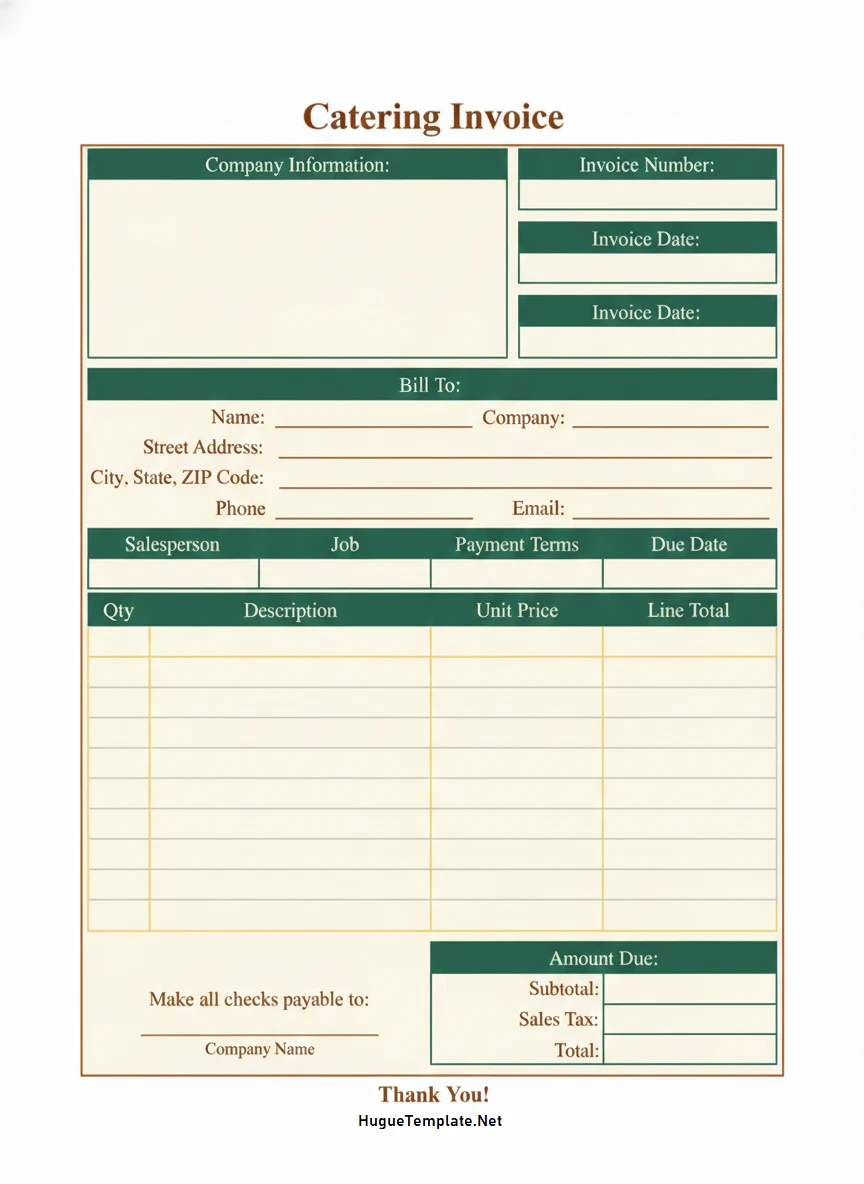
If you are a catering business owner, you understand the importance of having a streamlined invoicing process. Catering invoices play a crucial role in ensuring that you get paid for your services on time.
In this guide, we will delve into the world of catering invoices, exploring what they are, why they are essential, what to include in them, how to create them, and tips for successful invoicing.
What is a Catering Invoice?
A catering invoice is a document that outlines the services provided by a catering business and the associated costs. It serves as a formal request for payment from the client and provides a breakdown of the services rendered, the quantity of items delivered, the prices, and the total amount due.
Catering invoices are essential for record-keeping, tracking payments, and maintaining transparency between the caterer and the client.
Why Are Catering Invoices Important?
Catering invoices are crucial for several reasons. Firstly, they serve as a legal document that protects both the caterer and the client in case of a dispute. Having a detailed invoice ensures that all parties are on the same page regarding the services provided and the costs involved.
Additionally, invoices help track payments, manage cash flow, and maintain accurate financial records for tax purposes.
What to Include in a Catering Invoice
When creating a catering invoice, it is essential to include the following information:
- Client Details. Include the client’s name, contact information, and billing address.
- Invoice Number. Assign a unique invoice number for tracking purposes.
- Service Description. Provide a detailed description of the services provided, including the date, time, and location of the event.
- Itemized List. Break down the costs of each item or service offered, including quantities and prices.
- Total Amount Due. Calculate the total amount due, including any taxes or additional charges.
- Payment Terms. Clearly outline the payment terms, including due date, accepted payment methods, and any late fees.
How to Create a Catering Invoice
Creating a catering invoice is a straightforward process that can be done manually or using accounting software. Here are the steps to create a catering invoice:
- Choose a Template. Select a catering invoice template that suits your business needs.
- Fill in Client Details. Enter the client’s information, including name, address, and contact details.
- Add Service Description. Provide a detailed description of the services rendered, including the date, time, and location of the event.
- Itemize Costs. Break down the costs of each item or service offered, including quantities and prices.
- Calculate Total Amount Due. Add up the costs and calculate the total amount due, including taxes and any additional charges.
- Include Payment Terms. Clearly outline the payment terms, including the due date, accepted payment methods, and any late fees.
Tips for Successful Catering Invoicing
To ensure smooth invoicing processes and timely payments, consider the following tips:
- Be Clear and Detailed. Provide a detailed breakdown of services and costs to avoid any confusion.
- Set Payment Terms. Clearly outline payment terms, including due dates and accepted payment methods.
- Send Invoices Promptly. Send invoices promptly after the event to expedite the payment process.
- Follow Up on Overdue Payments. Don’t hesitate to follow up on overdue payments to maintain cash flow.
- Consider Using Accounting Software. Invest in accounting software to streamline the invoicing process and track payments efficiently.
- Keep Records Organized. Maintain organized records of all invoices for easy reference and tracking.
In conclusion, catering invoices are essential for catering businesses to ensure timely payments, maintain accurate financial records, and foster transparency with clients. By following the tips outlined in this guide and creating detailed invoices, you can streamline your invoicing process and improve cash flow for your catering business.
Catering Invoice Template – DOWNLOAD
