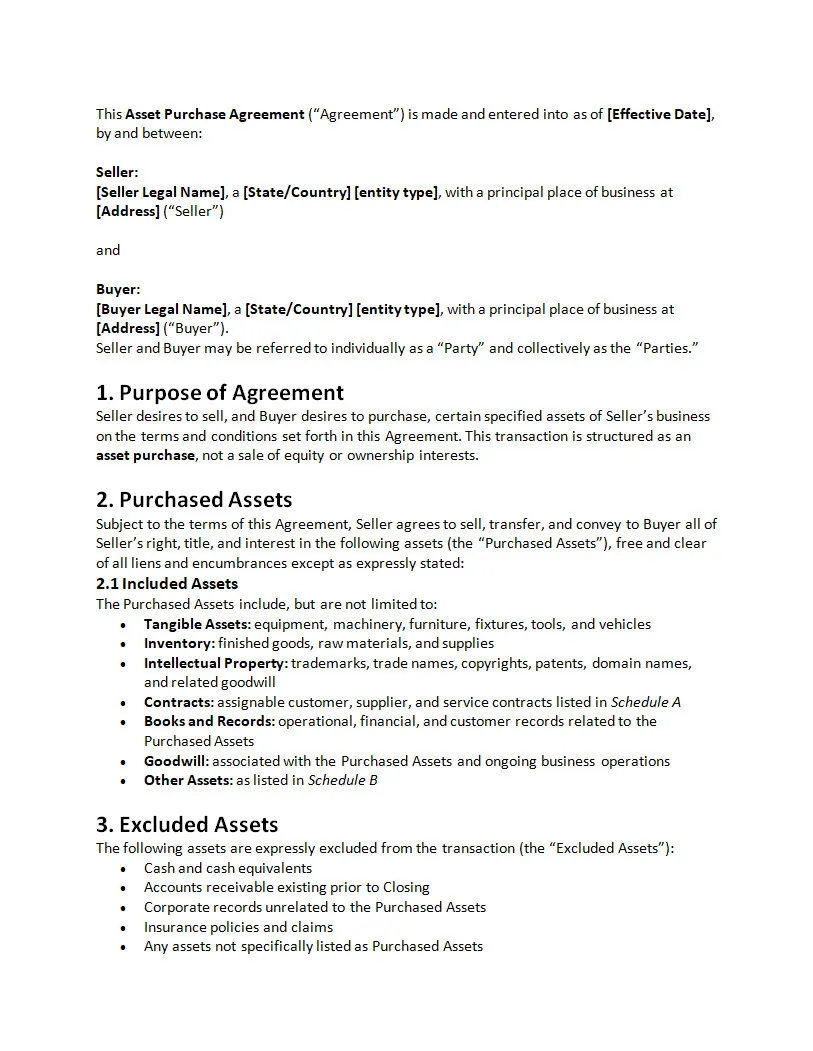
What is an Asset Purchase Agreement?
An asset purchase agreement, commonly abbreviated as APA, is a legal document that outlines the terms and conditions of a sale in which individual assets of a business are transferred from a seller to a buyer.
This type of agreement allows the buyer to select specific assets they wish to acquire, giving them the flexibility to “cherry-pick” desired items while excluding any unwanted liabilities associated with the business.
Asset purchase agreements are commonly used in mergers and acquisitions to facilitate the transfer of assets and ensure a smooth transaction process.
Importance of Asset Purchase Agreement
An asset purchase agreement is crucial for both parties involved in the transaction as it provides a clear framework for the sale of assets. For the buyer, the agreement helps in defining the scope of assets being acquired, ensuring that there are no hidden liabilities or unexpected surprises post-acquisition. On the other hand, for the seller, the agreement serves as a roadmap for transferring assets while protecting the seller from potential risks or disputes that may arise after the transaction.
Additionally, asset purchase agreements play a significant role in legal compliance and tax planning. By clearly specifying the assets being sold, the purchase price, and any warranties or representations, the agreement ensures that both parties adhere to relevant laws and regulations governing asset transfers. It also helps in allocating tax impacts and minimizing any potential tax liabilities that may arise from the transaction.
Key Elements of an Asset Purchase Agreement
When drafting an asset purchase agreement, several key elements must be included to make the contract comprehensive and legally binding. These elements ensure that both parties understand their rights and obligations under the agreement and provide clarity on the terms of the transaction. Some of the key elements of an asset purchase agreement include:
- Identification of Assets: Clearly specify the assets being sold, including a detailed description of each asset, its condition, and any relevant serial numbers or identification marks.
- Purchase Price and Payment Terms: Outline the total purchase price for the assets, the payment schedule, any adjustments or contingencies related to the price, and the method of payment.
- Representations and Warranties: Include statements from the seller regarding the accuracy of information provided, the condition of the assets, any existing liabilities, and any other relevant representations that impact the transaction.
- Covenants and Closing Conditions: Detail the obligations of both parties leading up to the closing of the transaction, including any conditions that must be met before the sale can be completed.
- Indemnification Provisions: Specify how disputes or liabilities arising from the transaction will be resolved, including indemnification clauses to protect both parties from potential losses.
- Confidentiality Agreement: Include provisions to maintain the confidentiality of sensitive information exchanged during the transaction to protect the interests of both parties and prevent unauthorized disclosure of proprietary information.
How to Draft an Asset Purchase Agreement
Drafting an asset purchase agreement requires careful consideration of the specific details of the transaction and the needs of both parties involved. Here are some steps to follow when creating a comprehensive asset purchase agreement:
Identify the Parties Involved
The first step in drafting an asset purchase agreement is to clearly identify the parties involved in the transaction. This includes providing the legal names and contact information of both the buyer and seller. Additionally, it is essential to include any subsidiaries or affiliated entities that may be part of the transaction to ensure that all parties are bound by the terms of the agreement.
Describe the Assets Being Transferred
Once the parties have been identified, the next step is to provide a detailed description of the assets being transferred. This includes listing each asset individually, along with any relevant information such as make, model, serial numbers, or any unique identifiers. It is essential to be as specific as possible to avoid any confusion or disputes regarding the assets being sold.
Determine the Purchase Price and Payment Terms
Agreeing on the purchase price and payment terms is a critical aspect of the asset purchase agreement. The agreement should clearly outline the total purchase price for the assets, any adjustments or contingencies related to the price, the method of payment, and the schedule for payment. Including provisions for escrow or holdback amounts can help protect both parties in case of any unforeseen issues post-transaction.
Include Representations and Warranties
Representations and warranties are assurances provided by the seller regarding the condition of the assets being sold, any existing liabilities associated with the assets, and other relevant information necessary for the transaction. Including comprehensive representations and warranties in the agreement helps in mitigating risks and ensuring that both parties have a clear understanding of the assets being transferred.
Define Closing Conditions
Closing conditions are requirements that must be met before the sale of assets can be completed. These conditions may include obtaining necessary approvals or consents, fulfilling any outstanding obligations, or meeting any other specific requirements outlined in the agreement. Clearly defining the closing conditions helps in ensuring a smooth and timely transfer of assets.
Address Indemnification Provisions
Indemnification provisions in an asset purchase agreement outline how disputes or liabilities arising from the transaction will be resolved. These provisions specify the responsibilities of each party in case of any claims, losses, or damages related to the assets being transferred. By including indemnification clauses, both parties can protect themselves from unforeseen risks and potential legal disputes.
Include Confidentiality Provisions
Confidentiality provisions are essential in protecting sensitive information exchanged during the transaction. These provisions ensure that proprietary information, trade secrets, and other confidential data are not disclosed to unauthorized parties. By including confidentiality clauses in the agreement, both parties can maintain the confidentiality of sensitive information and safeguard their interests.
Tips for Successful Asset Purchase Agreements
Entering into an asset purchase agreement requires careful planning and consideration to ensure a successful transaction for both parties involved. Here are some tips to help you navigate the process and create a comprehensive asset purchase agreement:
Seek Legal Advice
Consulting with a legal professional experienced in mergers and acquisitions can help in drafting or reviewing the asset purchase agreement. A legal advisor can provide valuable insights, ensure legal compliance, and protect your interests throughout the transaction.
Conduct Due Diligence
Performing thorough due diligence on the assets being acquired is crucial to uncover any potential risks, liabilities, or hidden issues that may impact the transaction. Conducting a comprehensive review of the assets and their associated documents can help in making informed decisions and avoiding costly surprises post-acquisition.
Be Clear and Specific
When drafting the asset purchase agreement, it is essential to be clear and specific in outlining the terms of the transaction. Clearly define the assets being sold, the purchase price, payment terms, and any conditions or contingencies to avoid any misunderstandings or disputes during the transaction.
Communicate Effectively
Open communication between the buyer and seller is key to a successful asset purchase agreement. Keeping the lines of communication open and addressing any concerns or questions promptly can help in resolving issues and ensuring a smooth transaction process for both parties.
Review and Revise Regularly
Periodically reviewing and updating the asset purchase agreement is essential to ensure that it accurately reflects the current state of the transaction and any changes in circumstances. Regularly reviewing the terms of the agreement can help in addressing any new developments or issues that may arise during the transaction.
Asset Purchase Agreement Template – DOWNLOAD
