Planning a ski vacation is exciting, but packing for cold weather and mountain activities requires more preparation than an ordinary trip. From waterproof clothing and ski equipment to travel documents and safety essentials, having the right items can make a significant difference in your overall experience.
A well-organized packing list for a ski trip helps you remember everything you need while avoiding unnecessary luggage. It also reduces the risk of forgetting important equipment that could affect your comfort or safety on the slopes.
Whether you are visiting a ski resort for a weekend or planning a longer winter vacation, this guide covers essential ski clothing, technical equipment, personal care products, health supplies, and travel necessities. Use the printable checklists throughout this article to organize your belongings before departure.
1. Essential Ski Clothing to Pack
Proper clothing is one of the most important parts of preparing for a ski vacation. Mountain weather can change quickly, and temperatures may drop significantly throughout the day. Wearing several layers helps regulate body temperature while keeping you warm and comfortable.
Base Layers
Base layers sit directly against your skin and help manage moisture. Choose lightweight materials that wick sweat away from your body instead of retaining it.
- Thermal base layer tops.
- Thermal leggings or long underwear.
- Moisture-wicking ski socks.
- Extra base layer sets for longer trips.
Mid-Layers and Outerwear
Mid-layers provide insulation, while outerwear protects you from wind, snow, and moisture. Choose clothing designed specifically for winter sports.
- Fleece jacket or insulated mid-layer.
- Waterproof and windproof ski jacket.
- Waterproof ski pants or snow pants.
- Warm winter gloves or mittens.
- Insulated winter hat or beanie.
- Neck gaiter or balaclava.
- Waterproof winter boots for walking around the resort.
Remember to bring extra socks and comfortable clothing for relaxing after skiing. Having dry clothes available makes it easier to stay comfortable after spending several hours outdoors.
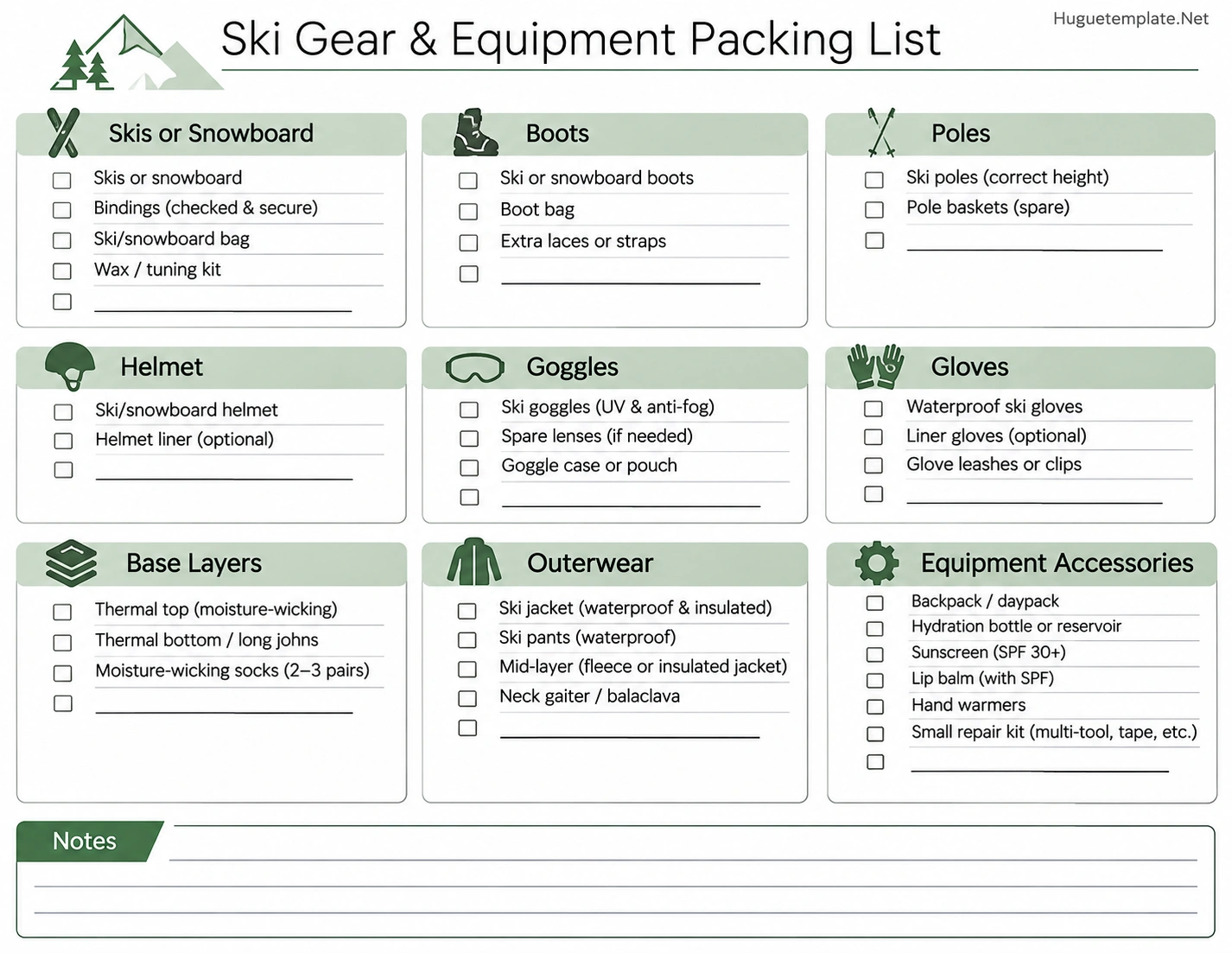
2. Ski Equipment and Technical Gear
Your ski equipment is another essential category on your packing list. Some resorts offer equipment rentals, so you may not need to bring every item from home. However, personal equipment can provide a more comfortable and familiar fit.
Essential Ski Equipment
- Skis or snowboard, depending on your activity.
- Ski or snowboard boots.
- Ski poles, if required.
- Helmet designed for snow sports.
- Ski goggles with suitable UV protection.
- Glove liners or spare gloves.
- Ski or snowboard equipment bag.
- Spare goggle lenses, if needed.
Additional Equipment Accessories
Small accessories can make your time on the mountain more convenient. Consider packing the following items:
- Boot bag for transporting ski boots.
- Hand warmers for extremely cold conditions.
- Helmet-compatible face covering.
- Goggle cleaning cloth.
- Small equipment repair kit.
- Water bottle or insulated hydration container.
If you plan to rent skis, snowboards, or boots, confirm your reservation before departure. Check whether the rental package includes essential accessories such as poles and helmets.
3. Safety and Health Essentials
Safety should always be a priority when preparing for a ski vacation. Cold temperatures, physical activity, and changing mountain conditions can create challenges, especially for inexperienced skiers.
Including basic health and emergency supplies in your packing list for a ski trip helps you prepare for minor injuries and unexpected situations.
First Aid and Medication
- Small first-aid kit.
- Personal prescription medications.
- Basic pain relief medication, if appropriate.
- Adhesive bandages and blister pads.
- Antiseptic wipes.
- Cold or allergy medication, if needed.
- Emergency contact information.
Sun and Cold Weather Protection
Snow reflects sunlight, which can increase exposure to ultraviolet rays. Even on cloudy days, protecting your skin and eyes is important.
- Broad-spectrum sunscreen with SPF 30 or higher.
- SPF lip balm.
- UV-protective sunglasses.
- Hand warmers.
- Moisturizer for dry skin.
- Waterproof face covering.
Keep frequently used safety items somewhere easy to reach. Before skiing, check the local weather forecast and mountain conditions. Always follow resort safety instructions and stay within areas appropriate for your experience level.
4. Travel Documents and Personal Essentials
Clothing and ski equipment are important, but you should also prepare the documents and personal belongings needed for your journey. Keeping these items together makes airport transfers, hotel check-ins, and resort access easier.
Important Travel Documents
- Passport or government-issued identification.
- Flight, train, or bus tickets.
- Hotel or accommodation confirmation.
- Ski resort reservations.
- Lift passes or ski tickets.
- Travel insurance information.
- Emergency contact details.
- Required travel permits or documents.
Electronics and Accessories
- Smartphone and charger.
- Portable power bank.
- Camera or action camera.
- Headphones.
- Travel adapters, if necessary.
- Waterproof phone pouch.
Store important documents in a secure, waterproof travel organizer. Keep digital copies of essential reservations and insurance information in case the original documents become unavailable.
5. Toiletries and Personal Care Items
Cold mountain air can leave your skin dry, while physical activity may require additional personal care supplies. Packing basic toiletries ensures you have everything needed throughout your stay.
- Toothbrush and toothpaste.
- Shampoo and conditioner.
- Body wash or soap.
- Deodorant.
- Moisturizer and body lotion.
- Lip balm.
- Sunscreen.
- Hairbrush or comb.
- Hand sanitizer.
- Personal hygiene products.
- Travel towel, if needed.
Consider using travel-sized containers to save luggage space. Place liquids in suitable leak-proof bags to protect your clothing and electronic accessories.
6. Après-Ski Clothing and Relaxation Essentials
Après-ski refers to activities and relaxation after skiing. Whether you plan to enjoy a resort restaurant, explore a nearby village, or simply relax at your accommodation, comfortable clothing is worth including in your luggage.
Consider packing these items:
- Warm sweaters or casual jackets.
- Comfortable jeans or lounge pants.
- Casual shirts and tops.
- Warm socks.
- Comfortable walking shoes or winter boots.
- Sleepwear and underwear.
- Swimwear, if your accommodation has a pool or hot tub.
- Extra gloves and winter accessories.
Choose versatile clothing that can be worn in different combinations. This helps reduce luggage weight without sacrificing comfort during your vacation.
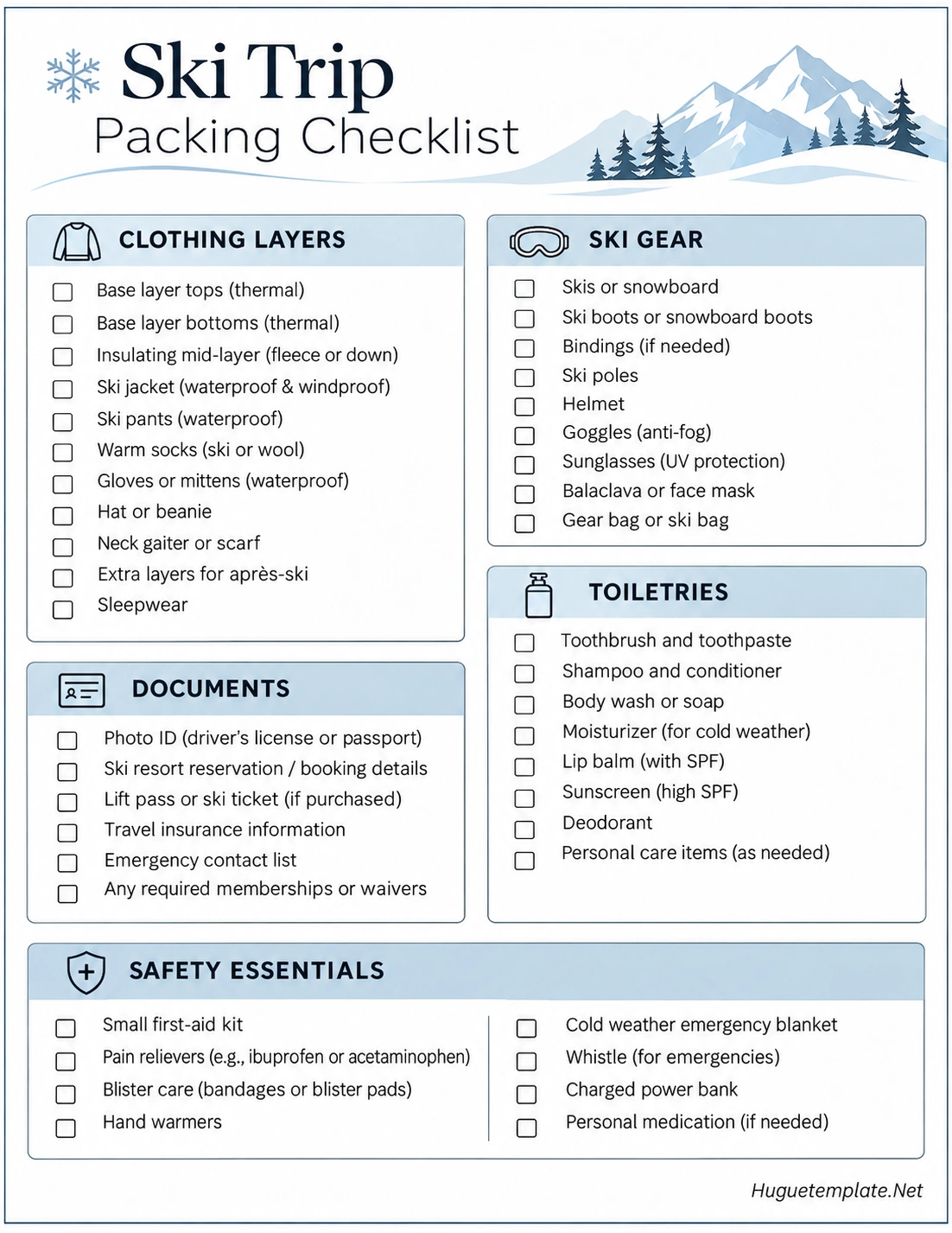
7. Printable Ski Trip Packing Checklist
A printable checklist makes it easier to track your belongings and identify anything you still need to purchase or prepare. Instead of relying on memory, you can check off each item as it goes into your suitcase.
The following checklist provides a simple overview of the most important categories for your ski vacation.
Clothing Checklist
- Base layers and thermal underwear.
- Insulating mid-layers.
- Waterproof ski jacket and pants.
- Ski socks and extra underwear.
- Winter gloves and beanie.
- Neck gaiter or balaclava.
- Après-ski clothing and sleepwear.
Ski Gear Checklist
- Skis or snowboard.
- Boots and poles.
- Ski helmet.
- Goggles and sunglasses.
- Equipment bag.
- Water bottle and hand warmers.
Health and Travel Checklist
- First-aid supplies and medication.
- Sunscreen and SPF lip balm.
- Identification and travel documents.
- Accommodation and resort confirmations.
- Phone, charger, and power bank.
- Toiletries and personal care products.
8. Tips for Packing Efficiently for a Ski Vacation
Winter clothing and ski equipment can take up considerable luggage space. A few simple packing strategies can help you organize your belongings without bringing unnecessary items.
Use a Layering System
Pack clothing based on the layering system rather than bringing multiple bulky outfits. Thermal base layers, insulating mid-layers, and waterproof outerwear provide flexibility for different weather conditions.
Separate Wet and Dry Clothing
Use separate waterproof bags for wet ski clothing, gloves, and socks. This prevents moisture from spreading to clean clothes and other personal belongings.
Check Rental Equipment Before Traveling
Contact your ski resort or rental provider to confirm which equipment is available. Renting bulky items such as skis and snowboards can reduce transportation costs and luggage requirements.
Check Airline Baggage Restrictions
If you are flying, review your airline’s baggage allowance and sports equipment policies. Ski equipment may have different size and weight restrictions from ordinary checked luggage.
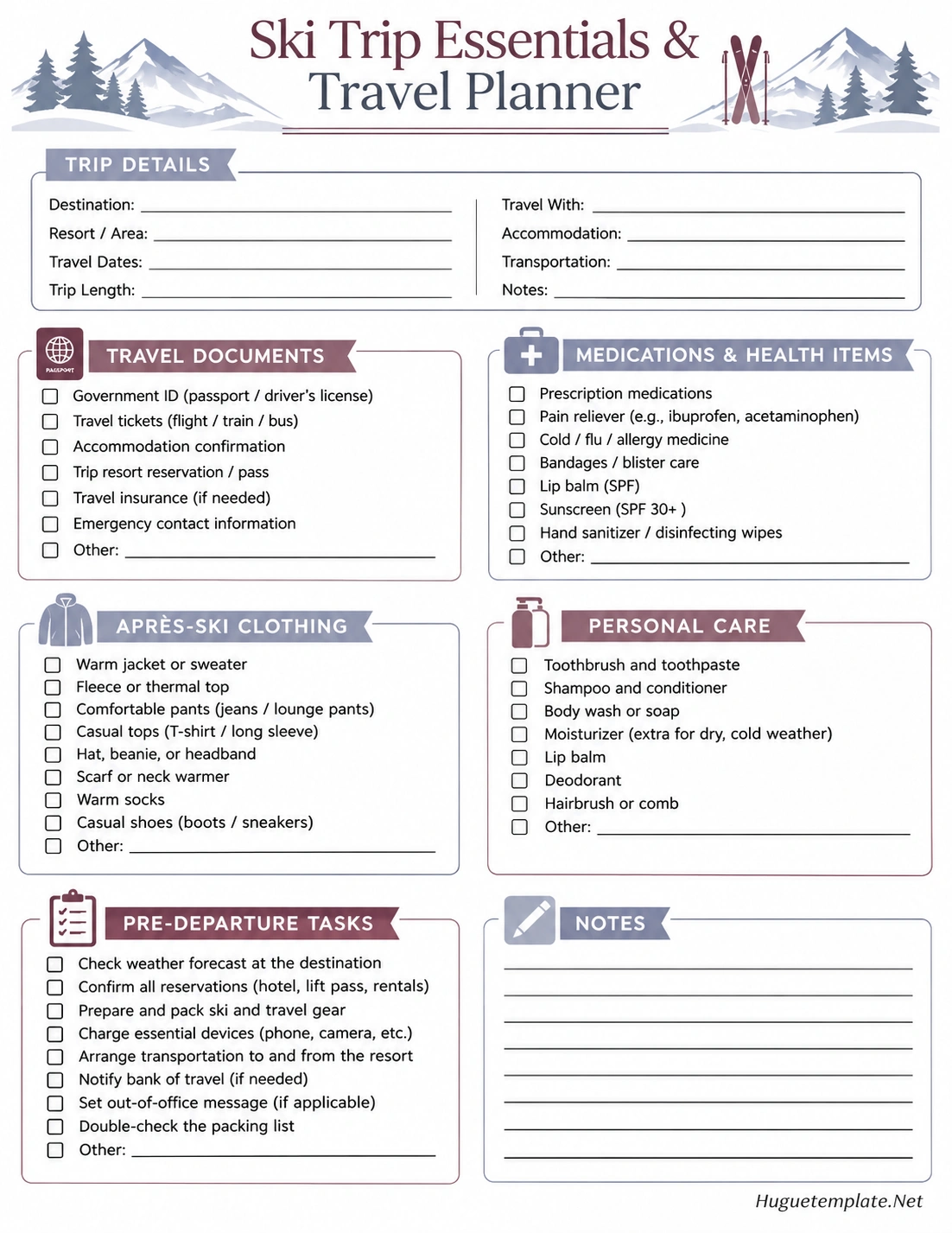
Prepare Your Packing List in Advance
Start organizing your belongings several days before departure. This gives you enough time to purchase missing items, check equipment condition, and confirm travel arrangements.
9. What Should You Avoid Packing for a Ski Trip?
Packing too many unnecessary items can make traveling more difficult. Before closing your suitcase, review your belongings and remove anything that is unlikely to be useful.
Here are some items you may want to avoid:
- Too many bulky casual outfits.
- Non-waterproof shoes for snowy conditions.
- Heavy cotton clothing as your primary base layer.
- Unnecessary duplicate equipment.
- Full-sized toiletries when travel-sized products are sufficient.
- Equipment that is already included in your rental package.
Always consider your destination, accommodation facilities, trip duration, and planned activities before deciding what to leave behind.
10. Frequently Asked Questions About a Ski Trip Packing List
What should I pack for a ski trip?
Essential items include thermal base layers, waterproof ski clothing, gloves, a helmet, goggles, suitable footwear, toiletries, travel documents, and basic first-aid supplies. Your exact packing list depends on the destination, weather, and length of your trip.
How many outfits should I pack for a 3-day ski trip?
For a three-day ski vacation, consider packing two or three base layer sets, three pairs of ski socks, one or two mid-layers, one waterproof ski outfit, and two or three casual outfits. Bring additional underwear and sleepwear as needed.
Do I need to bring my own ski equipment?
No. Many ski resorts offer rental equipment, including skis, snowboards, boots, helmets, and poles. Renting can be more convenient if you travel by air or do not ski frequently.
What should I wear under ski clothes?
Wear moisture-wicking thermal base layers underneath your ski clothing. Merino wool and synthetic fabrics are popular options because they help manage moisture and maintain warmth. Avoid using ordinary cotton as your primary base layer.
Should I bring sunscreen on a ski trip?
Yes. Sunscreen is important because ultraviolet exposure can remain significant at higher elevations, and snow reflects sunlight. Choose broad-spectrum SPF 30 or higher and reapply according to the product instructions.
How do I pack ski clothes without taking up too much space?
Use compression packing cubes or separate bags to organize clothing. Pack versatile layers that can be reused, and wear your bulkiest winter jacket and boots during travel when practical.
What safety items should I bring for skiing?
Important safety items include a properly fitted helmet, suitable goggles, sunscreen, a small first-aid kit, personal medication, blister care, and emergency contact information. Depending on your activity and location, additional safety equipment may be necessary.
Conclusion
Preparing a complete packing list for a ski trip helps make your winter vacation safer, more comfortable, and better organized. From essential clothing layers and technical ski equipment to health supplies and travel documents, every category plays an important role in preparing for your time at the resort.
Start packing early, check your destination’s weather conditions, and confirm which equipment is available for rent. Most importantly, use a printable ski trip packing checklist to keep track of everything before departure.
With the right preparation, you can spend less time worrying about forgotten belongings and more time enjoying your ski vacation.
