Planning a road trip is exciting, but forgetting important items can quickly turn an enjoyable adventure into a stressful experience. Whether you are taking a weekend getaway, driving across the country, or exploring scenic destinations with family and friends, having a well-organized packing list for a road trip makes preparation much easier.
A good road trip packing list helps you bring everything you need without overpacking your vehicle. It also ensures that essential items, such as travel documents, emergency supplies, snacks, and car accessories, are ready before you leave.
From personal belongings to vehicle safety equipment, this guide covers the most important things to pack for a road trip. Use these practical checklists to stay organized, travel comfortably, and enjoy a smoother journey from departure to arrival.
1. Essential Items to Pack for a Road Trip
Start with the everyday essentials you may need throughout your journey. Keep frequently used items somewhere accessible instead of placing everything inside the trunk.
Personal Essentials
- Wallet, cash, and identification
- Driver’s license and travel documents
- Smartphone and phone charger
- Power bank and charging cables
- Sunglasses and prescription glasses
- Reusable water bottle
- Personal medications
- Hand sanitizer and wet wipes
- Tissues and paper towels
- Small personal care kit
Consider packing these belongings in a small backpack or personal bag. This makes it easier to find important items during rest stops without searching through multiple suitcases.
Clothing and Personal Accessories
Choose clothing based on your destination, travel duration, and expected weather conditions. Comfortable outfits are especially important when spending several hours inside a vehicle.
- Comfortable T-shirts and tops
- Pants, shorts, or travel bottoms
- Underwear and socks
- Lightweight jacket or sweater
- Comfortable walking shoes
- Sleepwear
- Hat or cap
- Extra outfit for unexpected situations
- Rain jacket or compact umbrella
Instead of packing too many outfits, select versatile clothing that can be mixed and matched. Rolling clothes rather than folding them can also help save luggage space.
2. Food and Drinks for the Journey
Bringing your own food and drinks is a convenient way to stay refreshed during a road trip. It can also reduce unnecessary stops when you are traveling through areas with limited restaurants or convenience stores.
Road Trip Snacks
Choose snacks that are easy to eat, relatively mess-free, and simple to store inside your vehicle.
- Granola bars and protein bars
- Nuts and trail mix
- Crackers and pretzels
- Fresh apples, oranges, or bananas
- Dried fruit
- Sandwiches and wraps
- Individually packed snacks
Drinks and Food Storage
- Bottled water or reusable water bottles
- Insulated travel cups
- Small cooler with ice packs
- Reusable food containers
- Napkins and paper towels
- Reusable utensils
- Trash bags for food wrappers
Keep water and snacks within easy reach of passengers. If you bring perishable food, use a cooler with sufficient ice packs and maintain appropriate food storage temperatures.
3. Car Safety and Emergency Supplies
Vehicle safety should be a priority when preparing for a long drive. Even a well-maintained car can experience unexpected problems, so carrying basic emergency equipment is essential.
Before departure, check your vehicle’s condition and make sure your emergency supplies are accessible. Do not wait until something goes wrong to discover that an important tool is missing.
Essential Car Emergency Kit
- Spare tire in good condition
- Car jack and lug wrench
- Jumper cables or a portable jump starter
- Flashlight with extra batteries
- Reflective warning triangle
- High-visibility safety vest
- Basic automotive tool kit
- Tire pressure gauge
- Tire repair kit
- First aid kit
- Emergency blanket
- Portable phone charger
Some roadside equipment requires specific knowledge to use safely. Check your vehicle manual and learn how to use the tools before your trip. If you are unsure about a repair, contact roadside assistance rather than attempting it yourself.
First Aid and Health Supplies
A small first aid kit can be useful for handling minor injuries and unexpected health needs during travel.
- Adhesive bandages
- Sterile gauze and medical tape
- Antiseptic wipes
- Disposable gloves
- Personal prescription medications
- Motion sickness remedies, if appropriate
- Basic over-the-counter medications
- Insect repellent
- Sunscreen
Check expiration dates before packing medications and follow the instructions on their labels. Keep essential medicines in a temperature-appropriate, easily accessible place.
4. Navigation and Technology Essentials
Technology can make a road trip more convenient, especially when navigating unfamiliar roads. However, relying entirely on an internet connection is not always practical.
Navigation Equipment
- Smartphone with an updated navigation app
- Downloaded offline maps
- GPS navigation device, if needed
- Printed directions for remote destinations
- Car phone mount
Electronic Accessories
- Car phone charger
- USB charging cables
- Fully charged power bank
- Headphones for passengers
- Portable Bluetooth speaker
- Camera and spare batteries
- Tablet or entertainment device
Download maps, playlists, podcasts, and important travel information before leaving. This helps you stay prepared when mobile coverage is limited.
For safety, the driver should never handle a phone or operate navigation controls while driving. Set your route and entertainment before departure or ask a passenger to help.
5. Important Documents to Bring
Travel documents are easy to overlook when packing. However, having the correct paperwork can help prevent unnecessary delays during your journey.
Place important documents in a dedicated travel organizer so they are easy to locate when needed.
- Valid driver’s license
- Vehicle registration documents
- Proof of car insurance
- Identification documents
- Hotel and accommodation reservations
- Travel itinerary
- Emergency contact information
- Roadside assistance membership details
- Relevant permits for your destination
Keep digital copies of important documents in a secure location as a backup. However, digital copies may not replace original documents when official identification or paperwork is required.
6. Comfort and Entertainment Items
Long hours on the road can become tiring, particularly when traveling with children or several passengers. Packing a few comfort items can make the experience more enjoyable.
Comfortable Travel Accessories
- Travel pillow
- Lightweight travel blanket
- Neck support pillow
- Eye mask
- Lightweight jacket
- Comfortable socks
- Hand wipes and tissues
Entertainment for Passengers
- Books or magazines
- Downloaded movies and shows
- Music playlists
- Travel games and card games
- Coloring books for children
- Headphones
Plan entertainment according to the passengers’ ages and preferences. If children are joining the trip, bring familiar toys, activities, and snacks to help keep them comfortable.
7. How to Organize Your Road Trip Packing List
Having all the right items is important, but organizing them properly makes an even bigger difference. A crowded vehicle can make it difficult to access essential belongings and may reduce passenger comfort.
Use Separate Bags for Different Categories
Divide your belongings into categories instead of placing everything in one large suitcase.
- Personal bag: Wallet, phone, documents, medications, and frequently used essentials.
- Clothing bag: Outfits, underwear, shoes, and sleepwear.
- Food bag: Snacks, drinks, reusable containers, and utensils.
- Emergency bag: First aid supplies, flashlight, and basic emergency equipment.
- Technology bag: Chargers, cables, power banks, and electronic accessories.
Keep Frequently Used Items Accessible
Place water bottles, tissues, snacks, sunglasses, and charging cables where passengers can reach them easily. Avoid putting essential belongings underneath heavy luggage.
Distribute Luggage Carefully
Place heavier luggage low and secure it properly. Keep the driver’s visibility clear and avoid stacking loose items where they could become dangerous during sudden braking.
8. Pre-Trip Vehicle Preparation Checklist
Packing your belongings is only one part of preparing for a road trip. Your vehicle also needs attention before you start driving.
Complete these basic checks before departure:
- Check tire pressure and tread condition.
- Inspect the spare tire.
- Check engine oil and other fluid levels.
- Test the brakes.
- Inspect the battery condition.
- Test headlights, brake lights, and turn signals.
- Check windshield wipers and washer fluid.
- Make sure mirrors are properly adjusted.
- Confirm that registration and insurance documents are available.
- Check fuel level and plan refueling stops.
If your vehicle needs maintenance, arrange an inspection before traveling. A professional mechanic can identify potential problems that may not be obvious during a basic visual check.
9. Tips to Avoid Overpacking for a Road Trip
Overpacking can make your vehicle uncomfortable and leave less room for passengers. A practical packing strategy helps you bring what you need without filling every available space.
Pack According to Trip Duration
Consider how many days you will be away and whether laundry facilities are available. For a short trip, a few versatile outfits may be enough.
Check the Weather Forecast
Review the expected weather at your destination before selecting clothing and accessories. This helps you avoid carrying unnecessary items.
Choose Multi-Purpose Items
Whenever possible, select products that serve more than one purpose. A lightweight jacket, for example, can provide warmth during cool evenings and extra comfort in air-conditioned vehicles.
Use a Written Checklist
A printable road trip packing list makes it easier to track what you have packed and what still needs attention. Check off each item as you place it inside your luggage or vehicle.
Review your checklist once before departure to make sure nothing important has been forgotten.
10. Printable Road Trip Packing List Templates
To make trip preparation easier, use these printable road trip packing list templates. Each design serves a different purpose, helping you organize your belongings, check vehicle safety, and prepare for a comfortable journey.
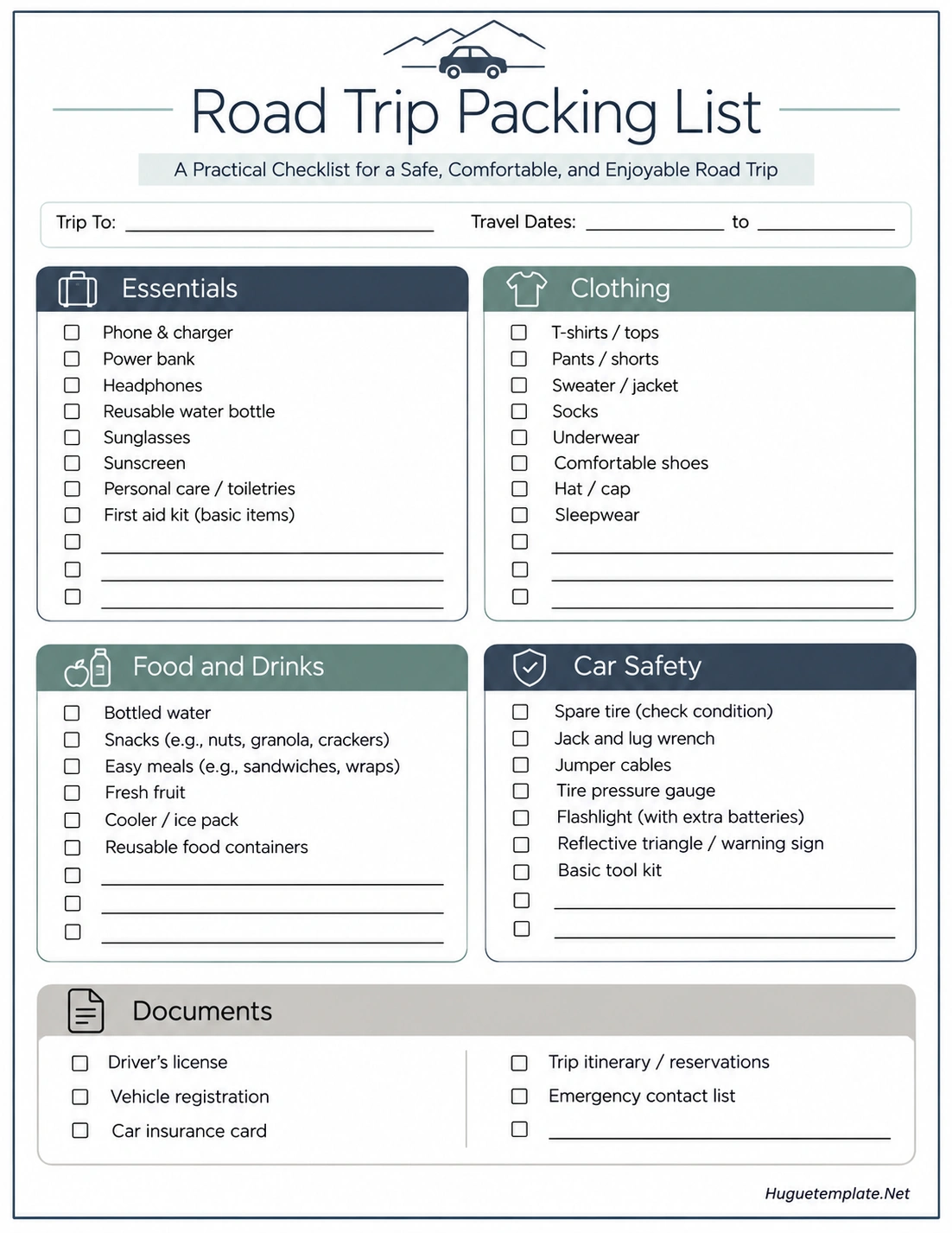
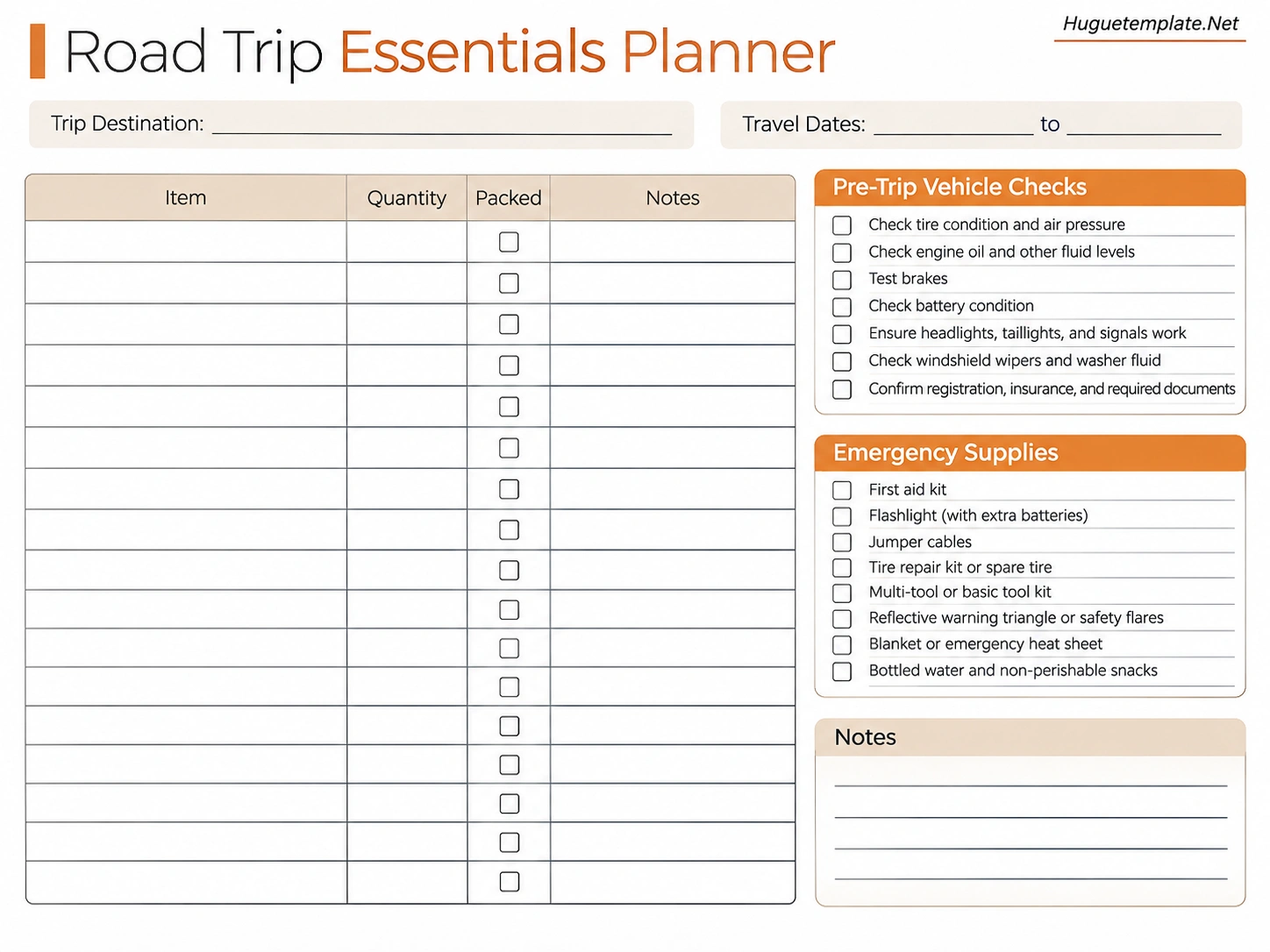
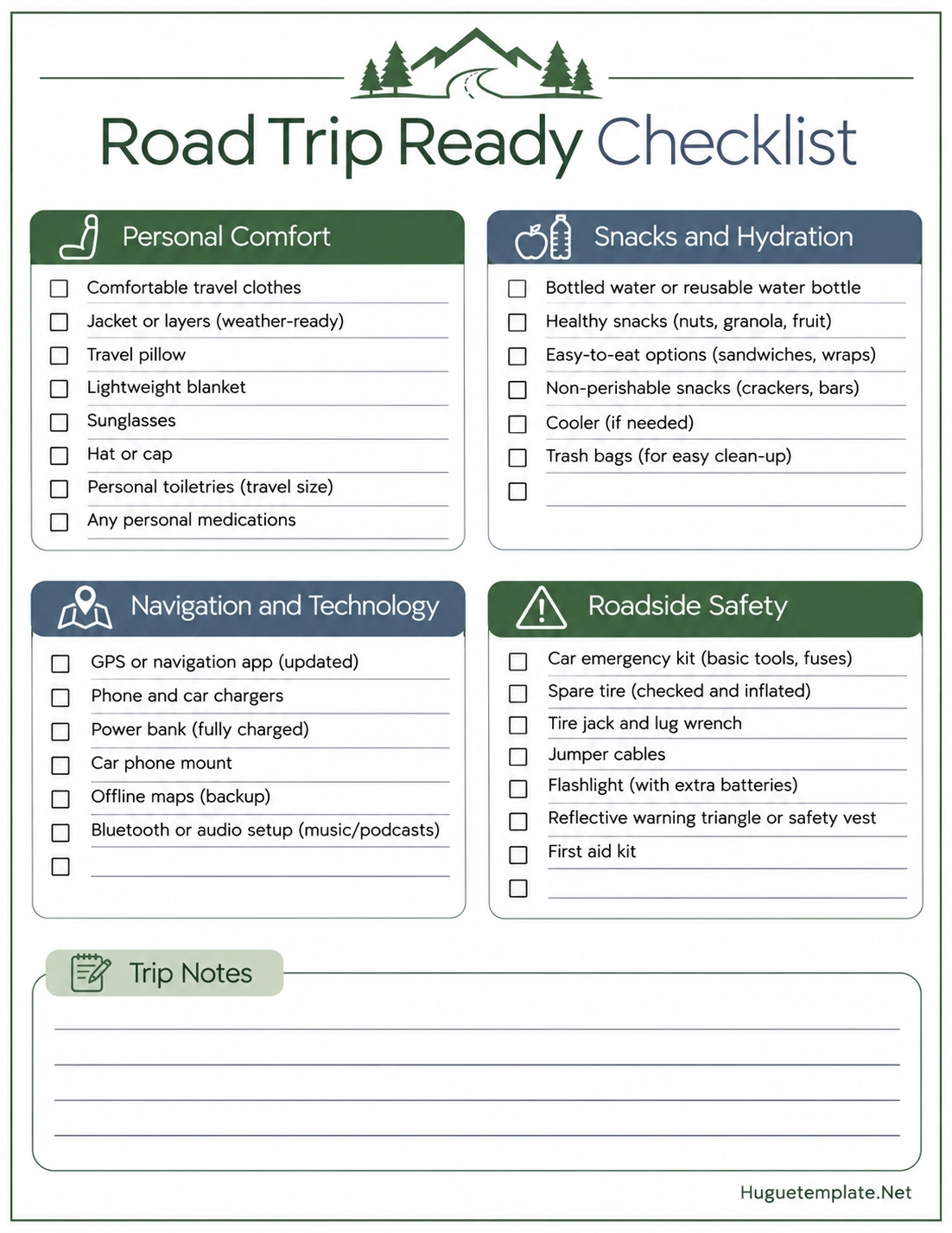
Print your preferred design and complete each section as you prepare. You can also use all three templates together to create a more detailed travel preparation system.
Frequently Asked Questions About Road Trip Packing
1. What should I pack for a road trip?
Pack personal essentials, comfortable clothing, food, drinks, travel documents, phone chargers, navigation equipment, first aid supplies, and car emergency tools. Adjust your packing list based on your destination, weather, and trip duration.
2. What are the most important road trip essentials?
The most important essentials include a valid driver’s license, vehicle documents, phone and charger, drinking water, snacks, medications, a first aid kit, spare tire, and basic roadside emergency equipment.
3. How do I pack efficiently for a long road trip?
Organize belongings into separate bags based on their purpose. Choose versatile clothing, avoid unnecessary items, use packing cubes, and keep frequently used essentials within easy reach.
4. What food should I bring on a road trip?
Bring convenient snacks such as nuts, granola bars, crackers, fresh fruit, sandwiches, and bottled water. Use a cooler with ice packs for perishable food and keep drinks accessible to passengers.
5. What should I keep in my car emergency kit?
A basic car emergency kit should include a first aid kit, flashlight, jumper cables, spare tire, jack, lug wrench, reflective warning triangle, safety vest, tire pressure gauge, and basic tools.
6. How can I avoid forgetting important items?
Use a written or printable packing checklist and organize items by category. Check off each item as you pack it, then review your list again before leaving home.
7. Should I pack differently for a family road trip?
Yes. Family road trips may require additional clothing, children’s entertainment, snacks, personal medications, comfort items, and extra supplies. Make sure each passenger has enough personal space and easy access to essential belongings.
Conclusion
A well-planned packing list for a road trip helps you stay organized, avoid unnecessary luggage, and prepare for unexpected situations. From clothing and snacks to travel documents and emergency equipment, every category plays an important role in making your journey safer and more comfortable.
Start preparing a few days before departure, organize your belongings into separate bags, and check your vehicle before hitting the road. Most importantly, use a printable road trip packing checklist to keep track of everything you need.
With the right preparation, you can spend less time worrying about forgotten items and more time enjoying the journey.
