When it comes to legal matters, it’s always better to be safe than sorry. Whether you’re organizing a sporting event, hosting a workshop, or allowing someone to use your property, having a general release of liability form in place can protect you from potential lawsuits and financial liabilities.
In this comprehensive guide, we will explore everything you need to know about general release of liability forms, including what they are, why they are important, what to include, how to use them, and some valuable tips for creating an effective form.
What is a General Release of Liability Form?
A general release of liability form is a legal document that protects individuals or organizations from being held responsible for injuries, damages, or losses that may occur during a specific activity or event. By signing this form, the participant agrees to waive their right to sue for any harm that they may experience while participating in the activity. This form is commonly used in situations where there is a risk of injury, such as sports events, recreational activities, or volunteer work.
Why are General Release of Liability Forms Important?
General release of liability forms are crucial for protecting both the organizers of an event and the participants involved. Without a signed form, the organizers could be held liable for any injuries or damages that occur during the activity, leading to costly legal battles and potential financial ruin. By having participants sign a release of liability form, organizers can mitigate the risk of lawsuits and ensure that everyone understands the risks involved in the activity.
What to Include in a General Release of Liability Form
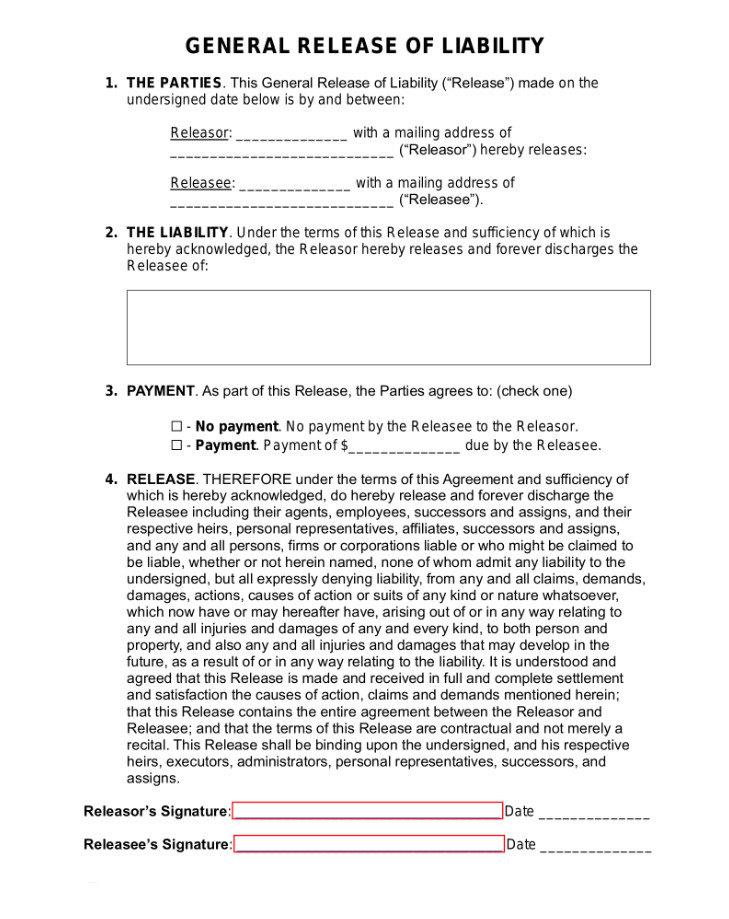
When creating a general release of liability form, it’s essential to include specific information to ensure its effectiveness. Here are some key elements to consider including in your form:
- Participant Information: Include the full name, address, and contact information of the participant signing the form.
- Activity Details: Clearly outline the details of the activity or event, including the date, time, and location.
- Risks and Acknowledgment: Describe the potential risks involved in the activity and have the participant acknowledge their understanding of these risks.
- Release and Waiver: Clearly state that the participant is releasing the organizers from any liability for injuries or damages that may occur during the activity.
- Signature and Date: Include a space for the participant to sign and date the form, indicating their agreement to the terms.
How to Use a General Release of Liability Form
Using a general release of liability form is a straightforward process, but it’s essential to follow these steps to ensure its validity:
- Provide the Form: Distribute the form to all participants before the activity begins and ensure that they have enough time to review and sign it.
- Explain the Terms: Clearly explain the terms of the form to participants and answer any questions they may have about the risks involved.
- Collect Signed Forms: Collect all signed forms and keep them on file for future reference in case of any disputes or legal issues.
- Retain Copies: Make copies of the signed forms for your records and provide participants with a copy for their reference.
Tips for Creating an Effective General Release of Liability Form
Creating an effective general release of liability form is crucial for protecting yourself and your organization from potential legal liabilities. Here are some tips to consider when drafting your form:
- Be Specific: Clearly outline the risks involved in the activity and include detailed language releasing liability.
- Consult a Legal Professional: If you’re unsure about the language or content of the form, consider consulting a lawyer to ensure its legality.
- Keep it Simple: Avoid using complex legal jargon and use plain language that participants can easily understand.
- Review Regularly: Periodically review and update your release of liability form to ensure it reflects any changes in the activity or legal requirements.
- Require Parental Consent: If minors will be participating in the activity, ensure that a parent or guardian signs the form on their behalf.
Conclusion
In conclusion, a general release of liability form is a crucial document for protecting both organizers and participants from potential legal issues. By including the necessary information, explaining the terms clearly, and following the proper procedures, you can create an effective form that mitigates the risks involved in any activity. Remember to keep your form up to date and consult a legal professional if you have any concerns about its content. With a well-crafted release of liability form in place, you can enjoy peace of mind knowing that you are protected in case of any unforeseen incidents.
General Release of Liability Form Template
