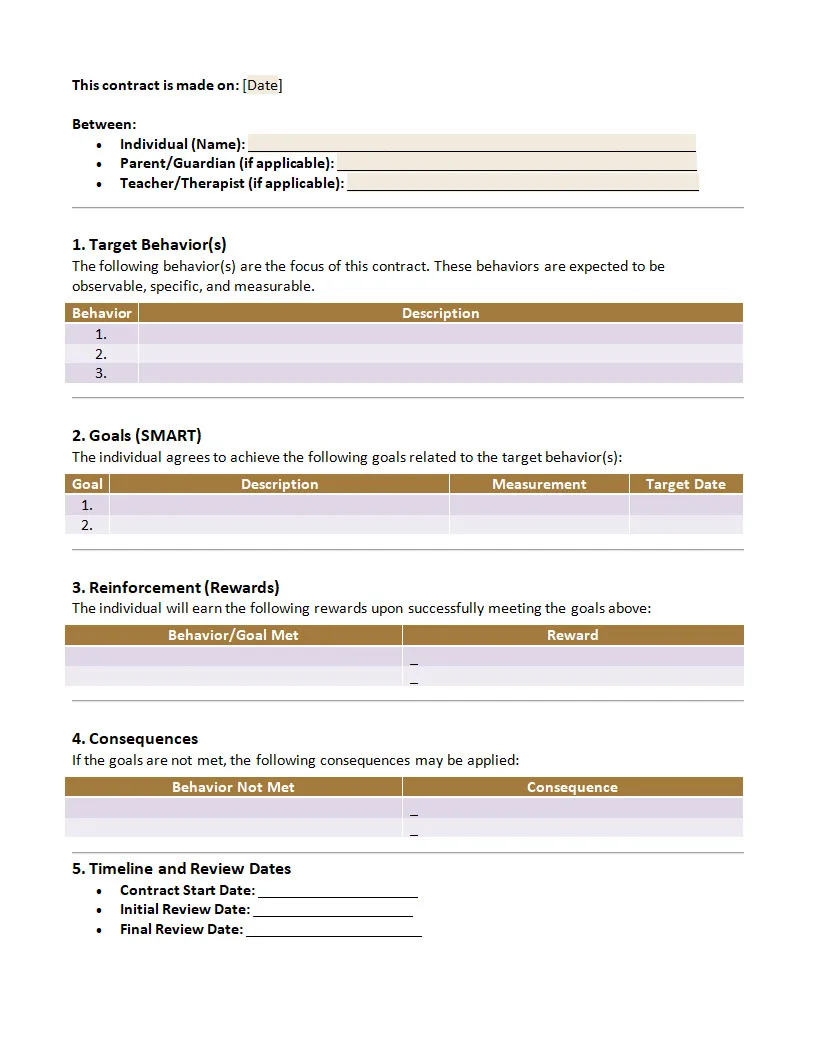
Have you ever struggled with managing behaviors in a classroom or at home? Do you find yourself dealing with recurring issues that seem impossible to address effectively? If so, you may benefit from implementing a behavior contract.
A behavior contract is a structured agreement between two or more parties, often involving a student and a teacher or caregiver. This contract outlines expected behaviors, rewards for positive actions, and sometimes consequences for negative ones, fostering accountability and consistency in behavioral management.
What is a Behavior Contract?
A behavior contract is a written agreement that clearly defines and targets specific behaviors that need improvement. It outlines the expectations for behavior, the rewards for meeting those expectations, and the consequences for failing to do so.
Behavior contracts are often used in educational settings, such as schools, but can also be beneficial in the home environment. By creating a behavior contract, all parties involved have a clear understanding of what is expected, making it easier to hold each other accountable.
Benefits of Using Behavior Contracts
Behavior contracts offer a structured approach to addressing behavioral issues, providing a clear roadmap for both parties involved. By outlining expectations and consequences upfront, behavior contracts create a sense of accountability and consistency in managing behaviors. This can lead to improved communication, positive behavior changes, and a more harmonious environment overall.
Behavior contracts are especially beneficial for individuals who may struggle with traditional forms of discipline or who need additional support in understanding and meeting behavioral expectations.
Who Can Benefit from Behavior Contracts?
Behavior contracts can be beneficial for a wide range of individuals, including students, children, adults, and individuals with special needs. Anyone who is struggling with managing behaviors or who could benefit from a structured approach to behavior management may find behavior contracts helpful.
Behavior contracts can be tailored to address specific behaviors and can be customized to meet the unique needs of each individual. Whether used in a school setting, at home, or in a therapeutic setting, behavior contracts can promote positive behavior changes and foster accountability and consistency.
Students
For students, behavior contracts offer a number of benefits that can support their academic and social development. By providing clear expectations and incentives for positive behaviors, behavior contracts can motivate students to stay on track and make positive changes. Behavior contracts also promote accountability and consistency in behavior management, helping students understand the link between their actions and the consequences. Additionally, behavior contracts can improve communication between students, teachers, and parents, fostering a collaborative approach to behavior management.
Children
Behavior contracts can be particularly effective for children who may struggle with impulse control or understanding social norms. By clearly defining expectations and providing rewards for positive behaviors, behavior contracts can help children learn to self-regulate and make better choices. Behavior contracts can also provide children with a sense of structure and consistency, which can be especially beneficial for children who thrive on routine. By using behavior contracts with children, parents and caregivers can support their development and help them build essential skills for success.
Adults
Behavior contracts are not just for children and students – they can also be beneficial for adults who are looking to make positive changes in their behavior. Whether it’s breaking a bad habit, improving time management skills, or enhancing communication skills, behavior contracts can provide a roadmap for change. By setting clear goals, outlining rewards for meeting those goals, and establishing consequences for failing to do so, behavior contracts can help adults stay motivated and focused on making positive changes. Behavior contracts can also be a useful tool for couples or roommates who want to address specific behaviors in a structured and supportive way.
Individuals with Special Needs
Individuals with special needs, such as autism or ADHD, can benefit greatly from behavior contracts. By providing clear expectations, rewards, and consequences, behavior contracts can help individuals with special needs understand and meet behavioral expectations. Behavior contracts can be tailored to address specific challenges and can be adjusted as needed to support the individual’s progress. Behavior contracts can also provide a sense of structure and predictability, which can be comforting for individuals with special needs. By using behavior contracts in conjunction with other interventions, such as Applied Behavior Analysis (ABA), individuals with special needs can make significant progress in improving their behaviors and achieving their goals.
Tips for Successful Implementation
To maximize the effectiveness of behavior contracts, consider the following tips for successful implementation:
- Involve all parties: Make sure all parties involved in the behavior contract are actively participating in its creation and implementation.
- Set realistic goals: Make sure the behavioral goals outlined in the contract are achievable and realistic for the individual.
- Provide consistent feedback: Offer regular feedback on progress and discuss any challenges or successes along the way.
- Adjust as needed: Be willing to make adjustments to the behavior contract as needed to ensure its effectiveness.
- Monitor progress: Keep track of the individual’s progress towards meeting behavioral goals and make adjustments as necessary to support their success.
- Celebrate success: Acknowledge and celebrate the individual’s achievements and progress towards meeting behavioral goals to reinforce positive behaviors.
- Seek support: If you encounter challenges or obstacles in implementing a behavior contract, seek support from a teacher, therapist, or behavior specialist who can provide guidance and assistance.
Behavior Contracts in Applied Behavior Analysis (ABA)
In the field of Applied Behavior Analysis (ABA), behavior contracts are often used as a tool to reinforce positive behaviors and reduce negative ones. ABA therapists work with individuals to create behavior contracts that target specific behaviors and provide incentives for meeting behavioral goals. By using behavior contracts in conjunction with other ABA techniques, therapists can help individuals make lasting changes in their behavior and improve their overall quality of life.
Benefits of Behavior Contracts in ABA
Behavior contracts play a key role in ABA therapy by providing a structured and systematic approach to addressing behaviors. By clearly defining expectations, rewards, and consequences, behavior contracts help individuals with autism or other developmental disabilities understand and meet behavioral expectations. Behavior contracts in ABA therapy are often used in conjunction with visual supports, social stories, and other interventions to support the individual’s progress. By utilizing behavior contracts in ABA therapy, individuals can learn new skills, improve their behavior, and enhance their quality of life.
Implementing Behavior Contracts in ABA
When implementing behavior contracts in ABA therapy, therapists follow a systematic process to ensure effectiveness. This process may involve conducting a functional behavior assessment to identify the target behaviors, developing a behavior intervention plan that includes a behavior contract, implementing the behavior contract with the individual, and monitoring progress over time. By following this process, ABA therapists can tailor behavior contracts to meet the individual’s unique needs and goals, providing a personalized approach to behavior management.
Examples of Behavior Contracts in ABA
In ABA therapy, behavior contracts can take many forms depending on the individual’s needs and goals. For example, a behavior contract may be used to target a specific behavior, such as completing homework assignments, following directions, or using appropriate social skills. The behavior contract may include specific goals, rewards for meeting those goals, consequences for failing to do so, and a timeline for review and evaluation. By customizing behavior contracts to address the individual’s unique needs, ABA therapists can support the individual in making positive behavior changes and achieving their goals.
Collaboration in ABA Therapy
Behavior contracts in ABA therapy often involve collaboration between the individual, their family, teachers, therapists, and other support professionals. By working together as a team, all parties can contribute their expertise and insights to create a comprehensive behavior plan that addresses the individual’s needs holistically. Collaboration in ABA therapy promotes open communication, shared decision-making, and a supportive environment for the individual to make progress towards their goals. By fostering collaboration, behavior contracts in ABA therapy can be more effective in promoting positive behavior changes and improving the individual’s quality of life
Benefits of Collaboration in ABA Therapy
Collaboration in ABA therapy offers a range of benefits for the individual receiving services. By involving multiple stakeholders in the development and implementation of behavior contracts, the individual can receive comprehensive support that addresses their needs from all angles. Collaboration ensures that everyone is on the same page and working towards common goals, which can lead to more consistent and effective interventions. Additionally, collaboration allows for the sharing of knowledge and expertise, providing the individual with access to a diverse range of perspectives and resources. By fostering collaboration in ABA therapy, behavior contracts can be more tailored, effective, and sustainable in promoting positive behavior changes.
Challenges of Collaboration in ABA Therapy
While collaboration in ABA therapy can offer significant benefits, it may also present challenges that need to be addressed. One common challenge is ensuring that all stakeholders are actively engaged and committed to the collaborative process. This may require clear communication, regular meetings, and ongoing feedback to maintain engagement and momentum. Another challenge is managing differing opinions and perspectives among stakeholders, which may require compromise, negotiation, and problem-solving skills to reach consensus. Additionally, logistical challenges, such as scheduling conflicts or communication barriers, may hinder effective collaboration and require proactive solutions to overcome. Despite these challenges, the benefits of collaboration in ABA therapy far outweigh the obstacles, making it an essential component of successful behavior contracts.
Personalized Approaches in ABA Therapy
One of the key strengths of behavior contracts in ABA therapy is their ability to be personalized to meet the individual’s unique needs and goals. ABA therapists take a person-centered approach to developing behavior contracts, considering the individual’s strengths, preferences, challenges, and goals. By tailoring behavior contracts to the individual, therapists can create interventions that are more relevant, engaging, and effective in promoting positive behavior changes. Personalized approaches in ABA therapy ensure that the individual receives the support and resources they need to succeed, leading to more meaningful and sustainable outcomes in behavior management.
Using Positive Reinforcement in Behavior Contracts
Positive reinforcement is a central component of behavior contracts in ABA therapy, as it helps to motivate individuals to engage in positive behaviors and meet behavioral expectations. By offering rewards for meeting goals outlined in the behavior contract, individuals are more likely to make positive changes and sustain their progress over time. Positive reinforcement can take many forms, such as verbal praise, tokens, privileges, or preferred activities, depending on the individual’s preferences and interests. By incorporating positive reinforcement into behavior contracts, ABA therapists can create a supportive and encouraging environment that promotes growth, learning, and success.
Setting Realistic Goals in Behavior Contracts
When developing behavior contracts, it is essential to set realistic and achievable goals that are tailored to the individual’s abilities and needs. Unrealistic goals can set the individual up for failure and undermine the effectiveness of the behavior contract. By setting specific, measurable, attainable, relevant, and time-bound (SMART) goals, ABA therapists can create clear expectations that are within the individual’s reach. Setting realistic goals ensures that the individual can experience success and progress towards meeting their behavioral objectives, building confidence, motivation, and self-efficacy along the way.
Monitoring and Adjusting Behavior Contracts
Monitoring progress and evaluating the effectiveness of behavior contracts is essential for ensuring their success. ABA therapists regularly track the individual’s behaviors, goals, and outcomes to assess progress and make adjustments as needed. By collecting data, analyzing trends, and identifying areas for improvement, therapists can refine the behavior contract to better meet the individual’s needs and goals. Monitoring progress also provides valuable feedback for all stakeholders involved, helping to guide decision-making and promote continuous improvement in behavior management. By monitoring and adjusting behavior contracts proactively, ABA therapists can maximize their impact and support the individual in achieving their behavioral goals.
Collaborating with Families and Caregivers
In ABA therapy, collaboration with families and caregivers is essential for supporting the individual’s progress and success. Families and caregivers play a crucial role in reinforcing positive behaviors, implementing strategies outlined in the behavior contract, and providing ongoing support at home. By involving families and caregivers in the development and implementation of behavior contracts, ABA therapists can create a more cohesive and comprehensive support system for the individual. Collaboration with families and caregivers also promotes consistency in behavior management across different settings, such as home and school, enhancing the individual’s ability to generalize skills and behaviors. By working together as a team, ABA therapists, families, and caregivers can create a supportive environment that fosters positive behavior changes and improves the individual’s quality of life.
Empowering Individuals through Behavior Contracts
Behavior contracts in ABA therapy empower individuals to take control of their behaviors, make positive changes, and achieve their goals. By providing clear expectations, rewards, and consequences, behavior contracts give individuals the tools and motivation they need to succeed. Through collaboration, personalized approaches, positive reinforcement, and realistic goal-setting, behavior contracts support individuals in their journey towards self-improvement and growth. ABA therapists work closely with individuals, families, and caregivers to create behavior contracts that are tailored to each individual’s unique needs and goals, ensuring that they receive the support and resources they need to thrive. By empowering individuals through behavior contracts, ABA therapy promotes independence, self-confidence, and success in managing behaviors.
Behavior Contract Template – DOWNLOAD
