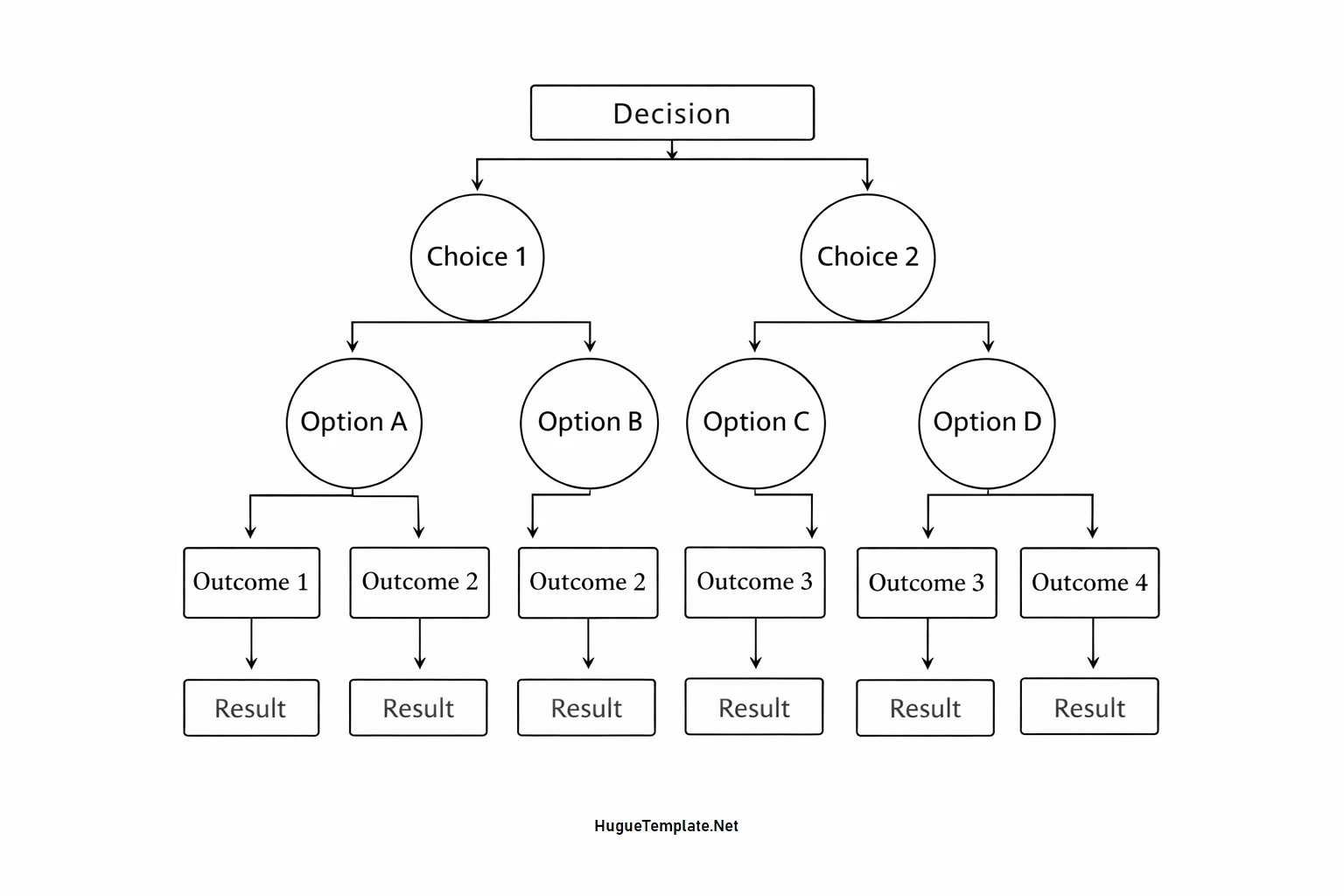
Decision-making can be a challenging process, especially when faced with complex choices that require careful consideration. In these situations, a decision chart can be a valuable tool to help organize information, weigh options, and ultimately make the best choice.
Whether you are trying to decide on a new project for your business or figuring out the best course of action for a personal matter, a decision chart can provide a visual representation of your decision-making process, making it easier to see all the factors at play.
What is a Decision Chart?
A decision chart, also known as a decision tree or a flowchart, is a visual tool used to map out different possible decisions and their potential outcomes. It typically consists of nodes, branches, and leaves that represent different choices, events, and results. Decision charts are often used in business, finance, healthcare, and other fields where complex decisions need to be made based on multiple factors.
Decision charts can be simple or complex, depending on the nature of the decision and the number of variables involved. They can help individuals or teams break down a decision into smaller, more manageable parts, making it easier to analyze the pros and cons of each option and evaluate the potential risks and rewards.
Why Use a Decision Chart?
There are several benefits to using a decision chart when faced with a complex decision. Some of the key advantages include:
- Clarity: Decision charts provide a clear and organized structure for decision-making, making it easier to understand the various factors at play.
- Visualization: By creating a visual representation of your decision-making process, you can see how different choices lead to different outcomes.
- Analysis: Decision charts allow you to break down a decision into smaller components, making it easier to analyze each option and its potential consequences.
- Decision-making: By mapping out different choices and their outcomes, decision charts can help you make informed and rational decisions.
Overall, decision charts can help you make better decisions by providing a structured framework for evaluating options and predicting outcomes.
What to Include in a Decision Chart?
When creating a decision chart, it is important to include the following elements:
- Decision Nodes: These are points in the chart where a decision needs to be made. Each decision node represents a different choice or course of action.
- Chance Nodes: These nodes represent uncertain events or factors that may influence the outcome of a decision.
- Outcome Nodes: These nodes show the potential outcomes of each decision or event, including the associated costs, benefits, and risks.
- Branches: Branches connect the nodes in the chart and show the possible paths that can be taken based on different decisions and events.
By including these elements in your decision chart, you can create a comprehensive and detailed visual representation of your decision-making process.
How to Create a Decision Chart?
Creating a decision chart involves the following steps:
1. Identify the decision to be made and the key factors that need to be considered.
2. List out all possible choices and outcomes related to the decision.
3. Determine the relationships between different choices, events, and outcomes.
4. Draw a visual representation of the decision chart using nodes and branches to connect the elements.
5. Evaluate the chart to ensure that all possible scenarios have been accounted for and that the logic of the chart is sound.
6. Use the decision chart to analyze the potential consequences of each choice and make an informed decision based on the information presented.
By following these steps, you can create an effective decision chart that will help you navigate complex decisions more confidently.
Tips for Successful Decision Charts
When creating a decision chart, keep the following tips in mind:
- Keep it simple: Avoid unnecessary complexity and focus on highlighting the key decision points and outcomes.
- Use clear labels: Make sure that each node and branch in the chart is clearly labeled to avoid confusion.
- Consider different perspectives: Take into account various viewpoints and potential outcomes to create a more comprehensive decision chart.
- Update as needed: Decision charts are dynamic tools that may need to be revised as new information becomes available or circumstances change.
By following these tips, you can create decision charts that are effective, informative, and user-friendly, helping you make better decisions in any situation.
Decision Chart Template – DOWNLOAD
