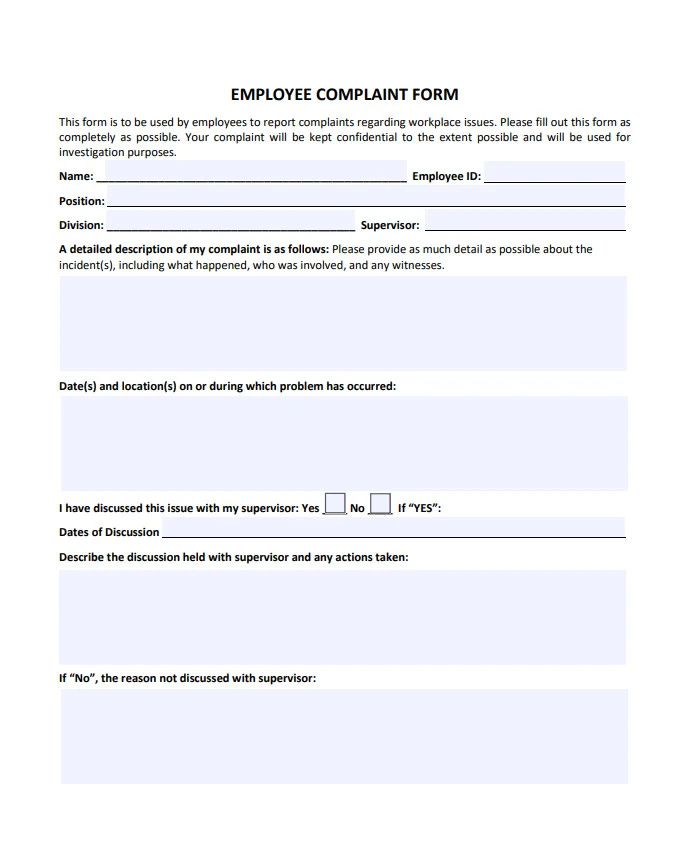
Are you an employer looking to streamline your HR processes? Or perhaps you’re an employee seeking a way to voice your concerns in a structured and formal manner? Look no further than the employee complaint form.
In this comprehensive guide, we’ll explore everything you need to know about employee complaint forms, from what they are to how to create an effective one.
What is an Employee Complaint Form?
An employee complaint form is a document used by organizations to collect feedback, grievances, or complaints from their employees. It provides a structured way for employees to communicate their concerns to management, HR, or other relevant parties. These forms can cover a wide range of issues, including harassment, discrimination, workplace safety, and more. By utilizing an employee complaint form, organizations can ensure that all complaints are documented and addressed in a timely and appropriate manner.
When creating an employee complaint form, there are several key elements to consider. Here are some best practices to keep in mind:
- Clear Instructions: Make sure the form provides clear instructions on how to fill it out and submit it.
- Confidentiality: Assure employees that their complaints will be kept confidential to encourage open and honest feedback.
- Specificity: Encourage employees to provide specific details about their complaint, including dates, times, and individuals involved.
- Signature: Require employees to sign and date the form to verify the accuracy of the information provided.
- Follow-up: Outline the process for follow-up and resolution of the complaint to keep employees informed.
Why Use an Employee Complaint Form?
Employee complaint forms offer numerous benefits for both employers and employees. For employers, these forms provide a systematic approach to handling complaints, ensuring that no issue goes unnoticed or unresolved. They also help organizations track trends and patterns of complaints, allowing them to address root causes and prevent future incidents.
From an employee perspective, complaint forms offer a safe and confidential way to voice concerns without fear of retaliation. By using a formalized process, employees can feel confident that their complaints will be taken seriously and addressed appropriately.
What to Include in an Employee Complaint Form
When creating an employee complaint form, it’s essential to include specific details that will help facilitate the resolution process. Here are some key elements to consider including in your form:
- Employee Information: Name, department, position, contact information
- Details of Complaint: Description of the issue, dates, times, witnesses
- Resolution Requested: What outcome is the employee seeking
- Confidentiality Assurance: Statement ensuring confidentiality of the complaint
- Signature and Date: Employee acknowledgment of the complaint
- Follow-up Process: Outline the steps for investigation and resolution
How to Implement Employee Complaint Forms
Implementing employee complaint forms in your organization is a straightforward process that can yield significant benefits. To get started, follow these steps:
First, design a template for your employee complaint form that includes all the necessary fields and instructions. Make sure to customize the form to reflect your organization’s policies and procedures. Next, distribute the form to all employees and provide training on how to use it effectively. Encourage employees to submit complaints in a timely manner and assure them that their feedback will be taken seriously. Finally, establish a process for reviewing and addressing complaints, including investigation, resolution, and follow-up with the employee.
Tips for Successful Employee Complaint Forms
To ensure the effectiveness of your employee complaint forms, consider the following tips:
- Train HR Staff: Provide training to HR staff on how to handle complaints professionally and confidentially.
- Regularly Review Forms: Periodically review the data collected from complaint forms to identify trends and areas for improvement.
- Communicate Updates: Keep employees informed about the status of their complaints and any actions taken.
- Encourage Feedback: Solicit feedback from employees on the complaint process to make improvements.
- Document Everything: Maintain thorough records of all complaints and their resolutions for future reference.
In Conclusion
Employee complaint forms are a valuable tool for organizations seeking to create a transparent and accountable workplace culture. By implementing effective complaint forms and processes, employers can address employee concerns promptly and proactively, leading to a more engaged and satisfied workforce.
Remember to customize your employee complaint form to fit your organization’s unique needs and always prioritize confidentiality and professionalism in handling complaints. With the right approach, employee complaint forms can be a powerful tool for fostering a positive work environment for all.
Employee Complaint Form Template – DOWNLOAD
