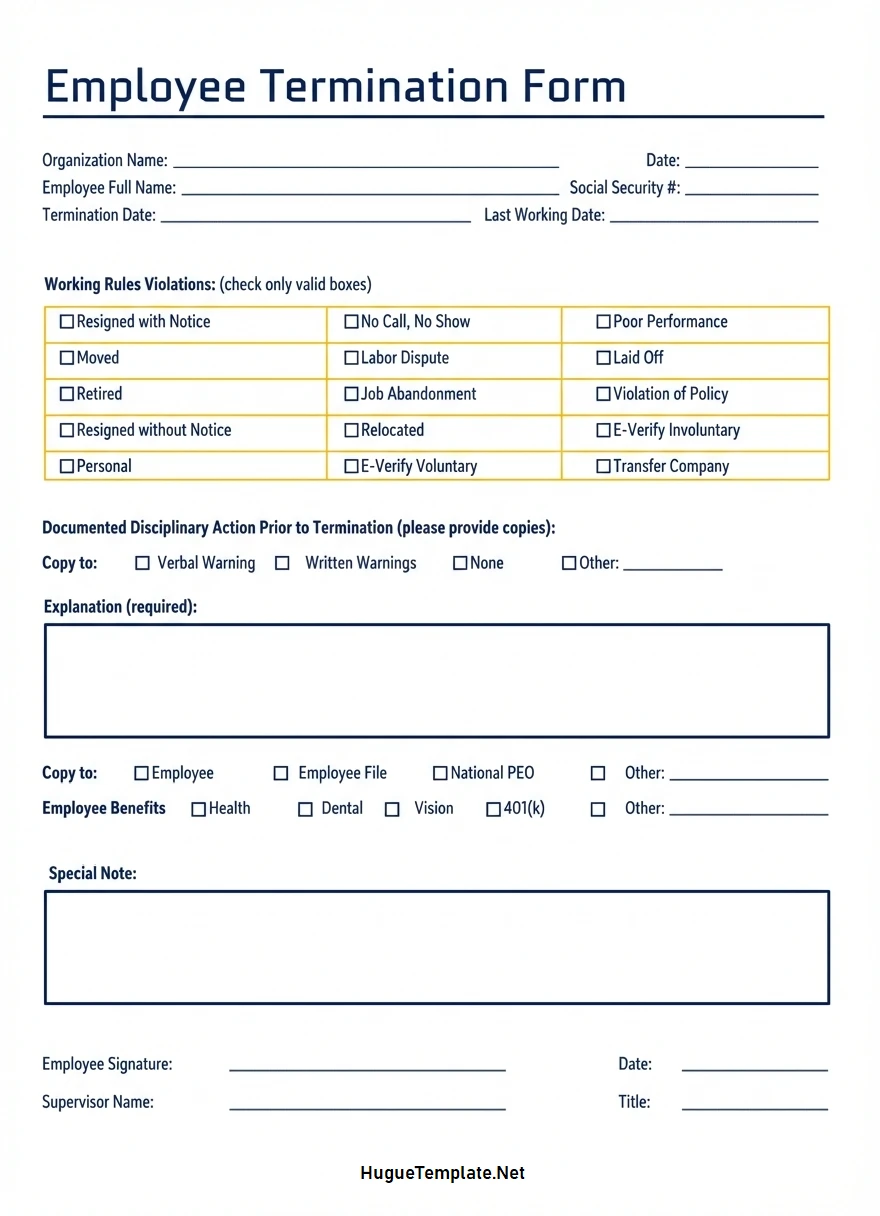
When terminating an employee, there are many legal and administrative aspects to consider. One crucial document in this process is the employment termination form. This form serves as a record of the termination and outlines important details such as the reason for termination, final pay, and any benefits the employee may be entitled to.
In this guide, we will dive deep into what employment termination forms are, why they are important, what to include in them, how to handle the termination process, and offer tips for successfully managing terminations.
What is an Employment Termination Form?
An employment termination form is a document used by employers to officially record the end of an employee’s tenure with the company. It typically includes details such as the employee’s name, position, termination date, reason for termination, final pay, and any benefits or severance packages the employee is entitled to.
This form serves as a crucial record for both the employer and the employee, documenting the circumstances surrounding the termination and ensuring that both parties are aware of their rights and responsibilities.
Why are Employment Termination Forms Important?
Employment termination forms are important for several reasons.
- Firstly, they provide a clear and formal record of the termination, which can help protect the employer in case of any legal disputes or claims of wrongful termination.
- Secondly, these forms ensure that both parties are on the same page regarding the terms of the termination, including final pay, benefits, and any post-employment obligations.
- Lastly, having a standardized termination form in place can help streamline the process and ensure that all necessary information is captured accurately.
What to Include in an Employment Termination Form
When creating an employment termination form, it is important to include the following key details:
- Employee Information: Name, position, and employee ID number.
- Termination Date: The date on which the employee’s employment will end.
- Reason for Termination: Whether the termination is voluntary or involuntary, and the specific reason for the termination.
- Final Pay: Details on the employee’s final paycheck, including any accrued vacation or sick time.
- Benefits and Severance: Any benefits or severance packages the employee is entitled to after termination.
- Return of Company Property: Instructions for returning any company property, such as keys, badges, or equipment.
How to Handle the Termination Process
When terminating an employee, it is important to handle the process with care and professionalism. Here are some steps to follow:
- Prepare in Advance: Gather all necessary documents and information before meeting with the employee.
- Communicate Clearly: Clearly explain the reason for the termination and answer any questions the employee may have.
- Provide Support: Offer support resources, such as information on benefits or job search assistance.
- Collect Company Property: Ensure that the employee returns any company property before leaving.
- Complete Termination Form: Have the employee review and sign the termination form to acknowledge the details of the termination.
Tips for Successful Termination
Here are some additional tips for successfully managing terminations:
- Document Everything: Keep detailed records of the termination process, including all communication and documentation.
- Follow Company Policies: Ensure that the termination process follows company policies and procedures.
- Be Respectful: Treat the employee with respect and empathy throughout the process.
- Offer Support: Provide resources and assistance to help the employee transition smoothly out of the company.
Conclusion
Employment termination forms play a crucial role in the termination process, providing a formal record of the end of an employee’s tenure with the company. By including key details such as the reason for termination, final pay, and benefits, these forms help ensure that both parties are on the same page regarding the terms of the termination.
By following best practices and handling terminations with care and professionalism, employers can navigate the termination process smoothly and minimize the risk of legal disputes.
Employment Termination Form Template – DOWNLOAD
