Have you ever found yourself in a situation where someone is using your intellectual property without your permission? Or perhaps you’ve been on the receiving end of a cease and desist letter and aren’t sure what to do next. Cease and desist letters are powerful legal tools that can help individuals and businesses protect their rights and assets.
In this guide, we will explore what cease and desist letters are, why they are important, what to include in a cease and desist letter, how to respond to one, and tips for successful resolution.
What is a Cease and Desist Letter?
A cease and desist letter is a formal document that demands an individual or entity to stop engaging in certain activities that are infringing upon the sender’s rights. These activities can include using copyrighted material, trademark infringement, defamation, harassment, or any other action that violates the sender’s legal rights.
Cease and desist letters are often the first step in resolving disputes before escalating to costly legal proceedings.
Why are Cease and Desist Letters Important?
Cease and desist letters serve as a warning to the recipient that their actions are illegal and may result in legal action if they do not comply with the demands outlined in the letter. By sending a cease and desist letter, the sender demonstrates that they are serious about protecting their rights and are willing to take legal action to enforce them.
In many cases, receiving a cease and desist letter can prompt the recipient to stop their infringing activities without the need for further legal intervention.
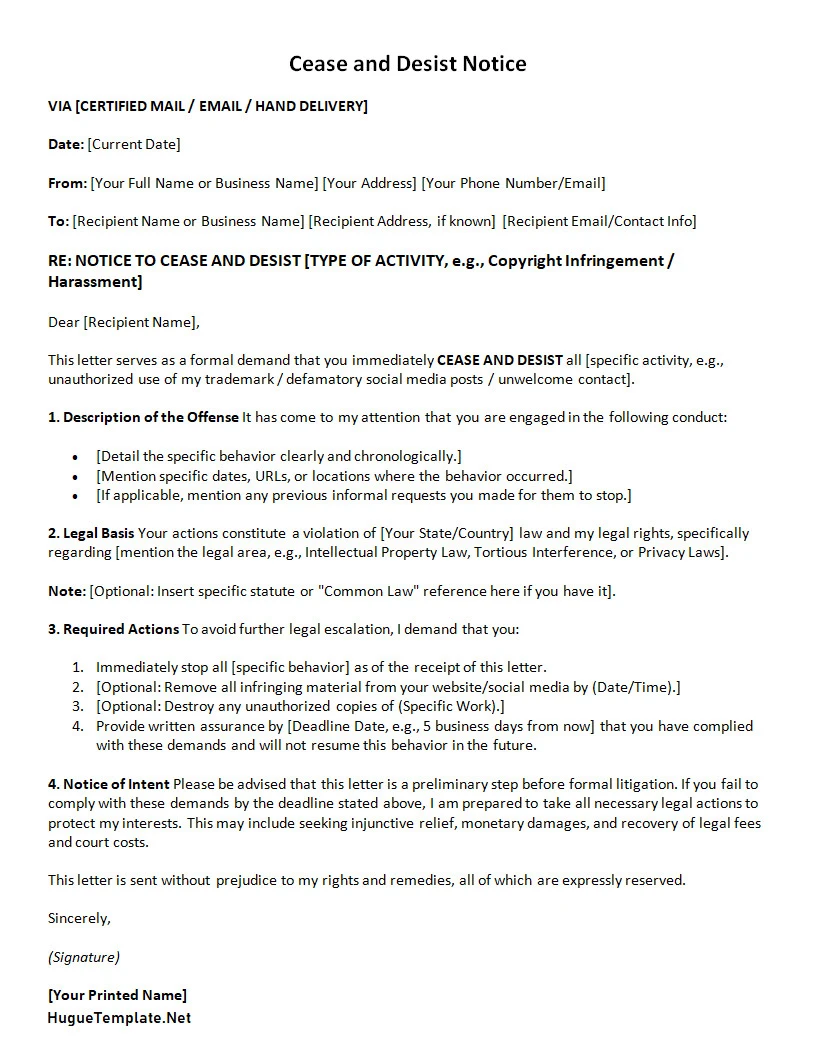
What to Include in a Cease and Desist Letter
When drafting a cease and desist letter, it is important to include specific details about the infringing activities, the legal basis for the claims, and the specific actions that the recipient must take to remedy the situation. Here are some key components to include in a cease and desist letter:
- Details of the infringement: Clearly outline the infringing activities and provide evidence to support your claims.
- Legal basis: Explain the legal basis for your claims, such as copyright or trademark law violations.
- Demands: Clearly state what actions the recipient must take to resolve the issue, such as ceasing the infringing activities and providing compensation for damages.
- Deadline: Set a reasonable deadline for the recipient to respond and comply with the demands outlined in the letter.
- Consequences: Clearly explain the consequences of failing to comply with the demands, such as legal action or further escalation of the dispute.
How to Respond to a Cease and Desist Letter
Receiving a cease and desist letter can be a stressful experience, but it is important to respond promptly and professionally to avoid further legal complications. Here are some steps to take when responding to a cease and desist letter:
- Seek legal advice: Consult with a lawyer to understand your rights and obligations under the law.
- Review the letter: Carefully read and analyze the contents of the cease and desist letter to determine the validity of the claims.
- Respond in writing: Craft a professional and concise response to the sender, addressing each of the claims and outlining your position.
- Comply or negotiate: Decide whether to comply with the demands, negotiate a resolution, or seek mediation to resolve the dispute amicably.
- Document everything: Keep detailed records of all communications and actions taken in response to the cease and desist letter for future reference.
Tips for Successful Resolution
Resolving a dispute through a cease and desist letter can be a complex process, but following these tips can help ensure a successful outcome:
- Act quickly: Respond to the cease and desist letter promptly to show that you take the claims seriously.
- Stay professional: Maintain a professional and respectful tone in all communications with the sender to avoid escalating the dispute.
- Seek legal advice: Consult with a lawyer to understand your rights and options for resolving the dispute effectively.
- Consider mediation: If negotiations stall, consider engaging in mediation or arbitration to find a mutually agreeable solution.
- Follow through: If an agreement is reached, ensure that all parties comply with the terms outlined in the resolution to avoid further legal action.
By understanding the power of cease and desist letters and following the proper steps for resolution, individuals and businesses can protect their rights and assets effectively. Whether you are sending or receiving a cease and desist letter, it is crucial to approach the situation with professionalism and diligence to achieve a successful outcome.
Cease and Desist Letter Template – DOWNLOAD
